

A child crouches over a tray of damp soil, pinching, pouring and patting it flat before pressing in a leaf they found outside. To an adult, it can look like simple play. In reality, this is sensory learning in preschool at its best – rich, purposeful and full of brain-building moments that support language, concentration, coordination and confidence.
For young children, learning rarely begins with a worksheet or a formal lesson. It begins with touch, sound, movement, scent, texture and observation. They learn by handling real objects, listening carefully, asking questions, noticing changes and trying again. This is one reason the early years matter so much. When children are invited to explore with their whole bodies and all their senses, they do not just remember more. They understand more deeply.
What sensory learning in preschool really means
Sensory learning is not limited to messy trays, finger painting or a box of rice and scoops, though those can certainly have value. It is a broader way of helping children make sense of the world through direct experience. When a child listens to birdsong in the garden, feels cold water run over their hands, compares the roughness of bark to the smoothness of pebbles, or notices how dough changes when pressed and rolled, they are building knowledge through sensory input.
In preschool, this approach matters because young children are still developing the foundations that later academic learning depends on. Before a child can confidently write, they need hand strength and control. Before they can follow complex instructions, they need attention and auditory processing. Before they can describe ideas clearly, they need a bank of real experiences to attach words to.
That is why a high-quality preschool environment does more than keep children busy. It carefully creates opportunities for children to see, hear, touch, move and explore in ways that are enjoyable and developmentally meaningful.
Why hands-on experience supports deeper learning
Children in the early years are not passive learners. They test ideas physically. They repeat actions to see what changes. They often need to feel something before they can fully understand it. A child who stacks wet sand and watches it collapse is learning about more than sand. They are meeting concepts such as weight, balance, cause and effect, persistence and problem-solving.
This is where sensory experiences become especially powerful. They make abstract ideas concrete. Big and small, smooth and rough, heavy and light, warm and cool – these words become easier to grasp when a child has experienced them many times in real life.
The benefits are not only cognitive. Sensory learning can also support emotional regulation. Some children feel calmer when they knead dough, pour water or sort natural materials. Others become more confident when they are encouraged to explore at their own pace in a safe, responsive setting. The right sensory experiences can help children settle, engage and feel more secure in their learning environment.
The link between sensory play and school readiness
Parents often ask what truly prepares a child for school. It is a fair question, especially when so much attention is placed on letters, numbers and early writing. Those things matter, but they rest on a wider set of developmental foundations.
Sensory learning helps build many of them. Fine motor skills develop when children pinch, squeeze, thread, scoop and manipulate small objects. Gross motor control grows through climbing, balancing, digging and moving through space. Listening games strengthen attention. Exploring texture and materials supports descriptive language. Group sensory activities also encourage turn-taking, cooperation and communication.
It depends, of course, on how these experiences are planned. Not every sensory activity is equally helpful. If it is overstimulating, rushed or disconnected from a child’s stage of development, it may not achieve much. The most effective preschool programmes balance freedom with thoughtful guidance. Children need space to explore, but they also benefit from trained teachers who can extend language, model curiosity and notice when a child is ready for a new challenge.
Sensory learning is more than messy play
One of the biggest misconceptions is that sensory learning is simply about making a mess. Parents sometimes picture paint-covered sleeves, water on the floor and trays of foam. While some sensory activities are delightfully messy, the goal is not mess for its own sake. The goal is meaningful engagement.
A well-planned sensory experience should have a purpose. It may be helping children compare textures, strengthen finger muscles, regulate energy levels, build vocabulary or observe patterns in nature. Sometimes the activity looks lively and exuberant. At other times, it is calm and focused, such as sorting shells by size or listening for different sounds outdoors.
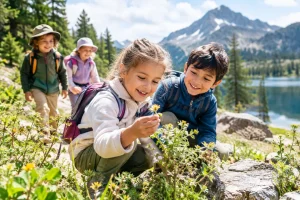
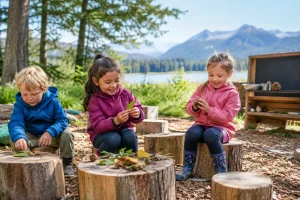
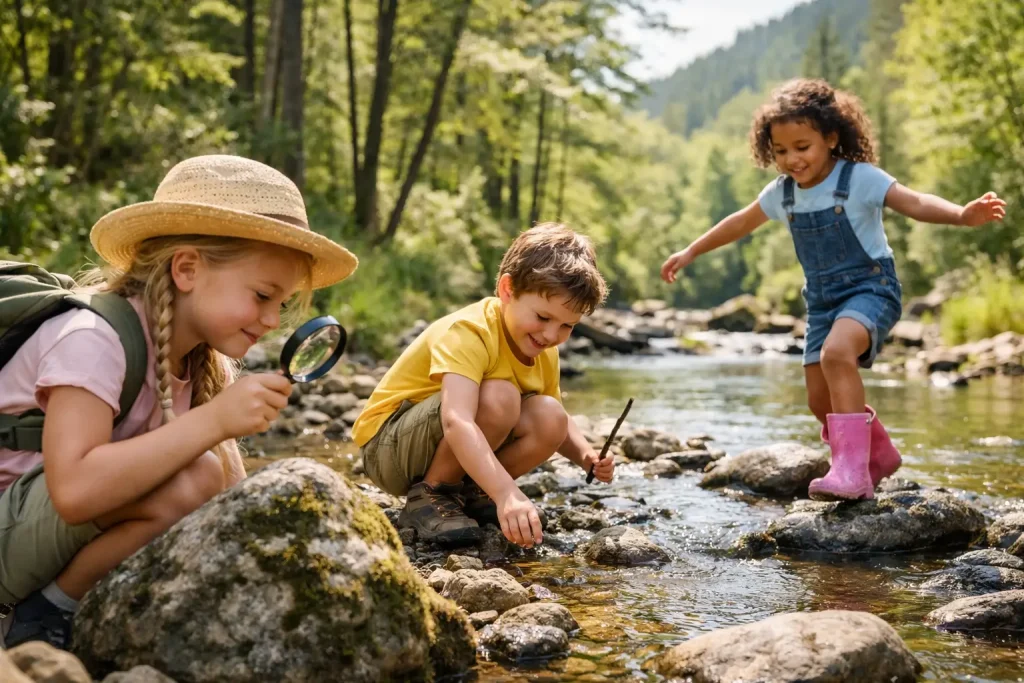
This is also where environment matters. Children benefit from spaces that feel inviting, safe and well organised, with materials that are suitable for their age and teachers who know when to step in and when to let discovery lead. Outdoor classrooms and green spaces can be especially valuable because nature offers endless sensory variation without feeling forced. A breeze, a muddy patch, a fallen flower, the scent after rain – these are rich learning invitations in their own right.
How children benefit across different areas of development
Sensory learning supports the whole child, which is why it sits so naturally within a strong early years curriculum. Language develops as children name what they feel, see and hear. Maths begins to take shape when they compare quantity, size, shape and pattern through real materials. Scientific thinking starts when they predict, test and observe.
There are social benefits too. Shared sensory experiences often create easy opportunities for conversation. Children negotiate who gets the scoop next, describe what they have made, or watch and imitate a friend’s idea. These small moments matter because they build communication and empathy alongside curiosity.
For some children, sensory learning can be particularly helpful because it offers different ways into learning. Not every child wants to sit still and listen for long stretches. Some need to move, handle, build or investigate before they feel fully engaged. A thoughtful preschool respects these differences and uses varied experiences to help each child flourish.
That said, balance is important. Children also need rest, routine and moments of calm. Sensory-rich learning should not mean constant noise or stimulation. The best settings know how to alternate energetic discovery with quieter experiences, helping children feel secure rather than overwhelmed.
What parents should look for in a preschool
If sensory learning matters to your family, it is worth looking beyond the phrase itself and asking what it looks like in practice. Some schools use the language generously, but the daily experience may be quite limited. Others embed sensory learning naturally across the day, in ways that support both joy and progress.
A strong preschool programme will offer children access to varied materials, indoor and outdoor exploration, and teachers who understand child development rather than relying on activities for appearance alone. You want to see purpose. Are children using real objects? Are they encouraged to ask questions? Are teachers extending learning through conversation? Is there a calm, nurturing structure around the experience?
It can also help to notice whether the setting values nature and movement. Young children do not learn best when confined to one mode of activity. They benefit from stepping outside, noticing seasonal change, collecting natural treasures and using large spaces as well as classroom tables. In places such as Johor Bahru, where outdoor learning can become a vivid and memorable part of the preschool day, this connection between nature and sensory exploration can be especially rewarding.
At Alpine Preschool, this belief shapes the way childhood is experienced – with room for curiosity, outdoor discovery and purposeful play guided by trained teachers who understand how children grow.
The long-term value of sensory learning in preschool
Parents sometimes worry that a play-based, sensory-rich environment may be less academic. In truth, the opposite is often closer to reality. When children build strong sensory foundations, they are better placed to concentrate, communicate, coordinate their movements and engage with formal learning later on.
A child who has sorted leaves, mixed colours, listened to stories under a tree, balanced on stepping stones, squeezed clay into shapes and talked through what they noticed is not missing out on learning. They are building the kind of connected understanding that helps future reading, writing, maths and problem-solving make sense.
Early childhood should feel alive with discovery. It should be structured, yes, but never sterile. Sensory learning keeps education grounded in what young children actually need – movement, meaning, connection and experiences they can hold in their hands.
When a preschool honours that, children do more than learn facts. They become confident explorers of their world, and that is a beautiful place to begin.