The morning a child starts kindergarten rarely hinges on whether they can recite the alphabet perfectly. What often matters more is whether they can separate with confidence, follow a simple routine, ask for help, and join in with curiosity. When parents think about kindergarten readiness skills, it helps to look beyond worksheets and focus on the whole child.
A child who feels secure, capable, and eager to explore is usually far better placed to thrive than one who has been pushed too quickly into formal academics. Readiness is not about rushing childhood. It is about giving children the foundations to enjoy learning, build relationships, and feel at home in a classroom.
What kindergarten readiness skills really include
Kindergarten readiness skills sit across several areas of development, not just literacy and numeracy. Teachers often look for a blend of emotional maturity, social confidence, communication, physical coordination, and early thinking skills. These are the building blocks that help children manage the school day with greater ease.
For many families, this can be reassuring. A child does not need to master everything before their first day. In fact, children grow at different rates, and some will shine socially before they show interest in mark-making, while others may love letters and numbers but need more support with turn-taking or managing big feelings. Readiness is best understood as progress, not perfection.
The social and emotional skills that shape a strong start
One of the clearest signs that a child is ready for kindergarten is their growing ability to be part of a group. This does not mean they must be outgoing or independent every moment. It means they are beginning to cope with shared spaces, shared attention, and shared expectations.
A ready child can usually separate from a parent or carer with support, even if there are a few tears at first. They are starting to understand simple boundaries and can wait briefly, listen to an adult, and move from one activity to another. Just as importantly, they are learning to express needs in appropriate ways rather than only through frustration.
Emotional regulation matters because the school day brings small challenges. A child may not get the toy they want, may need to tidy up before they feel finished, or may have to join a different activity from the one they had in mind. Children who are beginning to cope with these moments tend to settle more quickly and enjoy the day more fully.
Communication skills are central to kindergarten readiness skills
Strong communication does not mean advanced vocabulary alone. It means a child can understand simple instructions, respond to questions, and express basic thoughts, needs, and feelings. These skills are essential because so much early learning happens through conversation, storytelling, songs, role play, and shared routines.
Children benefit from being able to listen to a short story, follow a two-step instruction, and join in with familiar rhymes or classroom language. They do not need flawless speech, but they do need enough confidence to communicate with teachers and peers. If a child can say, “I need help,” “Can I have a turn?” or “I feel sad,” they are already carrying valuable tools into the classroom.
This is one reason rich, everyday conversation at home matters so much. Mealtimes, walks outdoors, bath time chats, and reading together all help children connect words with experiences. Language grows best in warm, responsive environments where children feel heard.
Early academic readiness matters, but not in isolation
Parents often worry most about letters, numbers, pencil grip, and early reading. These are part of readiness, but they work best when supported by broader developmental foundations. A child may recognise many letters, yet still struggle to learn in a group if they cannot focus briefly or follow instructions.
Useful early academic skills include recognising some letters and sounds, noticing patterns, counting objects, sorting by size or colour, and showing interest in books, songs, and mark-making. These experiences build familiarity with the language of learning. Still, a love of stories, curiosity about the world, and willingness to try are often just as important as any specific academic milestone.
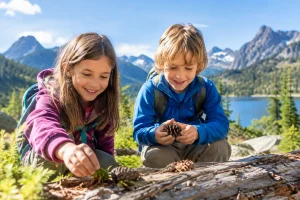
The most effective preparation tends to be playful. Counting leaves, comparing sticks, drawing in sand, spotting shapes on a walk, or talking about the beginning and end of a story all support learning naturally. Children absorb a great deal when education feels joyful rather than pressured.
Physical development is often overlooked
Kindergarten asks a lot from little bodies. Children need enough gross motor control to move safely, sit with some stability, and join active play. They also need fine motor strength to hold crayons, use scissors, turn pages, manage lunch items, and begin writing-related tasks.
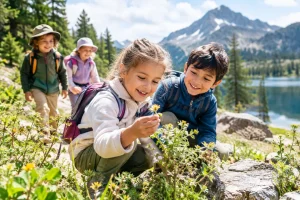
These skills develop through real movement and hands-on experiences. Climbing, balancing, jumping, carrying, pouring, threading, painting, and playing with clay all strengthen coordination. Outdoor play is especially valuable because it challenges balance, core strength, spatial awareness, and confidence in ways that indoor routines alone often cannot.
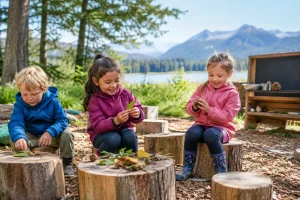
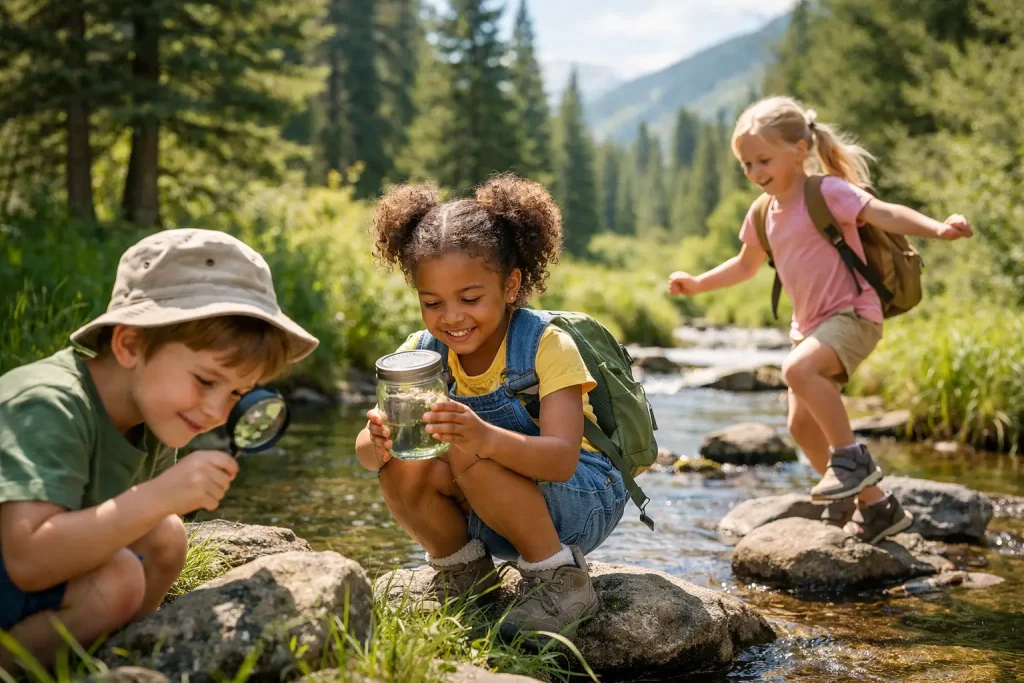
This is where a nature-connected environment can make a real difference. When children have room to run, explore textures, observe living things, and use their bodies with purpose, they build the physical confidence that supports classroom learning too.
Independence and routines help children feel secure
Some of the most practical kindergarten readiness skills are the ones that make the day run smoothly. Can a child wash their hands, put away their bag, open a lunch box, use the toilet with growing independence, and follow a familiar routine? These may seem small, but they contribute enormously to a child’s confidence.
Routine gives children a sense of predictability. When they know what comes next, they feel safer and more in control. This frees up energy for learning, socialising, and exploring. A child who can manage a few personal tasks independently often enters the classroom with more self-belief.
At home, these habits can be nurtured gently. Letting children help with dressing, tidying toys, setting the table, or packing their own belongings teaches responsibility without turning every moment into a lesson.
How parents can build kindergarten readiness skills at home
The good news is that school readiness does not require an intense programme. It grows through ordinary, meaningful experiences repeated over time. Reading together each day helps attention, vocabulary, and imagination. Open-ended play encourages problem-solving and creativity. Shared routines build security. Outdoor time supports sensory development, movement, and observation.
Children also benefit when adults slow down enough to let them try. It can take longer to let a child zip a bag or pour water into a cup, but those moments build capability. Confidence grows when children are trusted with small responsibilities and praised for effort, not only for getting things right.
If a child finds certain areas harder, that does not mean they are behind in every sense. Some children need more time with social confidence. Others need support with speech, attention, or transitions. What matters is noticing where support is needed and responding early, warmly, and consistently.
When readiness looks different from one child to another
There is no single checklist that captures every child. Temperament, previous group experience, developmental pace, and family context all shape readiness. A thoughtful school will recognise this and support children as individuals rather than expecting identical starting points.
For example, a bright and curious child may still need reassurance when separating from parents. Another child may be socially confident yet slower to engage with pre-writing tasks. Both can be ready for kindergarten in different ways, particularly if the environment is nurturing, structured, and responsive.
This is why high-quality early years settings matter. Trained teachers know how to observe, guide, and extend each child sensitively. In a purposeful, play-based environment, children can strengthen weaker areas while continuing to enjoy the magic of being young. At Alpine Preschool, this balance between structure and joyful exploration sits at the heart of how children are prepared to flourish.
Choosing a kindergarten environment that supports the whole child
If you are evaluating schools, it is worth looking beyond displays of academic work. Ask how children are supported emotionally, how routines are introduced, how outdoor learning is used, and how teachers build language, independence, and social confidence. The best environments do not treat readiness as a narrow academic target. They see it as a whole-child journey.
A calm, well-designed setting with caring educators, rich sensory experiences, and room for movement can transform a child’s transition into school. Children need opportunities to wonder, create, ask questions, and feel successful in small daily ways. Those experiences build the quiet confidence that lasts far beyond the first term.
The aim is not to produce a child who looks impressive on paper. It is to nurture a child who walks into kindergarten feeling safe, capable, and ready to belong – and that is a beautiful place to begin.