
A child’s first school experience can shape far more than their readiness for reading and numbers. It influences whether they feel safe asking questions, confident making friends, and excited to discover what they can do. This early childhood education guide is designed to help parents look beyond attractive classrooms and find a setting where their child can flourish with curiosity, kindness and joy.
For children aged two to seven, learning should feel purposeful without becoming pressured. The strongest early years environments offer a thoughtful rhythm of play, conversation, movement, creativity and gentle structure, giving each child both a secure foundation and space to grow in their own way.
What a quality early childhood education looks like
High-quality early education sees the whole child. Academic preparation matters, but it is only one part of a much bigger picture. Children also need opportunities to build emotional security, physical coordination, communication skills, independence and an understanding of how to belong within a community.
A well-planned preschool day may include stories, music, early mathematical thinking, sensory exploration, imaginative play and shared mealtimes. To a child, it feels like a happy day of making, building, running and wondering. To an experienced educator, these moments reveal developing language, concentration, problem-solving and social confidence.
The balance matters. A programme that is entirely unstructured may not give children the routines and focused experiences that prepare them for their next stage. Yet an environment that pushes formal worksheets too early can make learning feel like a task to complete rather than a pleasure to pursue. The right setting combines clear developmental intentions with the freedom children need to explore.
Early childhood education guide: choosing the right fit
Every family has practical considerations, from location and daily schedules to fees and holiday arrangements. These are important. But when visiting a preschool, pay close attention to how the environment feels and how adults respond to children.
Notice whether teachers come down to a child’s level, listen patiently and encourage them to try again. Observe whether children are busy with meaningful activities or simply waiting for the next instruction. A calm, cheerful atmosphere often comes from consistent routines and teachers who understand that young children need both reassurance and respectful boundaries.
Ask how the school plans learning across the years. A staged pathway is particularly valuable because children’s needs change rapidly between playgroup and kindergarten. At age two, they may be learning to separate comfortably from a parent, communicate needs and play alongside others. By the later kindergarten years, they are ready for longer periods of focus, richer language, early literacy, number sense and greater responsibility.
A clear progression helps children move forward without being hurried. It also helps parents understand what their child is working towards and why a particular activity has been chosen.
Look for learning through play with purpose
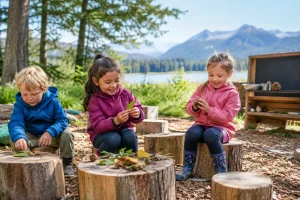
Play is not a pause from learning. It is one of the ways young children learn best. When children build a bridge from blocks, they test balance, shape and persistence. When they run a pretend café, they practise language, co-operation, counting and empathy. When they paint, sort natural objects or create a story, they develop fine motor control and the confidence to express an idea.
Purposeful play is guided by skilled teachers. They prepare inviting materials, introduce vocabulary, ask thoughtful questions and know when to step back. The goal is not to control every outcome. It is to extend a child’s thinking while protecting their sense of ownership and discovery.
Children benefit from repetition too. Returning to a favourite puzzle, water tray or role-play area lets them strengthen skills at a pace that feels satisfying. A school should offer variety, but it should also respect the deep learning that happens when a child is given time.
Consider the value of nature and outdoor classrooms
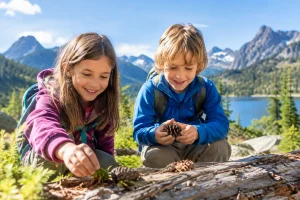
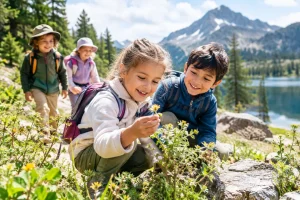
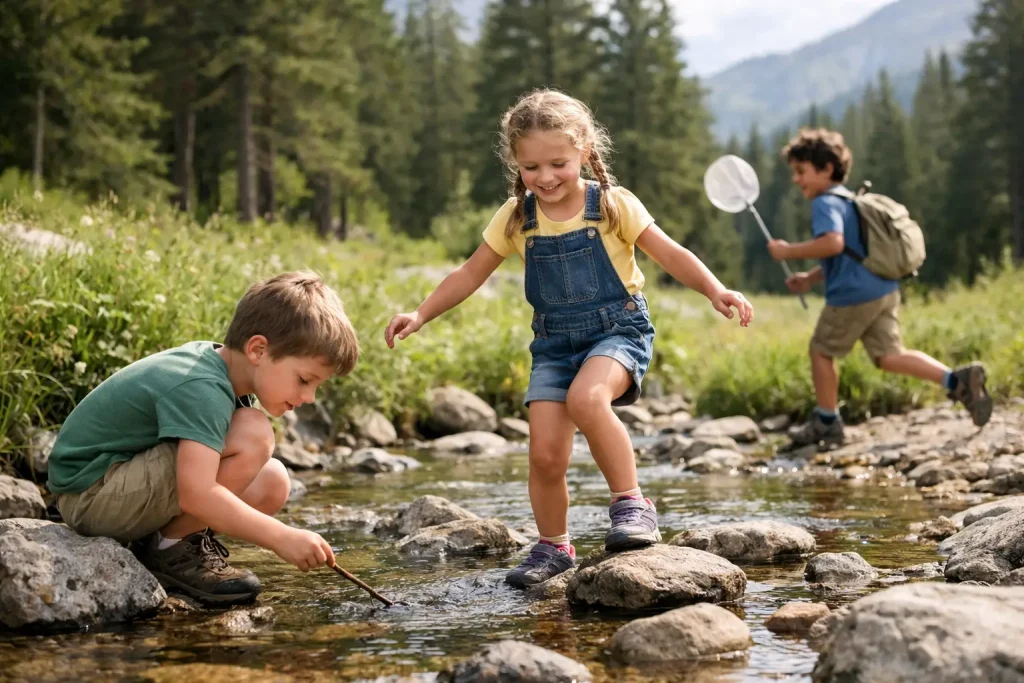
Outdoor learning gives children experiences that cannot be fully recreated at a table. They can feel the texture of bark, watch an insect move through grass, negotiate a slope, carry watering cans and notice how rain changes the ground. These small encounters build sensory awareness, physical strength and a lasting connection with the natural world.
Expansive green spaces also create room for different kinds of play. An energetic child can climb, pedal and run. A quieter child may examine leaves, draw outside or talk with a friend in a peaceful corner. Both experiences are valuable, and both can support concentration once children return indoors.
Nature-based learning is not about keeping children outdoors all day, whatever the weather. It is about making the outdoors a meaningful part of the curriculum, with sensible safety procedures, appropriate supervision and activities suited to the children’s ages. In a warm climate, thoughtful shade, hydration and timings are equally essential.
How a strong programme grows with your child
The most reassuring early years programmes do not treat all children as though they are at the same starting point. They recognise developmental milestones while leaving room for individual personalities, interests and rates of progress.
In a playgroup, children often begin by building trust. Gentle routines, songs, sensory activities and close teacher support can make the transition into group learning feel safe and enjoyable. Nursery typically expands opportunities for communication, self-care, movement and social play, helping children become more confident participants in a class community.
As children move into Kindergarten 1 and Kindergarten 2, learning can become more structured. They may explore phonics, storytelling, mark-making, early writing, mathematical patterns and practical problem-solving. The aim is to develop the attention, reasoning and foundational skills that support a confident transition to primary school, while retaining creativity and enthusiasm.
At Alpine Preschool, this developmental journey is supported through a curriculum that combines structured learning with outdoor experiences, excursions and opportunities for children to discover through their senses. The setting matters because children learn through their whole bodies, relationships and imaginations, not only through what they can repeat on paper.
Teachers make the greatest difference
Beautiful facilities are a pleasure, but trained and attentive teachers are what make a preschool truly special. Young children need educators who can observe carefully, recognise when a child needs encouragement and adapt an activity when it is too simple or too challenging.
Ask about staff qualifications, professional development and the school’s approach to communication with families. You should feel confident that teachers understand child development and that they can speak clearly about your child’s progress, friendships and emerging interests.
A warm teacher-child relationship does not mean there are no expectations. Children thrive when adults are kind and consistent: helping them wait for a turn, care for shared resources, use words to resolve conflict and take pride in small responsibilities. These everyday habits nurture resilience and consideration for others.
Cultural diversity should be visible in the life of the school as well. Children gain a richer view of the world when stories, celebrations, music and classroom conversations reflect different families and traditions with genuine respect.
Make your school visit count
A visit is your opportunity to imagine your child’s ordinary Tuesday morning, not just the school’s best display board. Take time to look at the classrooms, outdoor areas, toilets, arrival routines and spaces where children rest or eat. Safety should be present in the details, from secure procedures to clear supervision, without making the environment feel restrictive.
It is helpful to ask how the school settles new children, supports toilet learning where relevant, manages allergies and communicates if a child is upset. You may also ask how teachers respond to different learning needs and how they share observations with parents.
Listen for answers that are specific rather than rehearsed. A thoughtful school can explain its routines and philosophy, while also acknowledging that children are individuals. There is rarely one perfect approach for every family, but there should be a genuine willingness to understand your child.
Supporting the learning journey at home
Parents do not need to recreate school at the kitchen table. The most helpful home learning often happens in ordinary moments: reading together before bed, inviting your child to help sort laundry, talking about what you notice on a walk or allowing time for imaginative play.
Try to value effort as much as achievement. When a child says, “I can’t do it,” a calm “Let’s try one part together” encourages persistence without adding pressure. Regular sleep, nourishing meals and unhurried connection also give children the emotional reserves to learn well.
Choose a preschool where your child is known, challenged kindly and welcomed with warmth. When they begin each morning feeling safe enough to explore, childhood becomes not a race towards the next stage, but a magical place to grow into themselves.