
A child building a tower, pouring water between cups, pretending to run a café, or hunting for shapes in the garden may look as though they are simply having fun. For many parents, that raises a fair question: is play based learning effective, or is it just a gentler alternative to more traditional teaching?
The short answer is yes – when it is thoughtfully planned, guided by skilled teachers, and matched to a child’s stage of development. Play is not the opposite of learning in the early years. It is one of the most natural ways young children make sense of language, movement, relationships, numbers, patterns, and the world around them.
Why play works in the early years
Young children do not learn best by sitting still for long periods and absorbing information in the abstract. They learn through doing, noticing, repeating, testing, imagining, and asking questions. Play gives them a meaningful context for all of that.
When a child sorts shells by size, they are laying foundations for mathematical thinking. When they negotiate roles in pretend play, they are developing language, social awareness, and self-regulation. When they climb, balance, dig, and explore outdoors, they are building physical confidence alongside problem-solving skills.
This is why early childhood educators place such value on play. It supports the whole child at once. Cognitive growth, communication, emotional security, creativity, and independence do not develop in tidy separate boxes. In a strong play-based environment, they grow together.
Is play based learning effective in preparing children for school?
This is often the real concern behind the question. Parents are not only asking whether children enjoy it. They want to know whether it prepares them for reading, writing, number work, routines, and classroom expectations.
The answer again is yes, but with an important condition. Play-based learning is most effective when it is purposeful. A high-quality preschool does not simply leave children to entertain themselves all day. Teachers observe closely, introduce the right materials, ask thoughtful questions, extend vocabulary, model social skills, and create experiences that build towards clear developmental goals.
That means school readiness can grow through play in very practical ways. A child tracing lines in sand and strengthening finger muscles with clay is preparing for writing. A child singing rhymes and listening to stories is building early literacy. A child following instructions during a group game is practising attention, memory, and self-control. A child counting blocks to build a bridge is exploring mathematical concepts in a way that feels real rather than forced.
Children who learn this way often arrive at formal schooling not only with knowledge, but with the habits that help them use it well. They are more likely to ask questions, persist with challenges, work with others, and approach learning with confidence.
What the research really suggests
Parents sometimes hear a false choice presented between play and academics. In reality, the strongest early years settings tend to blend both. Research in child development consistently shows that young children benefit from active, hands-on, socially rich learning experiences.
That does not mean every kind of play has the same value. Completely unguided play has benefits, especially for creativity and independence, but it is not enough on its own if the goal is broad educational development. On the other hand, an overly formal approach introduced too early can create pressure without deep understanding.
The sweet spot is guided play. This is where teachers design an environment with intention and support children’s discovery without taking over. The child remains engaged and curious, while the adult helps shape the learning. That balance matters.
So, is play based learning effective? Yes – especially when it combines child-led exploration with teacher guidance, structure, and progression.
What effective play-based learning should look like
Not all settings use the phrase in the same way. Some use it well, and some use it loosely. For parents, the better question may be not only whether play-based learning works, but what good practice actually looks like.
An effective setting should feel warm and joyful, but also intentional. You should be able to see how activities connect to development. The environment should invite curiosity while still being organised. Teachers should know when to step in, when to observe, and when to let children wrestle with an idea a little longer.
You might notice children moving between indoor and outdoor spaces, using open-ended materials, engaging in conversation, and revisiting activities in deeper ways over time. You should also see evidence of progression. Two-year-olds and six-year-olds should not be doing the same things in the same way. As children grow, the play becomes more complex, the language richer, and the expectations more developed.
In a well-planned programme, play is not random. It is one of the ways the curriculum comes to life.
The role of the teacher matters more than many people realise
This is where quality makes all the difference. A trained early years teacher understands how to turn a playful moment into a learning opportunity without draining the joy from it.
For example, if children are making a pretend shop, a teacher might introduce labels, coins, shopping lists, and conversations about quantity. Suddenly, literacy, numeracy, social communication, and problem-solving are all present within an activity the children care about.
That is very different from leaving children with toys and hoping for the best. The effectiveness of play-based learning depends heavily on skilled adults, thoughtful planning, and a clear understanding of child development.
The trade-offs parents should understand
Play-based learning is highly effective, but it is not magic, and it is not identical in every school. Parents should be aware of a few genuine trade-offs.
First, progress may not always look as obvious at a glance as it does in a worksheet-heavy environment. You may not see pages of written work coming home every day. Instead, learning may show up in conversation, confidence, vocabulary, social maturity, storytelling, movement, and problem-solving.
Second, some children benefit from more structure than others, especially as they move towards the later kindergarten years. A strong programme responds to this by increasing challenge and routine over time rather than keeping everything completely free-form.
Third, play-based learning is only as strong as the setting delivering it. If there is little planning, weak observation, or limited teacher engagement, the approach can become vague. That is why parents should look beyond the label and ask how the school supports literacy, numeracy, communication, emotional development, and readiness for the next stage.
Is play based learning effective for every child?
Most young children benefit from it, but the shape of that benefit may vary. Some children thrive immediately in imaginative, social spaces. Others need more reassurance, more routine, or more time to join in. Some are highly active and learn best outdoors. Others are quieter observers who need thoughtful encouragement.
A good early years environment recognises these differences. It does not force every child into the same mould. Instead, it creates multiple ways to engage – sensory play, role play, storytelling, construction, music, movement, nature exploration, and guided group experiences.
This flexibility is one of the strengths of the approach. It allows children to learn through modes that feel natural to them, while still being gently stretched into new areas.
Why outdoor and nature-rich play can be especially powerful
For young children, outdoor learning is not simply a break from the classroom. It is a classroom in its own right. Uneven ground, loose parts, weather, living things, open space, and changing seasons offer a kind of learning that no table-based activity can fully replace.
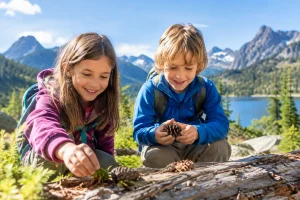
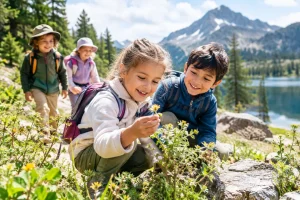
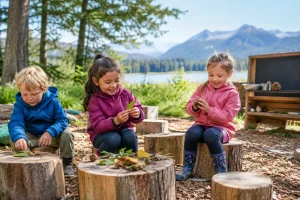
Children outdoors often show stronger engagement, richer imagination, and greater physical confidence. They take measured risks, collaborate more naturally, and become more observant. Digging in soil, balancing on logs, collecting leaves, or watching insects can support scientific thinking just as surely as any formal lesson.
That is one reason many families are drawn to settings that value both structured teaching and meaningful outdoor experiences. At Alpine Preschool, this balance is part of what makes early learning feel both purposeful and magical.
What parents can look for when choosing a preschool
If you are weighing up options, ask simple but revealing questions. How do teachers plan for learning through play? How do they track progress? How do they support children who need more challenge or more confidence? How do they help children become ready for primary school without rushing childhood?
It is also worth watching how children behave in the environment. Do they seem curious, calm, and engaged? Are adults speaking with warmth and intention? Is there a sense of structure beneath the joy?
The best play-based settings do not ask parents to choose between happy children and strong learning. They work hard to deliver both.
For young children, play is serious work. It is how they test ideas, build relationships, strengthen their bodies, and make meaning of the world around them. When a preschool respects that truth and pairs it with expert teaching, play becomes far more than a pleasant extra. It becomes a powerful foundation for children to flourish with confidence, curiosity, and delight in learning.