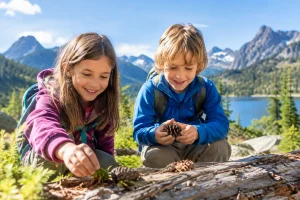
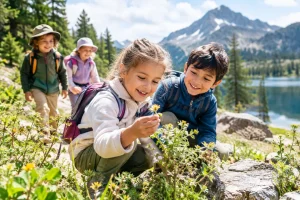
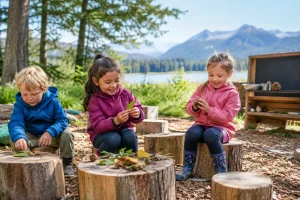
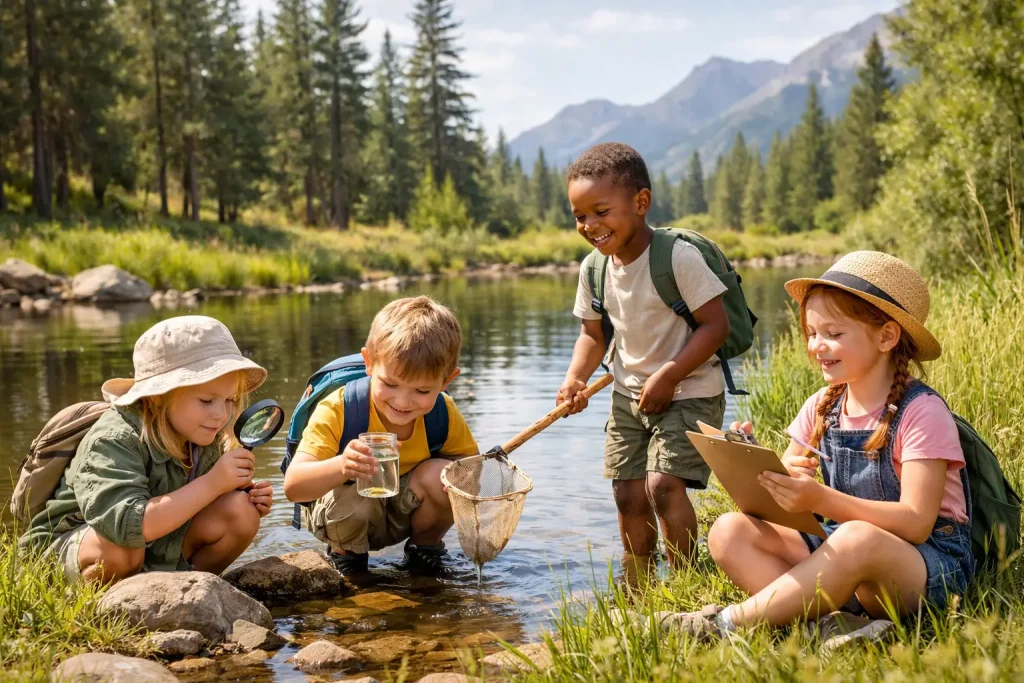
A child balancing across a fallen log, negotiating whose turn it is to pour water into the mud kitchen, or asking why a leaf has tiny lines on it is doing far more than playing. These moments build confidence, language, coordination and a lasting desire to learn. The early childhood education trends 2026 parents will encounter are bringing greater attention back to these meaningful, everyday experiences.
For families choosing a preschool, the question is becoming less about who can introduce formal academics earliest. It is about which environment can help a child feel safe enough to be curious, capable enough to try, and supported enough to grow at their own pace. The strongest changes ahead are not about chasing novelty. They are about creating childhoods with more connection, purpose and room to flourish.
Early childhood education trends 2026: a more balanced beginning
Outdoor learning becomes part of the curriculum
Outdoor time is moving beyond a short break between indoor activities. More early years settings are treating nature as a genuine learning environment, where children can investigate, create, take sensible risks and use their whole bodies.
A garden can become a science space when children observe insects, sort leaves by shape or notice how rain changes the soil. It can also become a rich social setting, where a group plans a den, solves a disagreement or works together to carry materials. These experiences support early vocabulary, problem-solving and self-regulation without making learning feel like a test.
This does not mean every lesson needs to happen outside, whatever the weather. Young children benefit from calm indoor spaces for stories, art, puzzles and focused small-group work too. The aim is balance: a well-planned day that lets children move between active exploration and quieter concentration.
For parents, it is worth looking beyond the size of a school garden. Ask how outdoor spaces are used, whether educators extend children’s questions, and how safety is managed while still allowing children appropriate freedom. A beautiful lawn alone is not an outdoor classroom. Thoughtful teaching makes the difference.
Play is being recognised as serious learning
Play-based learning is sometimes misunderstood as unstructured free time with no educational intention. High-quality play is quite the opposite. Educators observe carefully, prepare engaging materials, introduce new language and know when to step back so that children can make discoveries for themselves.
In 2026, families are likely to see more programmes that make the learning within play visible. A child building a bridge from blocks may be exploring balance, measurement, persistence and collaboration. A pretend café can encourage counting, mark-making, conversation and empathy. When teachers document these moments and share them with parents, play gains the recognition it deserves.
There is a useful trade-off to consider. Children need time to follow an idea deeply, but they also benefit from gentle routines and purposeful adult guidance. The most nourishing preschool days combine both: dependable rhythms that make children feel secure, alongside open-ended opportunities that allow imagination to lead.
Emotional literacy moves closer to the centre
A child cannot fully engage with new ideas while overwhelmed, worried or unsure of their place in a group. This is why social and emotional development is becoming a more visible priority in early education.
Rather than expecting children simply to behave, skilled educators help them understand what they are feeling and what they can do next. They might name disappointment after a tower falls, support a child to ask for a turn, or help two friends repair a conflict. Over time, children begin to recognise emotions, communicate needs and recover from small setbacks.
This work is not separate from academic readiness. A child who can listen, wait briefly, manage frustration and seek help is better prepared to enjoy learning with others. Kindness, independence and resilience are not extras to fit around the curriculum. They are foundations for it.
Families can support this at home through ordinary conversations. Instead of rushing to solve every difficulty, try acknowledging the feeling first: “You are disappointed that the game ended.” Then offer a manageable next step. This approach helps children feel understood while gradually building their confidence to cope.
Technology with purpose, not pressure
Artificial intelligence and digital tools will continue to shape education, including the early years. Yet the most promising trend is not more screen time for younger children. It is more thoughtful use of technology by adults, alongside clear protection for children’s hands-on, face-to-face learning.
Educators may use digital systems to record observations, communicate learning stories to families or identify patterns in a child’s development. These tools can make planning more responsive when they serve professional judgement rather than replace it. No platform can fully capture the meaning of a child’s expression, a new friendship or the determination behind a second attempt.
For children aged two to seven, sensory experiences remain essential. They learn the weight of a pinecone by holding it, the sound of rhythm by making it, and the give-and-take of conversation by being with people. Carefully chosen technology can have a place, particularly for creative documentation or occasional shared inquiry, but it should not crowd out mud, music, movement, books and real relationships.
When assessing a preschool, parents may want to ask not only what technology is available, but why it is used. A reassuring answer will centre on children’s development, privacy and meaningful learning rather than on novelty.
Individual pathways, shared belonging
Children arrive at preschool with different temperaments, languages, interests and stages of development. One may confidently join a group song but need time to strengthen pencil control. Another may be fascinated by letters yet still be learning how to separate from a parent at drop-off. Increasingly, early years education is responding through more individualised observation and planning.
This is not about pushing every child along a separate timetable. Shared experiences matter greatly. Children learn from one another when they collaborate, celebrate different traditions and see that friends may approach a challenge in their own way. A strong preschool community gives each child a sense of belonging while respecting their individual journey.
Cultural awareness also has growing importance. Meaningful exposure to different languages, family traditions, foods, stories and celebrations helps young children develop respect for others. It works best when woven naturally into daily life, not reduced to occasional themed displays. Children notice authenticity, especially when educators speak with genuine warmth and curiosity.
School readiness is becoming broader
Parents naturally want to know whether their child will be ready for the next stage of education. In 2026, the definition of readiness is likely to keep expanding beyond worksheets, phonics drills and number recall.
Early literacy and numeracy still matter. Children benefit from hearing rich language, enjoying stories, recognising sounds, experimenting with marks and developing a feel for number through real activities. The question is how these foundations are introduced. When learning is connected to songs, games, cooking, construction and conversation, children can build understanding without losing their joy.
Readiness also includes practical independence: managing belongings, following simple routines, using the toilet confidently where developmentally appropriate, and communicating with adults and peers. It includes curiosity, focus and the courage to have a go. These qualities are often built slowly through repeated, ordinary experiences.
A structured developmental pathway can be particularly valuable here. As children move from playgroup through nursery and kindergarten, they need new challenges that match their growing capabilities while preserving the security of familiar routines and caring relationships. Progress should feel encouraging, not hurried.
What this means for choosing a preschool
The most worthwhile early childhood education trends are only valuable when they are lived well each day. A school may speak about nature, wellbeing or personalised learning, but parents should look for the details: trained educators who know children deeply, inviting spaces designed for movement and discovery, clear safeguarding practices, and regular communication that feels personal rather than generic.
Visit when possible. Notice whether children are engaged, whether adults speak respectfully, and whether there is a healthy hum of activity alongside places for calm. Ask how the school responds when a child is unsettled, how it supports transitions, and how it balances child-led exploration with a structured curriculum.
At Alpine Preschool, this balance is reflected in a child-centred approach that brings together outdoor classrooms, creative exploration and purposeful early learning. For children in Johor Bahru, a campus with generous green space can offer the kind of daily sensory experiences that are increasingly valued, while trained teachers help transform those experiences into lasting growth.
The best childhood education does not ask children to grow up too quickly. It gives them time to wonder, friends with whom to belong, trusted adults who listen, and challenges that feel just within reach. That is the kind of beginning children carry forward long after preschool ends.