

A child who can hang up their own bag, join a small group, listen to a story, and ask for help when they need it is already building the kind of confidence that matters most in the early years. That is exactly how nursery prepares for kindergarten – not by rushing childhood, but by giving children the right experiences at the right time.
For many parents, the move from nursery to kindergarten brings a mix of excitement and questions. Will my child be ready to sit and learn? Will they cope with new routines? Will they feel secure without me? Readiness is rarely about doing everything perfectly. It is about growing the habits, emotional security, and early thinking skills that help a child step into a new environment with curiosity and trust.
How nursery prepares for kindergarten in everyday life
The strongest preparation often looks simple from the outside. A nursery child may be pouring water, choosing a book, taking turns on the climbing frame, singing at tidy-up time, or chatting about leaves collected outdoors. Yet each of these moments is doing meaningful work.
In a well-planned nursery setting, children learn that the day has a rhythm. They begin to understand transitions, from free play to group time, from outdoor exploration to snack, from active movement to quiet listening. This matters because kindergarten usually asks children to manage more structure. When those patterns are introduced gently in nursery, the next stage feels familiar rather than overwhelming.
Children also begin to practise independence in small but powerful ways. They learn to wash their hands, put away materials, carry their own belongings, and make simple choices. These are not just practical tasks. They help children feel capable. A child who believes, “I can do this,” tends to approach kindergarten with far more ease.
Readiness is more than early academics
Parents sometimes worry that kindergarten preparation means worksheets, memorising facts, or starting formal learning too soon. In reality, the foundation is much broader. Children need language, attention, self-regulation, physical control, and social confidence before academic learning can truly take root.
That is why strong nursery programmes do not separate care from education. They blend them. A role-play corner builds language and imagination. Water play supports focus, hand control, and scientific curiosity. Story time develops listening, vocabulary, and comprehension. Outdoor play strengthens balance, coordination, and resilience.
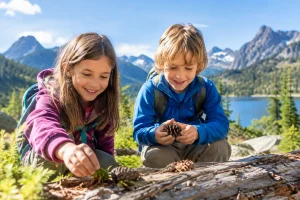
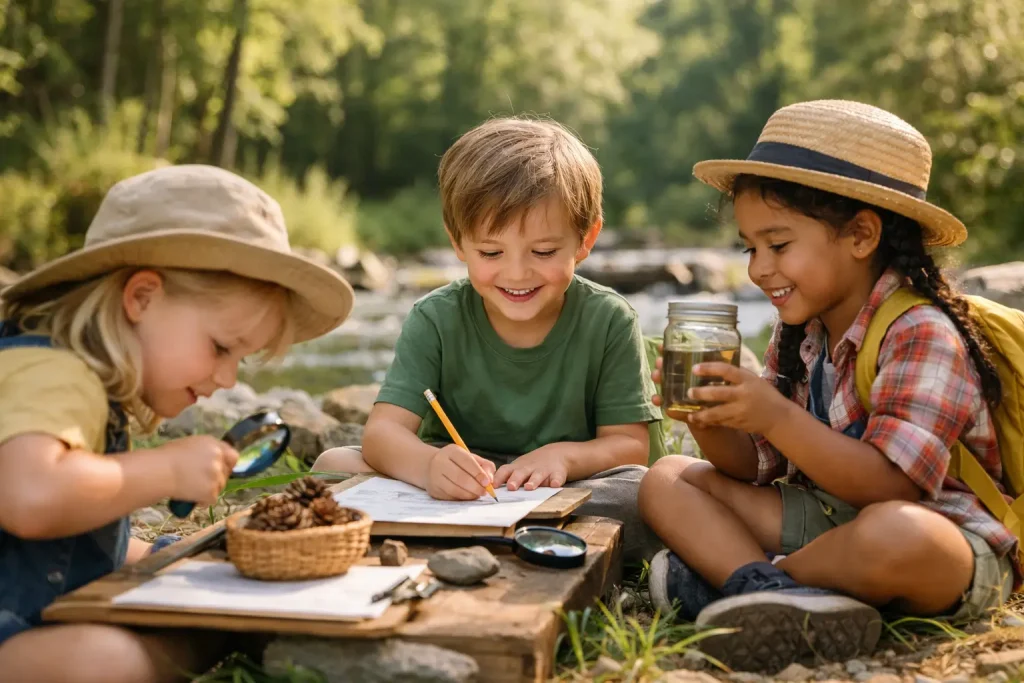
There is, of course, a place for early literacy and numeracy. Children benefit from hearing rich language, noticing patterns, counting objects, recognising sounds, and becoming familiar with books and mark-making. But the best outcomes usually come when these experiences are hands-on and joyful. A child tracing shapes in sand or counting pinecones is learning in a way that feels meaningful.
Social growth comes first more often than parents expect
One of the clearest signs that a child is becoming ready for kindergarten is not whether they can write their name neatly. It is whether they can be part of a group.
Nursery gives children daily opportunities to share space with others, wait for a turn, express frustration, listen to another point of view, and recover after a disagreement. These are big lessons for young children. They do not develop overnight, and they are not taught through correction alone. They grow through repetition, modelling, and patient guidance from trained adults.
A child entering kindergarten does not need perfect social skills. They do need some experience of belonging to a community beyond home. They need to recognise that other children have feelings and ideas too. They need to begin understanding boundaries, routines, and kindness. When these foundations are in place, children can participate more fully in classroom life.
This is also where mixed experiences can help. Group activities, shared projects, collaborative play, and outdoor games all create natural situations for communication and cooperation. For some children, this comes easily. For others, it takes time. A thoughtful nursery respects both.
Emotional security is a quiet kind of school readiness
Not every aspect of kindergarten readiness is visible in a photo or a progress chart. Emotional readiness often shows itself in quieter ways – a child separating more calmly, trying again after something goes wrong, or accepting gentle guidance from another adult.
Nursery supports this by creating secure relationships. When children feel known, they are more willing to explore. When they trust their teachers, they are better able to take small risks, whether that means speaking in a group, climbing something new, or attempting an unfamiliar activity.
This emotional base matters because kindergarten can bring bigger expectations. There may be longer group sessions, more complex tasks, and a larger social world to navigate. Children manage these changes more successfully when they have already learned that school is a safe place, that adults will help them, and that mistakes are part of learning.
Some children are naturally confident in new situations. Others need more time, especially if they are sensitive, cautious, or strongly attached to familiar routines. Good nursery preparation does not try to make every child the same. It helps each child build resilience in a way that matches their temperament.
Language, listening, and thinking skills develop through rich experiences
Kindergarten asks children to follow instructions, join conversations, understand stories, and express their ideas clearly. These abilities begin long before formal lessons. Nursery builds them through daily talk, songs, storytelling, questioning, and play.
When teachers speak with children rather than simply directing them, language grows. When children are encouraged to describe what they notice in the garden, explain how they built a tower, or predict what might happen in a story, they are developing thinking as well as vocabulary.
This is where a stimulating environment makes a real difference. Nature-based learning, sensory exploration, and purposeful materials invite children to observe closely and make connections. They learn words for texture, shape, weather, movement, feelings, and relationships. They begin to compare, classify, sequence, and problem-solve.
These are the building blocks of later literacy, mathematics, and inquiry. A child who can listen, notice, and talk with confidence is often better prepared than a child who has simply memorised a set of facts.
Physical development matters more than many people realise
Before children can sit comfortably, hold a pencil with control, or manage classroom tasks, they need strength, balance, and coordination. Nursery supports this through movement in all its forms.
Climbing, balancing, running, digging, carrying, threading, painting, and manipulating small objects all contribute to school readiness. Large movements build core stability and posture. Fine motor experiences strengthen the hands and fingers. Together, these help children become more comfortable with self-care and early writing tasks later on.
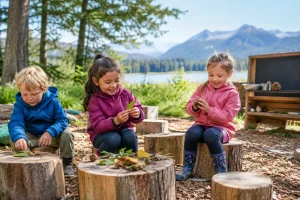
Outdoor learning is especially valuable here. It gives children room to test their bodies, judge space, manage manageable risk, and develop confidence through movement. For many children, being outside also improves focus and emotional regulation. They return to quieter activities more settled and ready to engage.
At Alpine Preschool, this balance between structured learning and expansive outdoor experience sits at the heart of the journey, helping children grow in both confidence and capability.
What parents can look for in a nursery environment
If you are choosing a nursery with kindergarten in mind, look beyond surface-level claims of school readiness. Ask how independence is encouraged. Notice whether children seem engaged, secure, and active rather than simply compliant. Observe whether teachers speak warmly and intentionally, and whether the environment offers both structure and discovery.
It also helps to ask how the setting approaches transitions. A child benefits when nursery is not treated as a holding stage, but as a purposeful foundation. Programmes that understand child development will know that readiness comes from a combination of routine, relationship, exploration, communication, and growing self-belief.
There is always some variation in how children mature. One child may show strong language early but need help with turn-taking. Another may be physically confident but slower to separate from a parent. A good nursery recognises those differences and prepares children as individuals, not as a checklist.
How nursery prepares for kindergarten without taking the magic out of childhood
Perhaps the most reassuring truth for parents is this: the best nursery preparation does not feel pressured. It feels alive. Children learn best when they are curious, secure, and given room to explore.
That means mud kitchens can matter as much as pencil grip. Story songs can matter as much as letter recognition. A caring routine, a trusted teacher, and time outdoors can be just as important as any formal school task. Kindergarten readiness is strongest when it grows from the whole child, not just the academic part.
If your child is in a nursery environment that nurtures independence, language, movement, kindness, and curiosity, they are already on a meaningful path. The next step will still bring change, and a little wobble is perfectly normal. But with the right foundation, kindergarten becomes less of a leap and more of a natural, confident progression.