
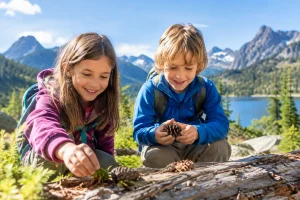
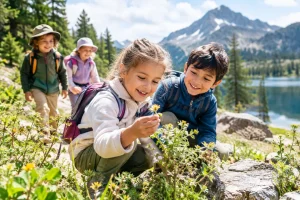
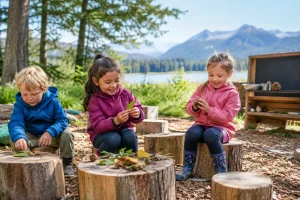
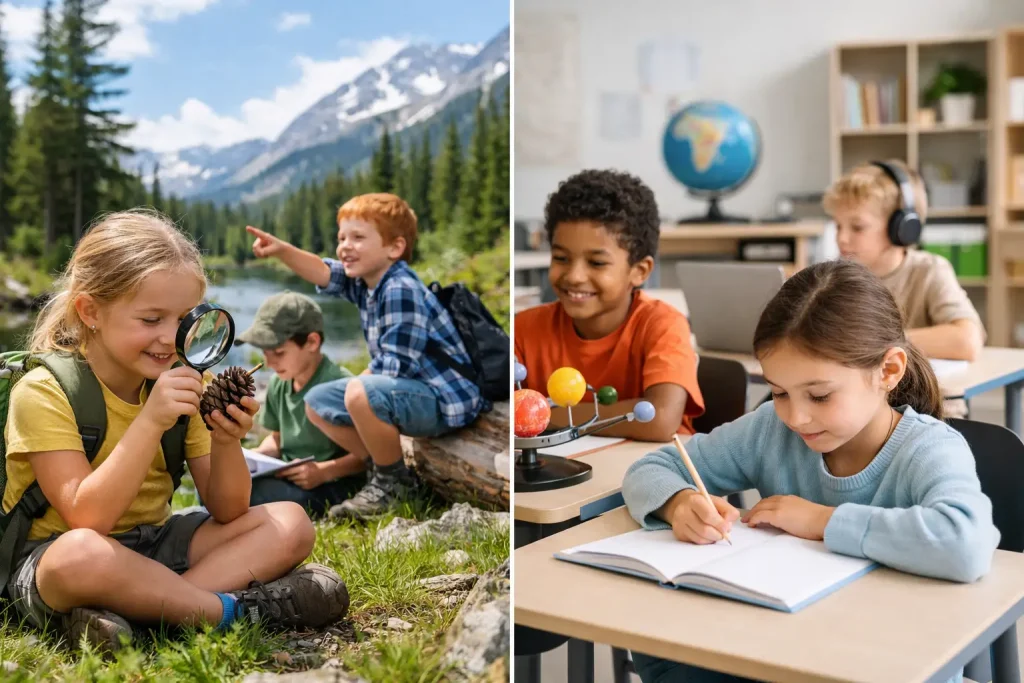
A child crouches beside a muddy patch, studying an ant trail with total concentration. Ten minutes later, that same child is indoors, matching picture cards, listening to a story, and learning to wait for a turn. This is the real heart of outdoor learning vs indoor learning – not which one is better in every situation, but how each setting shapes a different part of early childhood.
For parents choosing a preschool, the question often comes with understandable weight. You want your child to be safe, happy, well prepared for school, and surrounded by meaningful experiences. You also want more than a timetable filled with activities. You want an environment where curiosity is protected, confidence can grow, and learning feels joyful. When we look closely, outdoor and indoor learning are not rivals. They are most powerful when they work together.
Outdoor learning vs indoor learning: what is the real difference?
Indoor learning usually brings structure, predictability, and focused attention. It is where children often gather for stories, early literacy, guided art, number work, circle time, and quieter small-group activities. A well-planned classroom gives young children a sense of routine. That matters, especially in the early years, when emotional security supports cognitive growth.
Outdoor learning, by contrast, adds movement, space, sensory richness, and discovery. It gives children a chance to explore with their whole bodies. They climb, balance, dig, observe insects, notice weather, collect leaves, and test ideas in a living environment that changes from day to day. Nature does not present the same lesson twice, and that unpredictability can be deeply engaging for young learners.
The real difference is not simply location. It is the kind of learning experience each environment naturally encourages. Indoors often supports concentration and teacher-guided instruction. Outdoors often supports exploration, resilience, and open-ended thinking. Young children need both.
How indoor learning supports early development
Indoor spaces can be wonderfully rich when they are thoughtfully designed. For children aged 2 to 7, a calm and organised classroom helps build habits that will support later learning. They begin to recognise routines, follow instructions, care for materials, and take part in group activities with increasing confidence.
This setting is especially helpful for early language and foundational academic skills. Children can hear sounds more clearly during phonics work, focus on visual prompts, and sit with a teacher who can guide them step by step. If a child is learning to hold a pencil, identify patterns, or retell a story, an indoor environment often makes those moments easier to scaffold.
Indoor learning also supports children who need a gentler pace. Some children are highly sensitive to noise, heat, or busy movement. A cosy reading corner or a well-managed table activity can help them settle and participate without becoming overwhelmed. For younger children in particular, feeling secure is never separate from learning. It is part of it.
Still, indoor learning has limits. If children spend too long in one kind of setting, they may have fewer chances to move freely, test physical boundaries, or engage in sensory play on a larger scale. A classroom can support attention, but it cannot fully replace the developmental value of running, balancing, lifting, building, and exploring the natural world.
What outdoor learning offers that classrooms cannot
Outdoor learning invites children to think with their hands, feet, eyes, and imaginations all at once. That matters because young children are not designed to learn only by sitting still. They learn through doing, repeating, noticing, touching, questioning, and trying again.
When a child pours water into containers, they are not only playing. They are exploring volume, cause and effect, coordination, and problem solving. When they build with loose parts outdoors, they are learning to plan, negotiate, adapt, and persist. When they watch clouds or care for plants, they begin to understand sequence, change, responsibility, and wonder.
There is also a strong social and emotional dimension. Outdoor spaces tend to reduce pressure. Children often feel freer outside, which can make social interaction more natural. A child who is quiet indoors may become more expressive in the garden. A child with lots of energy may regulate more successfully after climbing, digging, or running. Fresh air and open space can support mood, confidence, and self-control in ways parents often notice quickly.
Physical development is another clear advantage. Core strength, balance, coordination, and body awareness all grow through active outdoor play. These are not extras. They support everyday learning, from sitting comfortably to using scissors with control.
Outdoor learning vs indoor learning for school readiness
Many parents ask a practical question: which approach prepares children better for primary school?
The honest answer is that school readiness is broader than early reading and number recognition. A child also needs to listen, communicate, adapt to routines, manage emotions, solve small problems, and cope with challenge. This is where the discussion around outdoor learning vs indoor learning becomes more nuanced.
Indoor learning can support readiness through focused teaching, classroom routines, and early academic foundations. Children learn to sit in a group, attend to instructions, and engage in more formal tasks. These are valuable skills.
Outdoor learning supports readiness differently. It helps children develop independence, resilience, attention restoration, and confidence in problem solving. A child who has learned to assess a climbing frame, work with others to move materials, or persist when a den collapses is building the mindset that future learning requires.
In other words, school readiness is not built in one room. It grows through varied experiences that strengthen both the mind and the child behind it.
Why the best early years settings use both
For most young children, the strongest model is not outdoor or indoor learning. It is the thoughtful combination of the two.
A balanced day allows children to move between guided and exploratory experiences. They might listen to a story indoors, then act it out outside. They may count objects at a table, then search for shapes and numbers in the environment around them. They might learn new vocabulary in class and then use it naturally while gardening, building, or observing insects.
This kind of rhythm respects how children actually learn. Knowledge becomes more meaningful when it is experienced in different contexts. A concept introduced by a teacher can be deepened through play. A discovery made outdoors can return indoors for reflection, drawing, discussion, or further investigation.
This is also where trained teachers make a real difference. Outdoor learning is not simply letting children run around, just as indoor learning is not simply asking them to sit quietly. Both environments need intention. The quality lies in how adults observe, guide, extend language, introduce challenge, and create a sense of safety without closing down curiosity.
In a well-designed early years setting, children do not feel pulled between two opposite methods. They experience one connected journey.
What parents should look for in practice
When visiting a preschool, it helps to look beyond labels. Many settings say they value play, nature, or holistic development, but the daily experience can vary greatly.
Look at how the environment is used. Is the outdoor area a meaningful learning space or simply a break area? Are there opportunities for messy play, physical challenge, imaginative exploration, and nature-based discovery? Indoors, is the classroom calm, engaging, and suited to young children rather than overly formal?
It is also worth noticing how teachers interact with children. Do they ask thoughtful questions? Do they encourage independence while offering reassurance? Do they seem confident guiding learning in both the classroom and the outdoor environment?
For families seeking a premium early years experience, this balance matters. At Alpine Preschool, for example, the value of expansive green spaces sits alongside structured learning and trained educators, creating a setting where children can flourish with nature while building strong foundations for the years ahead.
The choice is not either-or
The most reassuring answer for parents is often the simplest one. Young children do not thrive because everything happens indoors, and they do not thrive because every lesson is taken outside. They thrive when their world feels rich, safe, purposeful, and alive.
Some days a child needs the comfort of a calm classroom, a familiar song, and a teacher beside them. Other days they need grass under their shoes, wind on their face, and the freedom to turn a question into an adventure. Both experiences matter. Both shape the child.
If you are weighing different preschool environments, look for the place where learning feels complete – where structure and exploration, care and challenge, routine and wonder all have a place. That is where childhood keeps its magic, and where real growth quietly begins.