


The first weeks of playgroup can bring a surprising mix of excitement and uncertainty. Your child may be eager to explore a new garden, paint with their hands or follow another child towards the sand tray, then cling closely at drop-off the next morning. This parent guide to playgroup learning explains why both responses are a healthy part of beginning school, and how a thoughtful playgroup environment helps children grow at their own pace.
For many two-year-olds, playgroup is their first regular experience of being part of a wider community. It is not simply childcare or an early introduction to worksheets. It is a carefully supported stage where children learn through movement, sensory discovery, conversation, friendship and repetition. The most meaningful learning often looks wonderfully simple: filling a bucket, choosing a book, watering a plant or finding the confidence to say, “My turn.”
What Playgroup Learning Is Designed to Build
At this age, children learn with their whole bodies. They need to touch, carry, climb, pour, listen, imitate and try again. A high-quality playgroup uses these natural instincts as the starting point for early learning, rather than expecting young children to sit still for long periods or achieve academic tasks before they are ready.
The goal is not to rush childhood. It is to give children the secure foundations that make future learning feel possible and enjoyable. Through guided play, children begin to develop language, early thinking skills, coordination, emotional awareness and independence. They also discover that adults beyond their family can be trusted to listen, guide and care for them.
A structured programme matters here, but structure should feel reassuring rather than restrictive. Predictable routines such as arrival, circle time, snack, outdoor exploration, creative play and home time help children understand what comes next. Within that rhythm, they need room to make choices, follow curiosity and practise skills repeatedly.
A Parent Guide to Playgroup Learning: What Your Child May Experience
A child may not come home able to explain every part of their day. They might tell you they saw an ant, wore a funny hat or had a disagreement over a tricycle. These details are not small. They are often signs of rich learning in action.
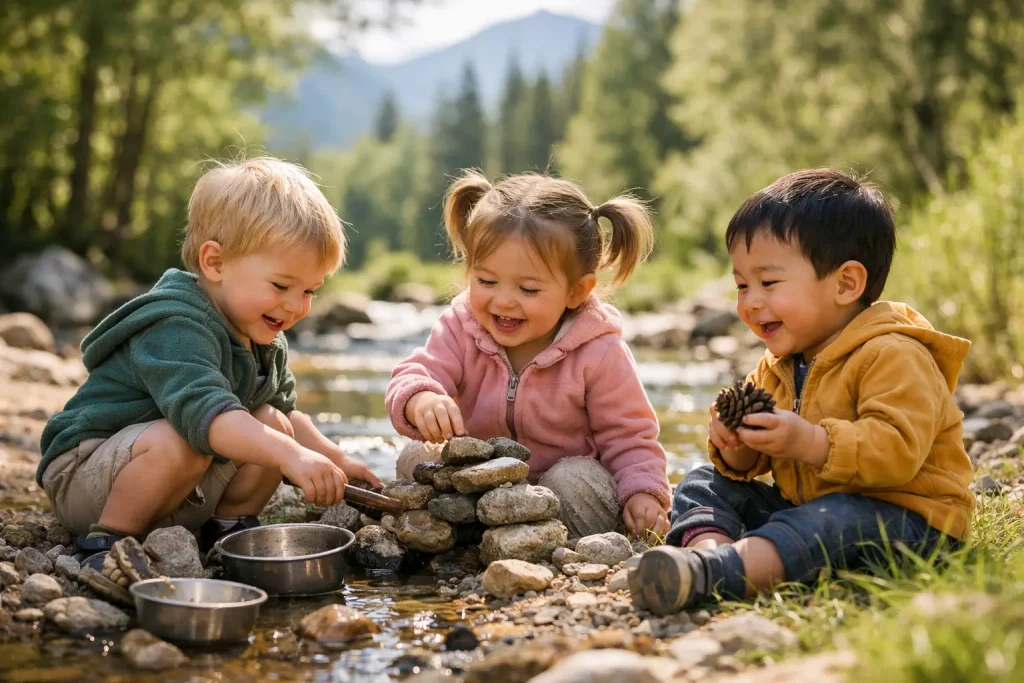
During imaginative play, children experiment with language and social roles. A pretend café or home corner gives them opportunities to negotiate, listen and express ideas. When building with blocks, they explore balance, size, problem-solving and perseverance. At the water tray, they notice cause and effect while strengthening the small hand movements that will later support drawing and writing.
Creative activities have value beyond the finished painting. Mixing colours, pressing clay, tearing paper and making marks allow children to develop sensory confidence and fine motor control. There is no need for every creation to look recognisable. At playgroup age, the process is where much of the learning happens.
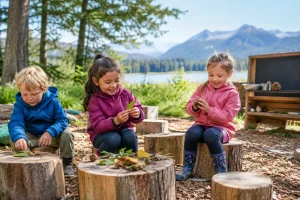
Outdoor time is equally purposeful. Green spaces invite bigger movement, fresh observations and a healthy sense of adventure. Running on grass, balancing on natural surfaces, collecting leaves and listening for birds support physical development while encouraging children to look closely at the world around them. Nature also offers a gentle lesson in care: a flower cannot be hurried to grow, and a tiny creature needs careful hands.
The best playgroup settings balance free exploration with intentional guidance. Teachers observe closely, then extend learning with the right question, material or invitation. If a child is fascinated by rolling objects down a slope, an educator may introduce different-sized balls, language such as fast and slow, or a shared game with friends. This is play with purpose.
The Social Learning That Happens Between Activities
Playgroup is often a child’s first opportunity to practise friendship in a regular group. This does not mean every child will immediately play alongside others with ease. Some will watch first. Some will prefer one familiar friend. Others may join in enthusiastically but find sharing difficult when emotions run high.
All of this is expected. Young children are learning that other people have needs, ideas and feelings of their own. They need calm adults who can name emotions, model kind language and guide them through small conflicts without shame. Over time, a child begins to understand that waiting can lead to a turn, that words can replace grabbing, and that a friend who is upset may need comfort.
Cultural awareness also begins in these early encounters. A warm, inclusive group introduces children to different family traditions, languages, foods and ways of celebrating. When diversity is part of everyday play and conversation, children learn that difference is natural, interesting and worthy of respect.
How to Support Playgroup Learning at Home
Parents do not need to recreate school at the kitchen table. In fact, too many planned activities can leave a young child overstimulated. The most helpful support is often a calm home rhythm where your child has time to talk, play and rest.
Ask gentle, specific questions after playgroup. “What did you enjoy outside?” may be easier to answer than “What did you do today?” If they do not want to talk, that is fine too. Children often process a busy day through quiet play, repeated stories or a few unexpected comments at bedtime.
You can build continuity by noticing everyday learning together. Sorting socks, carrying fruit, stirring batter, singing familiar songs and looking for shapes on a walk all develop useful skills. Reading together each day remains one of the loveliest ways to grow vocabulary, attention and closeness. Let your child turn pages, point to pictures and choose favourite books again and again.
Consistency around sleep, meals and morning preparation also makes a difference. A rushed goodbye can make separation harder, while a short, confident routine gives children a clear message: you are safe, your teacher will care for you, and I will return. Avoid slipping away without saying goodbye, even if it seems easier in the moment. Trust grows when your child sees that your words and actions match.
When Settling In Takes Longer
There is no single timetable for settling into playgroup. A child who appears confident at first may become tearful after several days, once they realise the routine is continuing. Another may cry at drop-off yet settle quickly after a few minutes of play. Neither pattern tells the whole story.
What matters is steady partnership between home and school. Share useful information with teachers, such as changes in sleep, a new sibling, worries at home or a particular comfort item. In return, ask what helps your child settle once you have left. A familiar song, a preferred outdoor activity or a job such as carrying napkins to the table can offer a positive focus.
It is worth seeking further guidance if distress remains intense over a sustained period, if your child is unable to engage at all, or if you notice a marked change in eating, sleep or behaviour. A caring school will take these concerns seriously and work with you on a supportive plan. The answer may be more gradual transitions, greater routine consistency or simply time, depending on the child.
Choosing a Playgroup That Feels Right
When visiting a playgroup, look beyond bright displays and polished facilities. Notice how the adults speak to children. Are they at the child’s level? Do they offer comfort without dismissing feelings? Are children encouraged to explore safely, make choices and care for one another?
Ask how the daily rhythm balances indoor and outdoor learning, how teachers observe development, and how families are kept informed. A purpose-built environment, trained educators and access to nature can make a meaningful difference, especially when these features are part of a clear early years approach rather than occasional extras.
At Alpine Preschool, playgroup children are welcomed into a nurturing first school experience shaped by creativity, curiosity and meaningful outdoor discovery. For families in Johor Bahru, a setting with space to move, explore and belong can help make those early separations feel less daunting and those first discoveries even more joyful.
Your child does not need to arrive at playgroup knowing how to share perfectly, hold a pencil correctly or join every activity. They need patient guidance, familiar routines and the freedom to be wonderfully two. With those foundations in place, each small step – a brave goodbye, a muddy handprint, a new friend – becomes part of a childhood where learning feels safe, magical and full of possibility.