

A child carefully sorting leaves by size, retelling a story in sequence, or setting the table for a pretend picnic is doing far more than keeping busy. These small, meaningful moments build the language, memory, reasoning and confidence often associated with left brain development preschool learning. For young children, the best preparation is not pressure to perform. It is a joyful, well-planned environment where thinking has a purpose.
What a left brain development preschool should mean
Parents often hear the term “left brain development” used to describe skills such as logic, language, numbers, sequencing and analytical thinking. It can be a useful shorthand, but children do not learn with one half of the brain in isolation. Their brains develop through connected experiences: movement supports attention, emotions affect memory, and imagination gives meaning to new knowledge.
A thoughtful left brain development preschool therefore does not turn early childhood into a worksheet-filled race. Instead, it gives children repeated chances to notice patterns, follow a sequence, make a plan, listen carefully and explain what they have discovered. These are foundational skills for later reading, writing, mathematics and independent learning.
The difference matters. A child who can recite numbers without understanding quantity may appear advanced, yet still need more hands-on experience. A child who counts stones while building a pathway outdoors is connecting number words to real objects, testing ideas and learning through the senses. Both have a place, but meaningful experience makes learning more secure.
The skills that grow through everyday play
Structured, play-based learning can strengthen cognitive skills without taking away the wonder of childhood. The key is intentional teaching. Trained educators observe what children can already do, offer the right level of challenge, and know when to step back so a child can try independently.
Language and communication
Language is central to thinking. When children describe how they built a tower, predict what might happen in a story, or negotiate roles in the home corner, they are finding words for ideas. Rich conversation develops vocabulary, listening and the ability to organise thoughts.
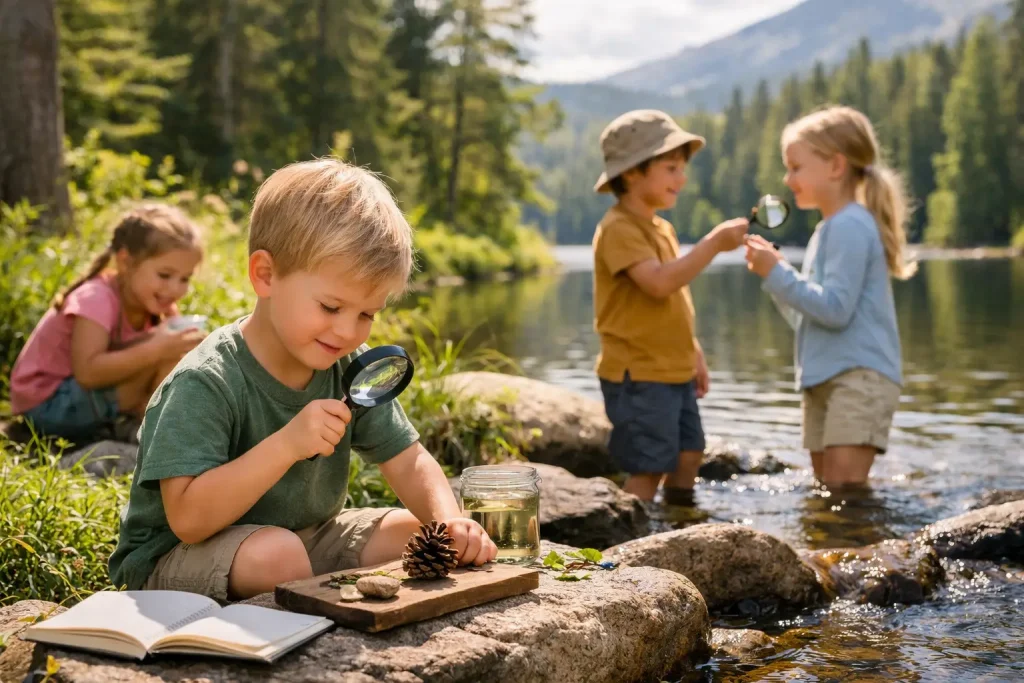
At preschool age, this does not need to look formal. A teacher might ask, “What did you notice?” rather than supplying an answer. During a nature walk, children can compare rough bark with smooth leaves, learn precise descriptive words, and later draw or dictate what they remember. These gentle exchanges strengthen comprehension while keeping curiosity alive.
Early maths and logical reasoning
Early mathematical thinking begins with comparison, pattern and quantity. Children learn it when they sort buttons, share snack pieces fairly, build symmetrical shapes, measure water in containers or decide which route will make a toy car travel furthest.
Purposeful activities give numbers a real job. Rather than simply memorising a sequence, children begin to understand more, less, equal, before and after. They also learn that mistakes are information. If a bridge falls, they can consider why, alter the design and test it again. That process builds reasoning, perseverance and confidence together.
Memory, sequencing and attention
Daily routines are quietly powerful. Hanging up a bag, washing hands, choosing an activity, tidying resources and preparing for home time all ask children to remember steps and manage their attention. Predictable routines also help children feel secure, which makes it easier for them to participate and learn.
Creative projects offer another natural route. Following a simple recipe, planting seeds or making a class book involves remembering an order, listening for instructions and seeing a task through. Younger children may need picture prompts and adult support; older children can begin to plan the steps themselves. This gradual progression respects individual readiness.
Why nature belongs in cognitive learning
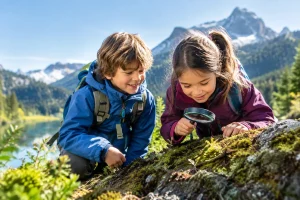
A calm classroom has value, but thoughtful learning should not be confined to a table. Green outdoor spaces offer real problems for young minds to solve. How many sticks are needed to make a shelter? Which leaf is largest? What changes after rain? How can we carry water without spilling it?
Outdoor learning also brings variety to sensory experience. Children see, touch, hear and move as they investigate, helping ideas become more memorable. A child who has watched a seed sprout has a richer understanding of growth than one who has only seen a picture. A child who sorts natural objects by colour, texture or shape is using classification skills in a way that feels like discovery.
This is not an argument against focused indoor learning. Children benefit from both. A well-designed preschool day moves naturally between active exploration, small-group discussion, creative work, stories, meals, rest and quiet concentration. The balance depends on the child, the activity and the developmental stage.
Structure without stealing the joy
Some parents worry that a focus on cognitive development will make preschool feel too academic. Others worry that play alone may not prepare their child for primary school. The most nurturing answer sits between these concerns.
Children need freedom to choose, invent and explore. They also need caring adults who introduce new language, set clear expectations and provide activities with a learning intention. Structure gives children a reassuring framework; play gives them ownership within it.
For a two-year-old, this might mean matching familiar objects, joining in with action songs and learning to wait briefly for a turn. For a child approaching seven, it may include recognising patterns, writing meaningful marks or words, retelling a sequence and taking responsibility for a group task. Neither stage should be rushed. Development is uneven, and a child may be confident with numbers while still needing support to express feelings or join a group.
What parents can look for in a preschool
When visiting a setting, look beyond displays of completed work. Notice how teachers speak with children. Are they extending a child’s thinking with warm questions? Are materials within reach, so children can make choices and practise independence? Is there time to explore outdoors as well as areas for books, construction, art and quieter work?
A strong programme should make its developmental pathway clear. Families deserve to understand how playgroup, nursery and kindergarten experiences build on one another, and how educators recognise progress without reducing children to scores. Ask how the school supports language, early maths, social confidence and self-help skills. These areas are closely connected.
It is also worth asking how teachers respond when a child finds something difficult. The goal is not to remove every challenge. It is to offer encouragement, sensible support and enough time for a child to try again. This is where resilience becomes part of learning.
Bringing purposeful learning home
Home does not need to become a second classroom. Everyday life already offers wonderful opportunities for logical thinking and language. Invite your child to help pair socks, count fruit for a picnic, spot patterns on a walk, describe how to make their favourite sandwich, or put photos from a special day in order.
Keep the conversation light and follow their interest. If they are absorbed in dinosaurs, buses, baking or bugs, use that enthusiasm as a starting point. Ask one thoughtful question, wait for their answer and allow room for an unexpected idea. Children learn that their thinking matters when adults listen with genuine attention.
At Alpine Preschool, children are given space to flourish with nature while building the steady foundations that support their next steps. The most valuable early learning experience is one where a child feels safe to wonder, capable of trying, and proud to say, “I worked it out.”