

A child crouching beside an ant trail, asking why puddles disappear, or turning a cardboard box into a rocket is doing more than playing. They are testing ideas, noticing patterns and building the confidence to ask another question. For parents wondering how to encourage curious learning, the most powerful starting point is not a worksheet or a perfect answer. It is an environment where children feel safe to wonder, try and sometimes get things wrong.
Curiosity is a natural part of early childhood, particularly between ages two and seven. It grows when children have time, attentive adults and meaningful experiences that invite them to use their hands, senses and imagination. A thoughtful routine can give young children the security they need while leaving room for unexpected discoveries.
Begin with the questions your child already asks
Young children often ask questions in quick succession: “Where does the moon go?”, “Why is that leaf brown?”, “Can fish sleep?” It can be tempting to provide an immediate explanation, especially during a busy morning. Yet a question can become even more valuable when it opens a conversation.
Try responding with interest before supplying an answer. “That is a wonderful question. What do you think?” gives your child permission to form a theory. You might look closely together, draw what you notice or return to the question later after observing the world around you. The aim is not to make every moment into a lesson. It is to show that their ideas deserve attention.
There are times when children need a clear, simple answer, particularly around safety or feelings. Curiosity does not mean withholding guidance. It means making space for children to think alongside the adult who is guiding them.
Use language that keeps exploration moving
Small changes in adult language can make a real difference. Instead of saying, “That is not how it works,” try, “I can see what you were trying. Shall we find another way?” Rather than praising only a finished drawing, notice the process: “You mixed those colours carefully and kept trying when the brush slipped.”
This kind of feedback helps children understand that effort, observation and revision matter. It also reduces the pressure to produce the ‘right’ result. When children are not worried about being incorrect, they are more willing to experiment.
Create a home environment that invites discovery
You do not need a house full of expensive educational toys to nurture a curious learner. In fact, too many choices can sometimes make it harder for a young child to settle into meaningful play. A few open-ended materials, kept within reach, often inspire deeper exploration.
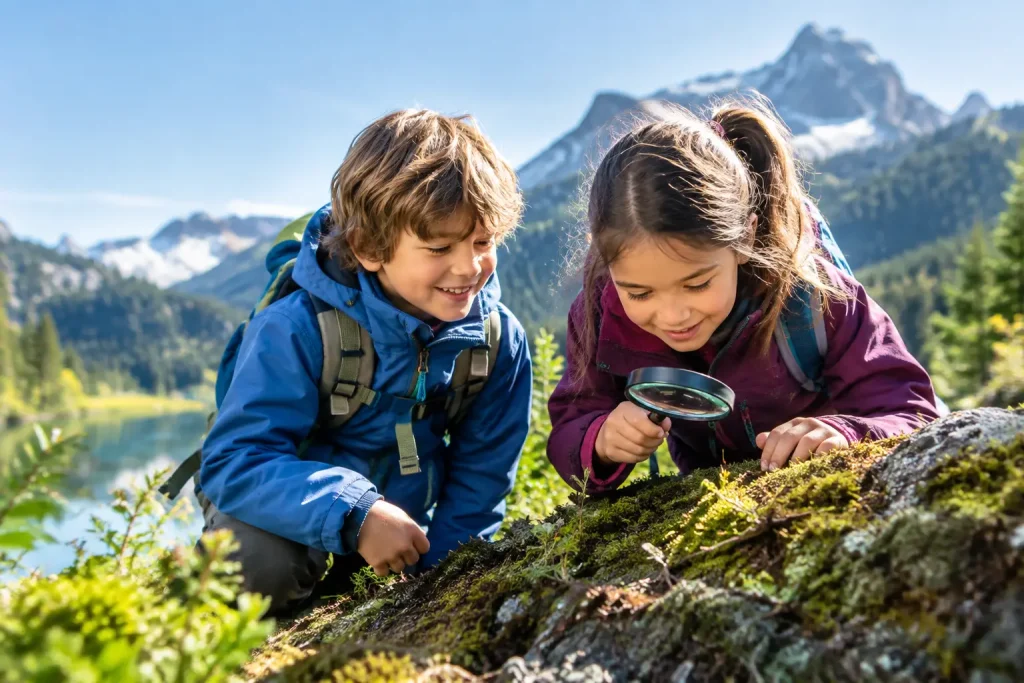
Blocks, recycled boxes, fabric scraps, crayons, picture books, shells, magnifying glasses and simple containers can be used in countless ways. A child may sort buttons by size one day, turn them into ingredients for an imaginary café the next, and use them to decorate a cardboard creature later in the week. Each activity develops different thinking skills without needing a fixed outcome.
Rotate materials rather than putting everything out at once. When a familiar basket returns after a short break, children often see it with fresh eyes. It is also helpful to leave their creations undisturbed when possible. A half-built city or a collection of carefully arranged stones may represent an ongoing investigation, not a mess to be cleared straight away.
Let nature provide the prompts
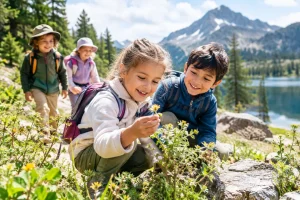
Outdoor experiences offer a rich, ever-changing classroom. A garden, neighbourhood walk or local park can introduce children to texture, movement, weather, sound and living things. The best discoveries are often small: a snail trail on a wall, seeds spinning in the wind, a shadow changing shape as the afternoon passes.
Give your child time outdoors without rushing from one activity to the next. Bring a small bag for safe treasures such as fallen leaves or seed pods, then examine them together at home. Notice the smell of wet soil after rain or listen for different birds. These sensory experiences build vocabulary, but more importantly, they make learning feel real and memorable.
Outdoor learning also involves sensible boundaries. Teach children which plants and creatures should be observed rather than touched, and stay close where roads, water or uneven ground are involved. Freedom is most meaningful when children understand the safe limits around it.
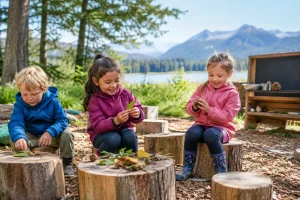
At Alpine Preschool, nature-connected experiences and outdoor classrooms help children see that learning is not confined to a table. The same principle can be carried into family life through unhurried walks, gardening and everyday noticing.
Protect time for deep play
Play is how young children rehearse ideas about the world. When they pretend to run a shop, build a bridge or care for a toy animal, they are practising language, planning, empathy and problem-solving. Adult-led activities have their place, but a day filled only with instructions leaves little room for children to follow their own thinking.
Try to protect a period of unstructured play each day, particularly after nursery or kindergarten. Some children need quiet time with puzzles or drawing; others need energetic outdoor movement before they can focus. It depends on the child, their age and how stimulating their day has already been.
During play, observe before stepping in. If a tower falls, pause. Your child may be about to adjust the base, ask for help or decide to build something entirely different. Intervening too quickly can unintentionally communicate that adults hold the solutions. Being nearby, interested and available is often enough.
Welcome manageable challenges
Curious learning needs a little productive struggle. A child who is never challenged may lose interest, while a task that is far too difficult can lead to frustration. Look for the middle ground: a puzzle with one or two tricky pieces, a recipe that involves measuring, or a den-building project that requires teamwork.
Offer just enough support for your child to continue. You might hold the tape while they position the cardboard, or ask whether a wider base would help the block structure stand. Then step back again. Each successful attempt strengthens independence and the belief that challenges can be approached calmly.
Make everyday routines more interesting
Curiosity does not require separate ‘learning time’. The kitchen, bath and journey to school are full of opportunities for observation. Let children help wash vegetables and notice which items float or sink. Count out socks while sorting laundry. Compare the sounds made by rain on a window and water in the bath.
Involve children in real responsibilities too. Watering plants, setting the table and feeding a pet can encourage care, sequencing and a sense of capability. The task may take longer than doing it yourself, but that slower pace is often where learning happens.
Reading together remains especially valuable. Choose stories that invite discussion, not only books designed to teach a specific fact. Pause to wonder what a character might do next, ask how an illustration makes your child feel, or let them retell the story in their own words. Re-reading favourites is not a lack of progress. Familiar stories allow children to notice new details and build confidence with language.
Encourage curiosity without turning it into pressure
Parents naturally want to support their child’s development, but curiosity fades when every interest becomes a performance. If your child loves dinosaurs, they do not need to memorise long names or complete a themed activity sheet every day. They may simply want to stomp, draw footprints and ask whether dinosaurs had families.
Follow their enthusiasm while keeping expectations light. Celebrate questions more than quick answers, and avoid comparing their progress with siblings or friends. Children develop in different patterns. A child who watches quietly before joining an activity may be deeply curious, even if they are not the first to speak.
It is equally helpful to model your own curiosity. Say, “I do not know, but we can find out,” when an unfamiliar question arises. Share small observations: “I wonder why the sky looks pink tonight.” Children learn that curiosity belongs to everyone, not just to people who already know a great deal.
The most lasting gift is not a child who can answer every question. It is a child who feels joyful, capable and safe enough to keep asking them. Give them time to wonder, a caring adult who listens, and a world they are welcome to explore. Their curiosity will have somewhere wonderful to grow.