


A child who can recite the alphabet but falls apart at goodbye is not necessarily more ready for school than a child who still muddles a few letters but can listen, join in and try again after a wobble. That is why school readiness for age five is often misunderstood. It is not a race to early worksheets or a checklist of impressive party tricks. It is a fuller picture of how a child copes, connects, communicates and grows.
For many parents, the question sits quietly in the background for months: Will my child be ready? It is a reasonable concern, especially when every child develops at a different pace. The reassuring truth is that readiness is not about perfection. It is about having enough emotional, social, physical and early learning foundations to step into school life with confidence.
What school readiness for age five really means
At five, children are still very young. They are learning how to be part of a group, how to express needs clearly, how to wait, how to manage small frustrations and how to recover when something feels unfamiliar. These skills matter deeply in a classroom.
Academic knowledge plays a part, but it is only one part. A school-ready child may recognise some letters, notice numbers in everyday life and enjoy books, songs and conversation. Just as importantly, they can begin to follow simple routines, listen to instructions, take turns and separate from a parent or carer without overwhelming distress.
This is where many families feel pressure. They hear about children reading early or completing pages of written work and wonder whether they are behind. In reality, strong early childhood settings know that children flourish when learning is built on secure foundations. Curiosity, language, independence and emotional steadiness often predict a smoother start than memorised facts alone.
The signs of school readiness at five
There is no single test for readiness, and there should not be. Children develop unevenly. A child may be wonderfully sociable but still need support with pencil control. Another may love numbers yet struggle to share space with peers. That is normal.
Still, there are some common signs parents can look for. A child is often moving towards readiness when they can manage simple personal tasks such as washing hands, using the toilet with little help, opening a lunch container or putting on shoes with some encouragement. These small acts build confidence and reduce stress during the school day.
Language is another key part. A five-year-old does not need polished speech, but they do need enough language to ask for help, join a conversation and understand simple instructions. Children who have rich opportunities to talk, listen, sing, question and tell stories are developing the tools they need for classroom learning.
Attention also matters. This does not mean sitting perfectly still for long periods. It means being able to focus for short stretches, shift between activities and return to a task with adult guidance. In a good early years environment, this grows through purposeful play, movement, stories, hands-on activities and routines that feel safe and predictable.
Social and emotional readiness may be the most overlooked piece. Can your child cope when they do not win? Can they wait briefly? Can they begin to recognise feelings in themselves and others? Can they accept comfort from a trusted adult at school? These are not minor details. They shape how a child experiences every part of the day.
Why early academics are not the whole story
It is tempting to measure readiness by visible academic milestones because they are easier to spot. A child who writes their name neatly or counts to 100 can seem obviously prepared. Yet school life asks children to do far more than demonstrate knowledge.
They need to enter a shared space, respond to routines, work with different personalities and cope when things do not go to plan. They need resilience when an activity feels difficult and confidence to have a go without fear of getting everything right first time.
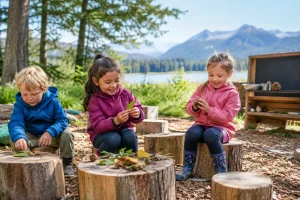
This is why play-based learning remains so powerful in the early years. Through imaginative play, construction, outdoor exploration, sensory experiences and guided group activities, children practise problem-solving, language, cooperation and self-regulation in ways that are natural and meaningful. They are not merely being kept busy. They are building the architecture for later learning.
There is also a trade-off to consider. Pushing formal academics too early can sometimes produce short-term performance while missing the broader developmental base. Children may learn to complete tasks on paper yet still find it hard to think independently, manage emotions or stay engaged. A balanced approach tends to serve children better over time.
How to support school readiness for age five at home
Parents do not need to recreate a classroom at the kitchen table. In fact, most children benefit more from steady routines, conversation and everyday responsibility than from excessive formal drilling.
One of the most valuable things you can do is build independence into ordinary moments. Let your child carry their bag, tidy toys, choose between two outfits, pour water carefully or help prepare a snack. These experiences strengthen motor skills, decision-making and self-belief.
Reading together remains one of the best ways to support readiness. Not because every child must become an early reader, but because shared books grow vocabulary, listening, imagination and comprehension. Pause to ask what they think will happen next. Notice sounds, rhymes and repeating words. Let stories be pleasurable, not performative.
Talk often and talk well. Describe what you see on a walk. Ask open questions. Encourage your child to explain ideas in their own words. Children develop language through real interaction, especially when adults slow down enough to listen properly.
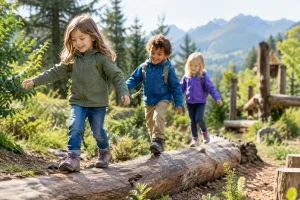
Physical development deserves attention too. Climbing, balancing, digging, painting, threading, building and playing outdoors all support coordination and body awareness. These foundations help with sitting posture, pencil grip, stamina and confidence in movement. Children who have space to move often arrive at classroom tasks more ready than children who have spent long periods only doing seated work.
Routine is another quiet hero. Predictable mornings, mealtimes, sleep habits and transitions help children feel secure. If starting school is approaching, practise small routines such as packing a bag, putting on shoes independently and saying goodbye calmly.
When a child is bright but not quite ready
Some children are intellectually curious well before they are emotionally ready for the demands of a larger group setting. Others are socially confident but need more time with speech, concentration or self-care. Readiness is rarely all-or-nothing.
If you feel your child is advanced in one area and less settled in another, that does not mean something is wrong. It simply means support should be thoughtful. The best early years environments recognise the whole child rather than pushing every child through the same narrow gate.
This is where high-quality preschool can make an enormous difference. In a nurturing setting with trained teachers, clear routines and meaningful play, children can strengthen the areas they need most without losing their natural joy in learning. A carefully planned environment helps them grow in confidence while still protecting the wonder of childhood.
For many families, this balanced preparation is exactly what they are seeking. At Alpine Preschool, for example, structured learning is paired with outdoor exploration, sensory discovery and child-centred experiences so that readiness is developed in a way that feels grounded, joyful and developmentally sound.
Choosing the right environment before primary school
If you are weighing up preschool or kindergarten options, it helps to look beyond surface impressions. A polished classroom is lovely, but the deeper question is how children are guided through the day.
Notice whether teachers speak to children with warmth and respect. Look for routines that are calm rather than rigid. Ask how the setting supports communication, friendships, independence and emotional regulation, not only literacy and numeracy. Children need challenge, but they also need space to explore, ask questions and feel safe enough to make mistakes.
Outdoor learning can be especially valuable at this age. Nature-rich environments invite movement, observation, cooperation and wonder. Children test ideas physically as well as mentally. They dig, sort, balance, compare, imagine and notice change. These are rich learning experiences, not extras.
It also helps to remember that the right setting depends on the child. Some children thrive in busy, highly social spaces. Others need a calmer transition with more reassurance. School readiness is not just about preparing the child for school. It is also about choosing an environment ready to meet the child well.
Every parent wants to know that their child will cope, belong and flourish. That begins not with pressure, but with patient preparation, thoughtful teaching and trust in how children grow. At five, readiness is less about being ahead and more about being steady enough to begin with confidence, curiosity and a sense of joy.