
Choosing a kindergarten can feel strangely high-stakes. One school promises strong academics, another highlights creativity, and a third offers beautiful classrooms that look impressive on a tour. If you are wondering how to compare kindergarten programmes in a way that goes beyond polished brochures, the key is to look at what your child will actually experience each day.
A good comparison is not about finding the school with the longest list of activities. It is about finding the programme that fits your child’s stage of development, your family’s values, and the kind of early years experience you want to build. Some children need a gentle, confidence-building start. Others are ready for more structure and challenge. Most need both care and thoughtful teaching.
How to compare kindergarten programmes without getting overwhelmed
Start by narrowing your focus. Parents often compare schools by surface details first – fees, facilities, location, class size. These matter, of course, but they only tell part of the story. A programme can have attractive rooms and still miss what children truly need to flourish.
The better approach is to compare five things together: the curriculum, the teaching team, the daily rhythm, the learning environment, and the school’s view of child development. When you look at these areas side by side, patterns appear quickly.
Ask yourself a simple question at each school: what kind of child is this programme designed to nurture? Some settings are heavily academic from the start. Some are almost entirely free play. Some aim for a more balanced path, combining structured learning with hands-on exploration, movement, outdoor discovery and social development. None of these approaches is automatically right for every child. What matters is whether the school’s method is intentional, consistent and age-appropriate.
Look past labels and study the curriculum
Many schools use appealing phrases such as play-based, holistic or child-centred. These can mean something thoughtful, or they can be used very loosely. Rather than relying on labels, ask what children are actually learning and how that learning is planned.
A strong kindergarten curriculum should show progression. Children should not simply repeat pleasant activities each week. They should build confidence in language, early numeracy, communication, problem-solving, self-help skills and emotional regulation over time. If a school offers stages that reflect developmental milestones, that is often a good sign. It suggests the programme has been designed with growth in mind rather than convenience.
At the same time, be careful of programmes that push formal academics too early. Early childhood education should prepare children for school, but preparation is not the same as pressure. Young children learn deeply through sensory play, storytelling, movement, music, conversation, nature experiences and purposeful routines. Worksheets may look reassuring to adults, but they are not always the best measure of meaningful learning.
When comparing curricula, ask how literacy and numeracy are introduced. Are children memorising in isolation, or are they learning through experiences that build understanding? A child who measures leaves in the garden, retells a story confidently, sorts objects by size and solves small social challenges is learning in a rich and lasting way.
Teaching quality changes everything
Even the best curriculum lives or dies by the adults delivering it. This is one of the most important parts of how to compare kindergarten programmes, because teaching quality shapes not only learning outcomes but also a child’s sense of safety and belonging.
During a visit, watch how teachers speak to children. Is the tone warm, respectful and calm? Do adults kneel to a child’s level, listen properly and guide behaviour with patience? Or do you see a rushed, controlling atmosphere where children are managed more than taught?
Well-trained educators do more than supervise. They observe, respond, extend children’s thinking and know when to step in or step back. They understand that a child building with blocks may be learning persistence, spatial awareness and cooperation at the same time. They know that a meltdown before lunch is not simply bad behaviour but often a sign of hunger, tiredness or an undeveloped regulation skill.
It is also worth asking about teacher continuity and professional development. Young children form strong attachments, and constant staff turnover can unsettle them. A school that invests in its teachers usually creates a more secure and consistent environment for children as well.
The daily rhythm tells you what the school values
A timetable reveals more than a prospectus. Look closely at how the day flows. Is there a healthy balance between guided learning, free exploration, outdoor play, rest and social time? Or does the routine feel packed, rushed or overly sedentary?
Children in kindergarten need rhythm. Predictable routines help them feel secure, but the best routines also leave room for curiosity and movement. A strong programme might include circle time, small-group learning, creative work, outdoor discovery, snack, imaginative play and reflection. That variety matters because young children do not learn well by sitting still for long stretches.
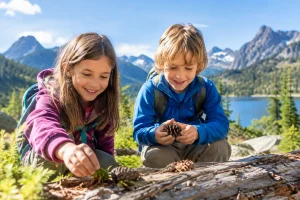
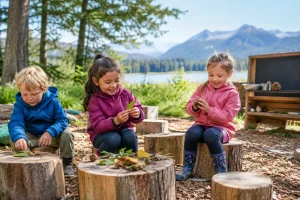
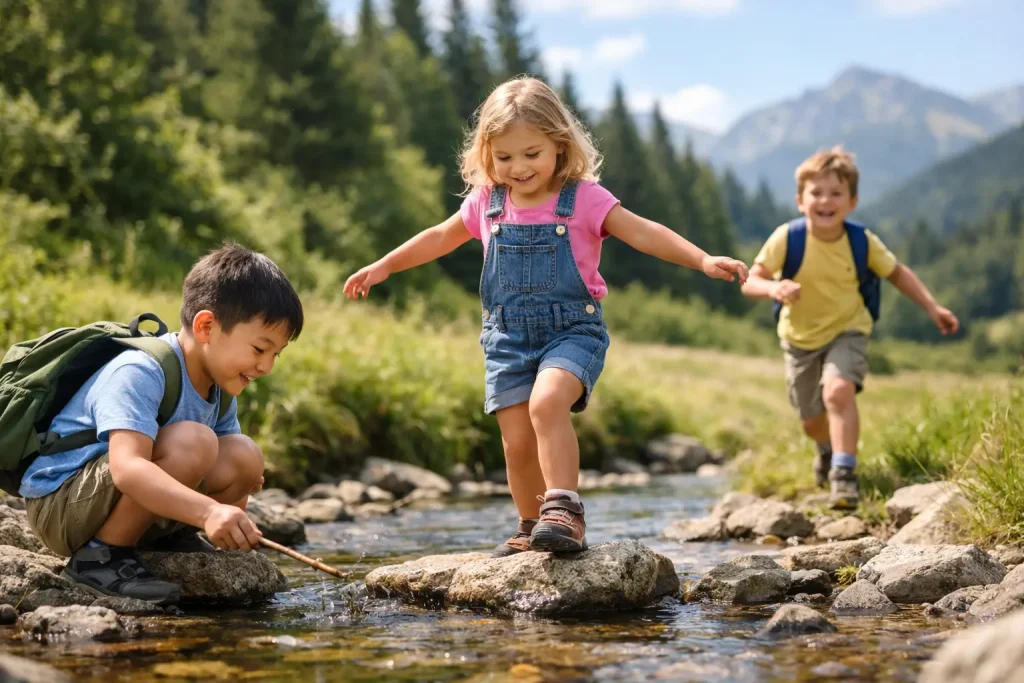
Outdoor time deserves particular attention. Nature-connected learning supports physical confidence, sensory development, emotional wellbeing and curiosity. Mud, water, trees, open-ended loose parts and space to move are not extras. They are part of a rich early years education. If a school mentions outdoor learning, ask whether it is a genuine part of the programme or simply occasional playtime.
For families in areas such as Johor Bahru, where warm weather can support regular outdoor experiences, this can be a meaningful point of difference when comparing premium kindergarten options.
Environment matters, but not in the way you might think
Beautiful spaces are lovely, but children do not need a showroom. They need an environment that feels inviting, organised and alive with purposeful learning.
Look for classrooms where materials are accessible, children’s work is displayed with care and spaces are designed for different kinds of activity. There should be places to read quietly, build, create, explore and gather together. Outdoor spaces should feel safe and stimulating rather than purely decorative.
A purpose-built campus can be a real advantage if it supports the programme well. Wide outdoor areas, shaded play zones, child-sized furniture and thoughtfully arranged learning corners all contribute to how children move, focus and interact. But environment should always serve the learning philosophy, not distract from it.
Compare outcomes, not promises
Every school says it helps children grow. Ask what that growth looks like in practice. A good kindergarten should be able to explain how children typically develop across the year – socially, emotionally, physically and cognitively.
You might hear about children becoming more independent with routines, more confident in speaking, more able to cooperate in groups, more curious about the world, or more prepared for the transition into primary school. These are meaningful outcomes. They reflect the whole child, not just a narrow academic score.
It also helps to ask how the school communicates progress to families. Do parents receive thoughtful feedback, examples of learning and clear observations? Or is communication limited to occasional updates and photographs? Families should feel included in the journey, not kept at the gate.
Pay attention to fit, not just reputation
A highly regarded school is not automatically the best choice for your child. Some children thrive in lively, highly social environments. Others need a calmer setting with more reassurance. Some families want stronger school-readiness goals. Others place equal value on creativity, kindness and outdoor exploration.
This is where honesty helps. If your child is still developing confidence, an intense programme may not be the right match yet. If your child is eager, verbal and ready for challenge, a setting with no structure at all may feel under-stimulating. The right kindergarten should stretch a child gently, not force them to adapt too quickly.
Parents are often relieved when they realise there is no single perfect programme, only the programme that best supports their child at this moment.
Questions worth asking on a school visit
When you tour a school, ask open questions that invite real answers. Ask how the programme supports children who are shy, how conflicts are handled, how school readiness is approached, and what a typical morning feels like for a new child. Ask what children do outdoors, how learning is documented, and how teachers adapt when children develop at different paces.
The answers should sound clear and grounded, not overly rehearsed. Confidence is reassuring, but so is nuance. A thoughtful school will admit that children develop differently and that good teaching involves observation, adjustment and partnership with families.
At Alpine Preschool, for example, families who value a blend of structured learning, outdoor discovery and whole-child development often appreciate seeing how those elements work together in everyday practice rather than as separate promises.
The clearest sign usually comes quietly. You walk through the classrooms and sense that children are engaged, known and gently guided. You notice warmth without chaos, structure without stiffness, and learning that feels joyful rather than forced.
That is often the moment the comparison becomes simpler. Not because every question has been answered, but because you can picture your child there – curious, secure and ready to grow.
When you are choosing a kindergarten, trust both evidence and instinct. The best programme is not the one that sounds most impressive. It is the one that gives your child room to become fully themselves while being thoughtfully prepared for what comes next.