
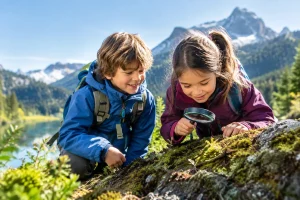
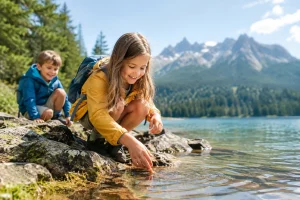
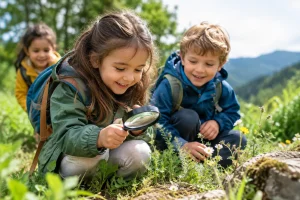
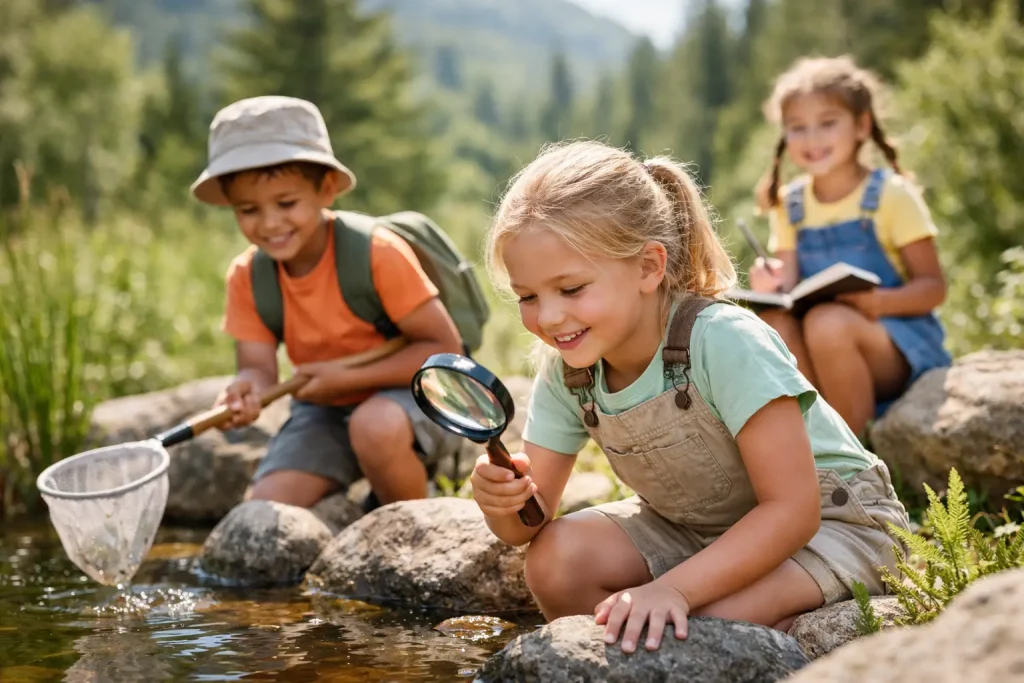
A child who comes home with soil on their shoes, a leaf tucked into a pocket and a story about the snail they carefully observed has not simply spent time outside. They have been noticing, questioning, moving, communicating and building confidence. Nature based education trends are gaining attention because they make these meaningful childhood moments a purposeful part of early learning.
For parents choosing a preschool, this shift is about far more than a beautiful garden or extra outdoor playtime. The strongest nature-connected programmes use outdoor spaces as real learning environments, guided by trained teachers and connected to clear developmental goals. Children are given room to explore while also gaining the routines, language, social skills and early foundations they need for their next stage of learning.
Why nature based education trends matter now
Young children learn through their whole bodies. Before they can confidently describe how something works, they often need to touch it, carry it, compare it, build with it and try again. Natural environments offer this sensory richness every day. A stick can become a measuring tool, a bridge in imaginative play or an object to sort by length and texture.
There is also a growing recognition that early childhood should not feel rushed. Academic readiness matters, but it develops best when children feel secure, engaged and capable. Outdoor learning can support concentration and self-regulation by giving children appropriate space to move, make choices and reset after busy moments indoors.
For families, the appeal is often deeply personal. Parents want their children to enjoy a childhood filled with wonder, friendships and freedom to discover. They also want reassurance that this enjoyment is supported by thoughtful teaching. High-quality nature-based education brings these wishes together rather than treating play and learning as separate experiences.
From outdoor time to an outdoor classroom
One of the most valuable nature based education trends is the move from occasional outdoor activities to intentionally designed outdoor classrooms. In this approach, the garden, courtyard or green space is not simply where children go between lessons. It is a place for stories, investigations, creative work and collaborative problem-solving.
A teacher might invite children to collect fallen leaves and notice their different shapes. Younger children may practise new words such as smooth, rough, large and tiny. Older children can group the leaves, identify patterns, count them or create artwork inspired by their colours. The experience feels natural and playful, yet it supports vocabulary, early mathematics, observation and fine motor development.
This does not require every moment to be directed. In fact, children need unhurried time to follow their own interests. The teacher’s skill lies in knowing when to observe quietly, when to introduce a thoughtful question and when to extend a child’s idea into deeper learning.
Sensory learning with real purpose
Early years children are drawn to sensory experiences because their understanding begins with what they can see, hear, smell and touch. Sand, water, mud, bark, seeds and stones provide variety that manufactured materials cannot always replicate.
Sensory play can be wonderfully calming, but it also calls for care and planning. Children learn to share tools, wait for a turn, describe what they notice and manage small challenges such as balancing a container of water without spilling it. These are practical foundations for independence as well as learning.
The trend is not about making every activity messy. A well-organised environment gives children freedom within clear boundaries. Appropriate clothing, accessible resources, hygiene routines and attentive supervision allow exploration to feel joyful and safe.
Risk, resilience and sensible boundaries
Parents sometimes wonder whether nature-connected learning means children are exposed to unnecessary risk. The answer should be no. Quality provision does not ignore risk. It teaches children to recognise and manage it gradually, with adults close by and expectations suited to their age and ability.
Climbing over a low log, carrying a watering can or using child-safe gardening tools can help a child assess their body, focus on a task and persevere when something is difficult. These experiences build confidence because children achieve something real, not because adults remove every possible challenge.
There is an important balance. A two-year-old and a six-year-old need different levels of freedom, guidance and complexity. Thoughtful educators plan environments that allow each child to stretch safely, while maintaining consistent routines that help children feel secure.
Growing curiosity through seasons and living things
Another meaningful trend is using seasonal change and care for living things as a thread through the year. When children plant seeds, water them and return to see what has changed, they learn that growth takes time. They also begin to understand responsibility, patience and care.
These experiences can support language and early scientific thinking without turning childhood into a worksheet. Children may predict which plant will grow first, record changes through drawing or talk about what a small creature might need to live. Their questions become the starting point for learning.
In a busy urban setting, even a modest green space can offer these opportunities. What matters is regular access and attentive teaching, not a vast forest. A purposeful campus can create daily encounters with nature through planting areas, open-air creative spaces, weather observations and places for active movement.
Nature learning still needs structure
A common misunderstanding is that nature-based learning is the opposite of a structured curriculum. The best programmes show that both can work beautifully together. Children benefit from predictable routines, skilled guidance and a clear developmental pathway, particularly as they prepare for kindergarten and beyond.
Nature gives educators a rich setting in which to develop those goals. A group building a shelter may be practising communication, listening and cooperation. Children creating patterns with pebbles may be strengthening early mathematical thinking. Retelling a story beneath a tree may encourage expressive language and imagination.
The balance depends on the child, the activity and the stage of development. Some children flourish when given a wide-open invitation to create. Others need a teacher to model the first step before their confidence grows. A premium early years setting should be able to offer both warm encouragement and educational direction.
What parents can look for in a programme
When visiting a preschool, look beyond whether there is grass, a playground or a weekly gardening activity. Ask how outdoor learning connects to the curriculum and how teachers document children’s development. Notice whether the outdoor area invites different kinds of play: active movement, quiet observation, creativity, social play and practical exploration.
It is equally helpful to ask about safety procedures, sun and rain planning, staff training and the daily rhythm. Nature-connected learning is most effective when it is reliable rather than dependent on perfect weather. Children can learn from a light shower, changing clouds or a breezy morning when adults prepare the environment well.
Also consider the atmosphere. Do children appear comfortable sharing ideas? Are teachers close enough to support them without taking over? Does the setting feel calm, cared for and full of possibility? These details often reveal whether outdoor learning is a true part of the school’s culture.
A childhood that makes room for wonder
The lasting value of nature-based education is not measured only by the names of plants a child can recall. It is seen in a child who notices the world closely, approaches new experiences with curiosity and trusts their ability to try. These qualities support learning long after the preschool years.
At Alpine Preschool, nature-connected experiences can sit alongside a carefully structured early years journey, helping children flourish through play, exploration and meaningful relationships. For families, the most reassuring choice is often a setting where childhood wonder is protected and every muddy, marvellous discovery has a purpose.