


A preschool teacher can make a child feel brave enough to try, safe enough to ask for help, and valued enough to be fully themselves. That is why learning how to assess preschool teachers involves far more than checking qualifications or listening for polished answers on a school tour. You are looking for the adults who will shape your child’s ordinary days: their arrivals, friendships, questions, muddy outdoor discoveries and moments of uncertainty.
For families choosing an early years setting, teaching quality is often the most meaningful part of the decision. A beautiful campus and well-planned programme matter, but children experience these through the people who guide them. The strongest teachers combine professional knowledge with genuine attentiveness, creating a calm, joyful space where each child can grow at their own pace.
Look for warmth that respects the child
Warmth is not simply a teacher who smiles at children. It is visible in the small, respectful ways they speak and listen. Notice whether teachers come down to a child’s level, use their name, give them time to respond and acknowledge their feelings without making a fuss of every upset.
A child who is struggling to separate from a parent, for example, needs a steady response: “You miss Mummy. I will stay with you while you choose something to do.” This offers comfort and confidence at once. By contrast, a teacher who distracts, dismisses or rushes a distressed child may be trying to keep the room moving, but the child’s emotional needs can be missed.
Kindness should also have boundaries. Children need educators who can guide behaviour clearly and calmly, rather than relying on shouting, shaming or vague threats. Listen for language that explains expectations: “The blocks are for building, not throwing. Let’s find a safe way to use that energy.” This helps children develop self-control while preserving their dignity.
Observe the classroom, not just the tour
A tour is useful, but it is only one snapshot. Whenever possible, visit while children are engaged in their normal routine, attend a trial session, or ask whether you can observe a short part of the day. The real picture often appears during transitions: tidying up, washing hands, moving outdoors, settling for lunch or resolving a disagreement.
In a well-led classroom, children do not need to be silent or perfectly still. Play-based learning can be lively, messy and wonderfully noisy. What matters is whether that energy has purpose. Are teachers moving around the room, noticing who needs support and extending children’s thinking? Do children seem comfortable approaching them? Is there enough structure for everyone to feel secure?
Watch for educators who join play thoughtfully rather than taking it over. If a child is building a bridge from wooden planks, a skilled teacher may ask, “What could make it stronger?” or introduce a problem for the child to solve. They do not need to turn every activity into a lesson. Their role is to make space for curiosity, language, persistence and imagination.
Notice how teachers understand development
Preschool children develop unevenly. One child may tell elaborate stories but need support with sharing; another may be physically adventurous yet quiet in a group. Good teachers see these differences as information, not as a problem to fix.
Ask how the school observes progress and plans next steps. A reassuring answer will describe individual development across social, emotional, physical, communication and early cognitive skills. It should not focus only on worksheets, letter recognition or whether children can produce work that looks impressive on a display board.
There is a place for early literacy and numeracy, especially as children approach school readiness. However, these foundations are strongest when they grow from meaningful experiences. Counting seeds after gardening, recognising signs on an excursion, retelling a favourite story or measuring water in outdoor play can all build important knowledge while keeping learning alive and relevant.
Teachers should be able to explain why an activity is offered, not just describe what children do. If children are painting with leaves, for instance, the value may include sensory exploration, hand control, colour awareness, creative expression and conversation. This thoughtful connection between play and learning is a hallmark of quality early education.
Ask about safety, supervision and safeguarding
Trust begins with practical care. You should feel comfortable asking direct questions about supervision, staff-to-child ratios, arrival and collection procedures, first aid training, illness policies and how concerns are recorded and shared with parents.
The way a school responds matters as much as the policy itself. Clear, unhurried explanations usually indicate that systems are part of everyday practice. Vague answers, reluctance to discuss safeguarding, or a classroom where adults are consistently distracted by mobile phones and paperwork deserve closer attention.
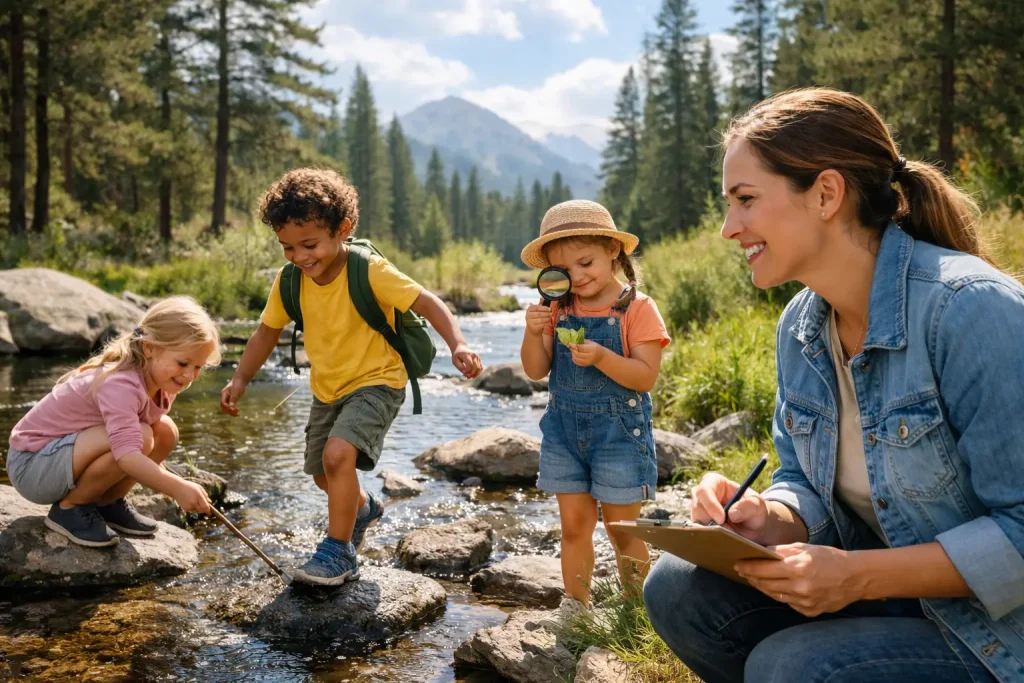
Outdoor learning is especially valuable when it is well supervised. Climbing, digging, balancing and exploring natural materials help young children develop coordination, confidence and sensible risk awareness. The goal is not to remove every challenge. It is to ensure teachers assess risk carefully, prepare the environment and stay close enough to support children without limiting their independence.
Pay attention to communication with families
The relationship between teacher and parent should feel like a partnership. You do not need a lengthy report every afternoon, but you should understand how the school shares meaningful updates, celebrates progress and raises concerns.
During your visit, ask how teachers communicate when a child is finding something difficult, such as biting, reluctance to join group activities or a change in mood. Strong educators speak with compassion and specificity. They share what they have observed, explain what support is being offered and invite parents to contribute useful context from home.
Be wary of two extremes: communication that only delivers cheerful highlights, and communication that makes parents feel blamed whenever a child has a challenging day. The best conversations are honest, respectful and focused on helping the child feel secure.
You may also ask these questions during a tour or meeting:
- How do teachers help a new child settle into the class?
- How do you adapt activities for children with different interests and developmental needs?
- What do you do when two children are in conflict?
- How do you document and share a child’s progress over time?
The answers should sound practical rather than rehearsed. Look for examples that show teachers know the children in their care.
Consider the team, not only one excellent teacher
A warm conversation with one outstanding educator is encouraging, but preschool quality depends on the whole team. Children may be cared for by different adults across the week, during outdoor sessions, meals, enrichment activities and holiday programmes. Consistency is especially important for younger children, who build trust through familiar routines and relationships.
Ask about teacher training, staff retention and professional development. Qualified teachers need ongoing opportunities to reflect on child development, behaviour guidance, safeguarding and inclusive practice. A school that invests in its educators is better placed to offer thoughtful, consistent care.
It is also helpful to notice how staff speak to one another. A respectful team tends to create a respectful environment for children. Do adults help each other during busy moments? Are they calm when plans change? Do they speak about children with affection and professionalism? These details are revealing.
Trust evidence, then trust your child’s response
Choosing a preschool is both a practical and emotional decision. Check the evidence: trained educators, clear routines, safe spaces, intentional learning and open communication. Then consider the feeling of the environment. Can you imagine your child being known here, not simply managed?
At Alpine Preschool, a nature-connected, child-centred approach means teachers can turn everyday experiences into meaningful learning, whether children are exploring the outdoor classroom, creating with sensory materials or building friendships through play. Yet every family should look beyond promises and observe how a setting brings its values to life.
No preschool teacher will handle every moment perfectly. Children are unpredictable, and early years classrooms are busy places. What matters is the pattern you see: attentive adults, purposeful play, respectful guidance and a genuine belief that childhood is a time to be nurtured, explored and enjoyed. When those qualities are present, your child has the space to flourish with confidence and wonder.