
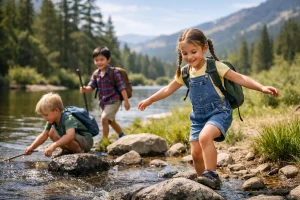
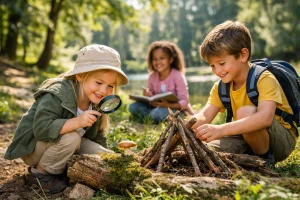
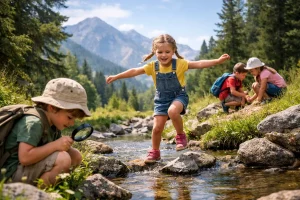
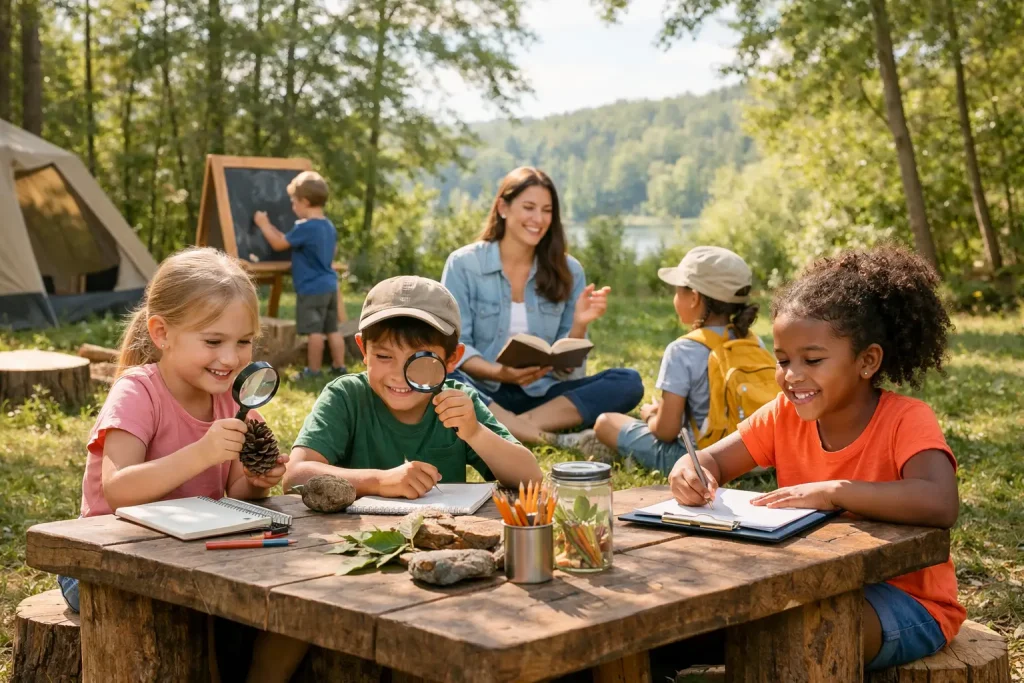
A child crouched beside a garden bed, studying the trail of an ant, is not simply enjoying a pleasant morning outdoors. They are concentrating, asking questions, building vocabulary and learning that careful observation can reveal something new. A thoughtful guide to outdoor classroom learning begins here: with the understanding that fresh air and freedom are most meaningful when they are paired with purpose, safety and skilful teaching.
For children aged 2 to 7, the outdoors can be one of the richest learning environments available. It offers space to move, materials that change with the weather, and real experiences that make early concepts feel alive. A stick can become a measuring tool, a collection of leaves can start a sorting activity, and a puddle can prompt a lively conversation about rain, reflection and cause and effect.
What Outdoor Classroom Learning Really Means
Outdoor classroom learning is not a break from education, nor is it simply letting children play outside before returning to the ‘real’ lesson. It is a planned extension of the classroom, where children explore learning goals through movement, sensory discovery, imaginative play and guided conversation.
A well-designed outdoor session has room for children’s own ideas. A teacher may introduce a simple invitation, such as finding objects with different textures or building a shelter for a toy animal, then observe how each child responds. Some children may count and compare; others may tell stories, negotiate roles or test which materials stay dry. All of these responses matter.
This approach works particularly well in the early years because young children learn through their whole bodies. Before a child can confidently draw a zigzag on paper, they may need to trace one in sand, form it with twigs or follow it along a path. Before they understand balance as a concept, they can experience it while stepping between logs or carrying water carefully from one container to another.
Why Nature-Rich Learning Supports Young Children
It gives movement a meaningful role
Young children are naturally active. Outdoor spaces allow them to run, climb, carry, dig, pour, stretch and balance in ways that are difficult to recreate indoors. These movements develop gross motor skills, coordination and body awareness, while also helping children practise self-regulation.
The value is not in making every activity energetic. A quiet moment listening for birds can strengthen attention just as much as an obstacle course strengthens confidence. The key is variety: children need opportunities to be lively, calm, independent and collaborative across the day.
It makes early learning tangible
Many foundational ideas become easier to grasp when children can touch and test them. Comparing the weight of stones, arranging pinecones by size, counting petals or noticing shadows grow longer gives shape to early mathematical and scientific thinking.
Language also grows naturally outdoors. Children need words to describe what they notice: smooth, prickly, damp, tiny, heavier, hidden, floating. When trained educators respond with thoughtful questions rather than quick answers, children learn to express ideas with growing confidence. “What do you think will happen?” and “How could we find out?” are small questions with lasting value.
It builds resilience without removing care
Nature does not always behave predictably. Wind scatters carefully placed leaves. Rain changes the ground beneath little feet. A tower made from branches may fall down just as a child believes it is finished. These manageable challenges help children develop perseverance and flexible thinking.
Of course, resilience should never mean unnecessary risk. Adults create the secure boundaries that allow children to take appropriate risks: climbing at a suitable height, using tools with close guidance, or learning to judge whether a surface is slippery. Children gain confidence when they are trusted to try, while knowing a caring teacher is nearby.
It nurtures social and emotional growth
Outdoor learning often creates shared tasks with a genuine reason to cooperate. Children may work together to transport natural materials, make a pretend café, care for a garden or decide how to cross a muddy patch. Such moments invite turn-taking, kindness, communication and problem-solving.
For children who find busy indoor spaces overwhelming, time outside can also offer a gentler route into connection. There is more room to pause, observe and join play at their own pace. A child who says little during group time may become an animated storyteller while making a home for insects beneath a shrub.
A Guide to Outdoor Classroom Learning at Different Ages
Children do not need the same outdoor experience at every stage. The most effective programmes match activities to their development, interests and growing independence.
For toddlers and nursery-aged children, sensory exploration is central. Scooping soil, patting mud, splashing water and collecting natural treasures help build coordination and language. Short, familiar routines are reassuring at this age: watering plants, checking a favourite tree or singing a song before returning indoors.
As children move into kindergarten, they can take on longer projects and more complex questions. They may plan a miniature garden, map a route around the grounds, record weather patterns or work together to construct a den. These experiences can support early literacy and numeracy without turning outdoor time into a worksheet lesson.
It depends on the child, too. Some will be ready to lead a group investigation; others may need time to watch before participating. A child-centred programme does not lower expectations. It recognises that children reach meaningful milestones through different paths and gives each one the encouragement to progress.
What Parents Should Look for in an Outdoor Programme
A beautiful green space is a wonderful starting point, but the quality of outdoor learning depends on more than the setting. Parents should look for a programme where outdoor time is intentional, frequent and supported by educators who understand early childhood development.
Ask how teachers connect outdoor experiences to the wider curriculum. A strong answer will include more than exercise or free play. It should show how children’s curiosity is observed, extended and documented, and how activities support communication, physical development, early thinking and emotional wellbeing.
Safety is equally essential. Purpose-built spaces should be checked regularly, equipment should suit children’s ages, and clear routines should guide transitions, handwashing, hydration and sun or wet-weather care. The aim is not to make outdoor learning sterile or over-controlled. It is to make exploration feel secure enough for children to engage wholeheartedly.
It is also worth asking how the school approaches weather. In a warm climate such as Johor Bahru’s, sensible timing, shade, drinking water and appropriate clothing all matter. Rainy days can still offer valuable learning when conditions are safe, but staff should know when a change of plan is the right decision. Good outdoor education responds to nature rather than forcing a fixed schedule upon it.
Bringing the Learning Home
Parents do not need a large garden or specialist resources to extend this kind of learning. A walk to notice clouds, a small pot of herbs, or a bowl of water with leaves and stones can create a meaningful invitation to explore. The most valuable ingredient is unhurried attention.
Try following your child’s interest before offering explanations. If they are fascinated by a snail, notice its movement together. If they want to carry every pebble home, invite them to sort the collection by colour, size or texture. These everyday exchanges show children that their questions are worth pursuing.
At Alpine Preschool, outdoor classrooms are part of a wider, carefully structured learning journey: one where nature, creativity and skilful guidance help children flourish. The goal is not to rush childhood towards the next academic milestone. It is to give children memorable experiences that strengthen the curiosity, confidence and kindness they will carry into every new stage of learning.
The next time your child returns with muddy shoes, a pocketful of leaves or an excited story about something they discovered outside, pause to listen. You may be hearing the beginning of a much bigger idea.