
A muddy pair of wellies, a pocket full of leaves, and a child proudly carrying a tiny pebble as if it were treasure – this is often where the best nature activities for preschoolers begin. For young children, the outdoors is not simply a place to run off energy. It is a rich learning environment where curiosity becomes language, movement becomes confidence, and small discoveries become lasting understanding.
For parents, the question is rarely whether nature is good for children. It is usually how to make outdoor time meaningful, safe, and developmentally valuable. The good news is that preschoolers do not need complicated plans or expensive equipment. What they need is time, gentle guidance, and space to notice, explore, and wonder.
Why the best nature activities for preschoolers matter
Nature-based play supports far more than physical exercise. When children sort stones by size, listen for birdsong, or balance along a low log, they are building early thinking skills, concentration, coordination, and self-belief. They are also learning to regulate their emotions. Outdoor spaces tend to invite a calmer, more open kind of play, especially for children who feel overwhelmed by noise or too much structure indoors.
There is also a social benefit that parents often notice quickly. In nature, play becomes more collaborative and imaginative. A pile of sticks can become a house, a boat, or a dragon’s cave. Children negotiate roles, test ideas, and solve small problems together. That kind of learning feels joyful, but it is deeply valuable.
Of course, not every outdoor activity suits every child on every day. Some preschoolers love energetic movement, while others prefer to crouch quietly and watch ants at work. The best approach is to offer variety and let interest lead.
12 best nature activities for preschoolers
1. Nature treasure hunts
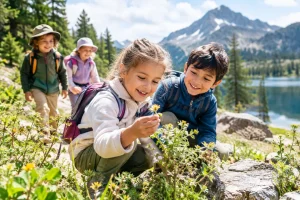
A simple treasure hunt gives outdoor time a clear purpose without making it feel pressured. You might invite your child to find a smooth leaf, a tiny stick, something yellow, or a feather. This encourages observation, comparison, and vocabulary growth.
For younger preschoolers, keep it sensory and visual. For older children, you can make it more thoughtful by asking them to find something rough, something curved, or something that smells interesting. The activity grows with the child, which is one reason it remains such a reliable favourite.
2. Mud kitchen play
There is something wonderfully absorbing about mixing mud, water, petals, and grass into imaginary soups and cakes. Mud play develops sensory awareness, hand strength, creativity, and sustained attention. It also allows children to experiment freely, which is often where confidence begins.
The trade-off is obvious – it is messy. Yet for many families, a change of clothes and a clear handwashing routine are a small price to pay for the depth of learning involved.
3. Leaf and bark rubbings
With paper and wax crayons, children can discover patterns they might otherwise miss. Leaf veins, tree bark textures, and uneven natural surfaces suddenly become visible. This is a lovely quiet activity, especially for children who enjoy creating but may not always want high-energy play.
It also introduces the idea that nature has detail and structure. Preschoolers may not say it in those terms, but they begin to notice that no two leaves are quite the same.
4. Bug spotting
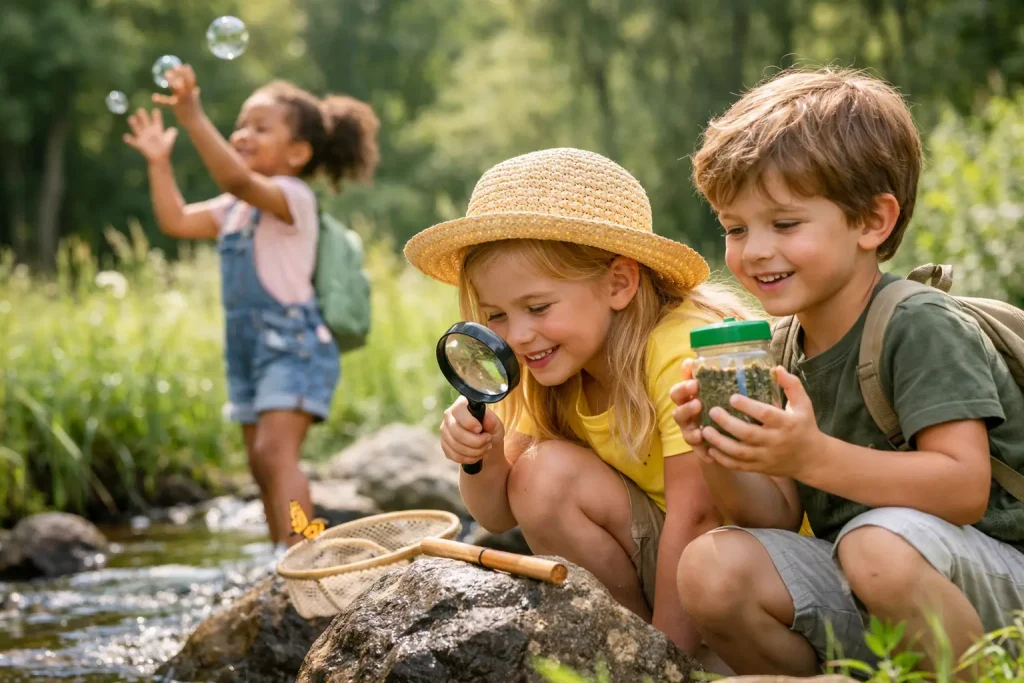
Looking for insects teaches children patience and gentleness. Lift a stone carefully, peer into a patch of soil, or watch a line of ants crossing a path. Even a few minutes can spark real fascination.
This works best when adults resist the urge to rush in with too many facts. A simple comment such as, “I wonder where they are going,” often does more than a mini science lesson. At this age, curiosity matters as much as information.
5. Water play with natural materials
Add leaves, pebbles, seed pods, or flower petals to a basin of water and preschoolers will usually find their own experiments. They will test what floats, what sinks, what spins, and what drifts. This supports early scientific thinking in a way that feels completely natural.
If you have outdoor space, this can become a calm but deeply engaging part of the day. If not, even a small tub on a balcony or shaded corner can work beautifully.
6. Planting and caring for something simple
Growing herbs, beans, or easy flowers helps children understand change over time. They learn that living things need water, sunlight, and care. More importantly, they begin to feel responsible in a meaningful way.
This activity does ask for patience, which can be hard for preschoolers. Choose plants that show visible progress fairly quickly, or interest may fade. The goal is not perfection. It is helping children see that their actions have an effect.
7. Stick building
Sticks are among the most versatile loose parts in nature. Children can line them up, sort them, make letter shapes, build tiny dens for toy animals, or create frames and patterns on the ground. This kind of open-ended play supports problem solving and spatial awareness.
It is also excellent for collaborative play. One child may gather materials while another decides how to arrange them. There is no single right outcome, which makes the activity especially inclusive.
8. Nature art
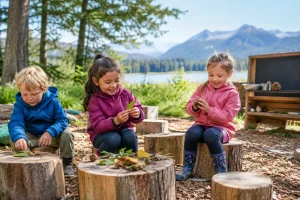
Petals, leaves, grass, seeds, and small stones can become temporary art on the ground or on a tray. Children might make faces, spirals, gardens, or entirely abstract patterns. This builds creativity while strengthening fine motor control and visual discrimination.
Because the materials are natural and often temporary, children also learn a gentle lesson about impermanence. The wind may move their design. A leaf may tear. That is part of the experience, not a failure.
9. Listening walks
Some nature activities are about doing, while others are about noticing. A listening walk invites children to move slowly and identify sounds: birds, rustling leaves, footsteps on gravel, distant traffic, or rain on a roof.
This can be especially valuable for children who need help settling their bodies and attention. It creates a quiet rhythm and helps them tune into the environment with more care.
10. Obstacle trails using natural features
A safe outdoor trail might involve stepping over branches, weaving between trees, hopping to a marker, or balancing along a low edge. These experiences support gross motor development, body awareness, and risk assessment.
The key word is safe, not risk-free. Preschoolers benefit from learning what their bodies can do, but the challenge should match their stage of development. A confident six-year-old and a cautious three-year-old will need different levels of support.
11. Cloud watching and weather talk
Lying on a mat and watching the sky may seem simple, but it creates rich opportunities for language and imagination. Children can describe shapes, notice movement, and talk about sunshine, wind, shadows, and rain.
It is also a lovely reminder that nature learning does not always need to be busy. Sometimes wonder grows best in stillness.
12. Collecting natural loose parts for sorting
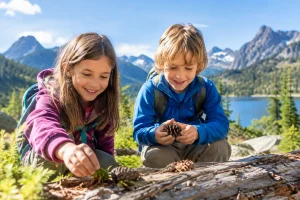
Gathering leaves, pinecones, seed pods, stones, or shells and then sorting them by shape, size, texture, or colour builds early maths thinking. Preschoolers begin to classify, compare, and describe. These are foundational skills for later learning, but here they appear through play rather than pressure.
This can be done outdoors or continued at home on a tray or table. Either way, it helps children revisit their discoveries and extend the learning.
How to choose the right nature activity for your child
The best nature activities for preschoolers are not always the most elaborate. Often, the right activity depends on your child’s temperament, age, and energy level that day. A child who loves movement may thrive on obstacle trails and treasure hunts. A more reflective child may prefer bug spotting, cloud watching, or leaf rubbings.
It also helps to think about timing. After a busy nursery morning, a quiet nature art activity may feel restorative. At the weekend, when children are eager to move, water play or stick building may suit them better. Good outdoor learning is responsive rather than rigid.
Parents sometimes worry that they are not making activities educational enough. In truth, the value lies less in delivering a lesson and more in creating the conditions for exploration. A trained early years environment may extend this learning with intentional prompts and carefully designed outdoor spaces, but the heart of it remains the same: children learn beautifully when they are engaged, secure, and free to investigate.
Making outdoor learning feel safe and joyful
Young children flourish when outdoor exploration is paired with simple, reassuring boundaries. Clear expectations such as staying where an adult can see them, handling living things gently, and washing hands after muddy play allow children to explore with confidence.
Clothing matters too. Wellies, sun hats, spare clothes, and layers make a practical difference. When children are comfortable, they stay engaged for longer and are less likely to see weather as a barrier. In a high-quality early years setting such as Alpine Preschool, this preparation is part of what turns outdoor time into a truly enriching learning experience rather than a brief play break.
You do not need perfect weather, a forest school site, or a packed schedule to give your child meaningful time in nature. A patch of grass, a few trees, a garden path, or a local green space can hold more learning than it first appears. Start small, follow your child’s curiosity, and let the ordinary outdoors become a magical place where they can flourish.