
A child may not tell you that a curriculum is working. They will show you instead: by arriving with confidence, asking another question about the snail they found outside, retelling a story at dinner, or trying again when a tower falls. An early years curriculum review helps parents look beyond attractive classrooms and busy timetables to see whether those meaningful moments are being thoughtfully created.
For children aged two to seven, a strong curriculum is not a stack of worksheets or a list of topics to rush through. It is a carefully planned developmental journey that gives children room to play, belong, communicate, investigate and gradually become more independent. The best programmes make learning feel joyful while ensuring each experience has a clear purpose.
What an early years curriculum review is really assessing
A curriculum review should consider the whole experience of childhood at school, not simply whether children can recognise letters, count objects or complete a craft activity. Those skills matter, but they are only part of readiness. A child who can concentrate, express a need, join a group, handle disappointment and remain curious is building foundations that support learning for years to come.
For parents, the review is a useful way to ask a bigger question: does this school understand how young children learn? At this age, learning is physical, social and emotional as well as cognitive. Children make sense of ideas by moving, touching, talking, imagining and repeating. They need trusted adults who notice their interests and know when to extend them.
A considered review therefore looks at the connection between the school’s values and the everyday programme. If a preschool speaks about creativity, do children have time to invent, make choices and explore materials in their own way? If it values kindness, are teachers actively supporting friendships and helping children resolve small conflicts with care? If outdoor learning is central, is nature a regular classroom rather than an occasional treat?
A clear journey, without rushing childhood
Parents should be able to see how the curriculum grows with their child. Playgroup and Nursery children need secure routines, language-rich interaction, sensory discovery and plenty of movement. As children enter Kindergarten 1 and Kindergarten 2, they can take on longer projects, develop early literacy and numeracy understanding, build sustained attention and practise greater responsibility.
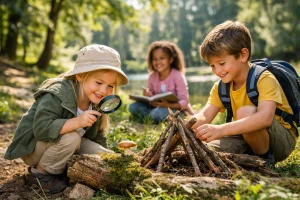
Progression does not mean replacing play with formal instruction too soon. It means making play more purposeful and responding to what children are ready to do next. A child might begin by sorting leaves by colour, later compare their sizes and eventually use that observation to explore patterns, numbers and descriptive language. The learning develops naturally because the experience remains meaningful.
There is a balance to hold here. Some children are eager for letters and numbers early; others need more time to strengthen confidence, speech or fine-motor control. A high-quality curriculum offers appropriate challenge without treating every child as though they should reach the same milestone on the same day.
The signs of a thoughtful early years curriculum
A curriculum becomes visible in the small details of a school day. Look for an environment where teachers plan with intention but can also follow a child’s genuine curiosity. A planned lesson on growing plants may lead to questions about worms, rain or how tall each seedling has become. Rather than steering children back to a fixed answer, skilled educators use those questions to deepen language, observation and reasoning.
The following areas deserve particular attention during a review:
- Relationships and emotional security. Young children learn best when they feel known. Warm greetings, consistent routines and sensitive support at separation create the security needed for exploration.
- Play with purpose. Role play, block building, water play, art and games should be valued as real learning opportunities, with teachers extending vocabulary, collaboration and problem-solving.
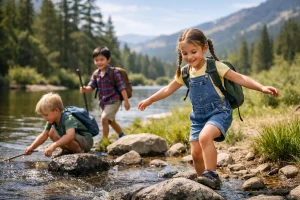
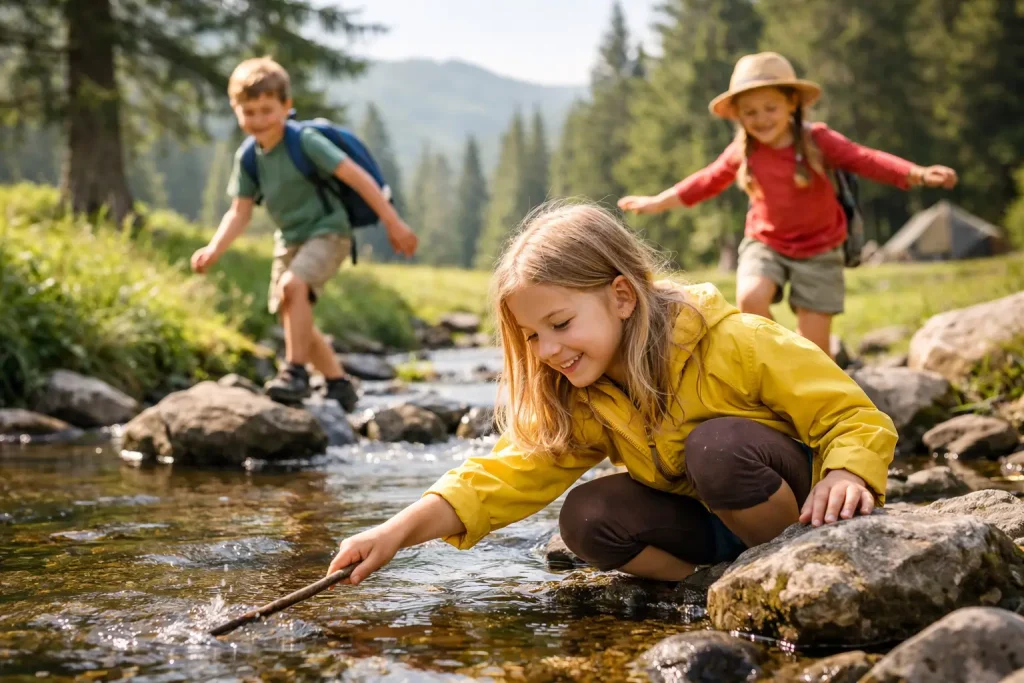
- Outdoor and sensory experiences. Green spaces, natural materials and active play invite children to use their whole bodies and senses. They also offer rich opportunities to take manageable risks, care for living things and notice change.
- Language, early literacy and numeracy. These foundations should be woven through stories, songs, conversations, games and everyday routines, not taught as isolated drills alone.
- Observation and individual support. Teachers should watch closely, record meaningful progress and adapt experiences so each child is encouraged at the right level.
These elements work together. A child mixing mud in an outdoor kitchen may be developing far more than imaginative play. With a thoughtful teacher nearby, they may be negotiating roles with friends, measuring ingredients, describing texture, strengthening hand control and learning that their ideas are worth sharing.
How teachers turn a plan into meaningful learning
Even the most beautifully written curriculum depends on the people delivering it. Trained teachers understand child development, but they also bring attentiveness and warmth to the room. They know when to step back so children can lead, when to introduce a new word or tool, and when a child needs reassurance rather than another instruction.
Ask how educators plan, observe and communicate with families. Useful feedback goes beyond a list of activities completed. It offers a picture of what a child is becoming interested in, where they are growing in confidence and how parents can continue a conversation or routine at home.
Teaching quality also appears in transitions. Moving from outdoor play to lunch, joining a group activity, saying goodbye at the gate and settling after a disagreement are all learning moments. Calm, respectful guidance helps children develop self-regulation and a sense of belonging. These capabilities are every bit as valuable as an early writing sample.
Questions parents can ask during a curriculum review
When visiting a preschool, it helps to listen for examples rather than broad promises. Ask how the programme changes for a child who is newly two compared with one preparing for primary school. Ask how teachers respond when children show different interests or developmental needs. Ask what outdoor learning looks like on an ordinary week, not just during a special event.
You may also ask how children’s progress is shared with families, how the school supports social and emotional development, and how it introduces early academic concepts through play. The answers should feel clear and practical. A good school can explain not only what children do, but why it matters and what the next step may be.
Observe the children, too. Are they engaged rather than merely occupied? Do they approach teachers comfortably? Are there chances to choose, collaborate, move and rest? A calm room is not necessarily one where every child is silent; it may be a room filled with purposeful conversation, concentration and laughter.
It is also worth considering the campus itself. Purpose-built spaces, accessible resources and generous outdoor areas can support a curriculum in ways that cannot be replicated by a timetable alone. At Alpine Preschool, nature-connected learning, outdoor classrooms and carefully designed stages from Playgroup through Kindergarten 2 are intended to give children both a sense of wonder and a secure path towards school readiness.
When academic readiness and wellbeing belong together
Parents are right to think about the next stage. They want children to enter primary school able to listen, communicate, manage basic routines and engage with early reading, writing and mathematics. Yet readiness is strongest when it grows from wellbeing, not pressure.
A child who has been trusted to explore, supported to persist and encouraged to share their thinking carries valuable confidence into a new classroom. They are more likely to see learning as something they can participate in, rather than something that happens to them.
The right curriculum will not promise identical outcomes for every child. Children develop at different rhythms, and family priorities may differ too. What it should offer is a clear, caring framework: one that recognises each child’s starting point while opening up rich experiences that build capability across many areas.
When you review an early years curriculum, look for the childhood it makes possible. The most memorable learning may begin with muddy hands, a favourite story, a patient teacher and a child who feels wonderfully ready to ask, “What happens if we try?”