
Choosing a school for your child often comes down to one quiet but crucial question: what will they actually experience each day? A strong kindergarten curriculum guide helps parents look past glossy classrooms and busy timetables to understand how learning is shaped, how progress is supported, and whether childhood is being honoured along the way.
For many families, kindergarten is the first stage where learning starts to feel more purposeful. Children are still very young, still imaginative, still learning through movement, play, repetition, and connection. Yet this is also the period when early literacy, numeracy, communication, independence, and social confidence begin to take clearer form. The best curriculum does not rush children forward. It gives them the right foundations so they can grow with confidence.
What a kindergarten curriculum guide should really show
A useful curriculum guide should do more than list topics or worksheets. It should show how a school understands child development. In the kindergarten years, children need a balance of structure and freedom. They benefit from routines that feel secure, but they also need space to question, build, pretend, explore, and make sense of the world in their own way.
That means a thoughtful curriculum guide should explain not only what children learn, but how they learn it. If reading readiness is introduced, parents should be able to see whether it happens through songs, stories, sound play, conversation, and hands-on activities, rather than pressure or constant seatwork. If maths is included, it should feel connected to real experiences such as sorting leaves, counting blocks, measuring water, or noticing patterns in nature.
This matters because young children do not learn in separate boxes. Language, motor skills, emotional regulation, social awareness, and thinking skills all develop together. A curriculum that looks impressive on paper can still fall short if it ignores the whole child.
The essential areas in a kindergarten curriculum guide
Most strong kindergarten programmes cover similar developmental areas, even if the teaching style differs from one school to another. Parents should expect to see early language and literacy, early mathematics, social and emotional development, physical development, creative expression, and knowledge of the world.
Language and early literacy
At this stage, literacy is not simply about memorising words. It begins with listening, speaking, recognising sounds, enjoying books, building vocabulary, and understanding that print carries meaning. Children may start identifying letters, hearing rhymes, and connecting sounds to symbols, but this should sit within playful and meaningful experiences.
Storytelling, singing, role play, picture discussion, and conversations with adults all matter here. Children who feel heard and encouraged often become stronger communicators and more enthusiastic readers later on.
Early mathematics
A good kindergarten curriculum guide should show mathematics as something children can touch, move, compare, and notice. Counting is important, but so are patterns, sequencing, shape, sorting, estimating, and understanding simple quantities.
The most effective early maths learning often happens in ordinary moments. Lining up cups, sharing fruit, building towers, or comparing the size of stones outdoors can all deepen mathematical thinking. This makes maths feel natural rather than intimidating.
Social and emotional growth
Parents sometimes focus first on letters and numbers, but emotional development is just as important. Kindergarten is where many children learn to take turns, follow routines, express needs, cope with frustration, and build friendships beyond the family circle.
A curriculum worth trusting will make space for this. Children need guidance in kindness, resilience, confidence, empathy, and self-awareness. These qualities support academic learning later because a child who feels secure and connected is better able to concentrate, persist, and participate.
Physical development
Young children learn with their whole bodies. Fine motor skills support drawing, cutting, and early writing, while gross motor skills build balance, coordination, strength, and body awareness. A curriculum should reflect both.
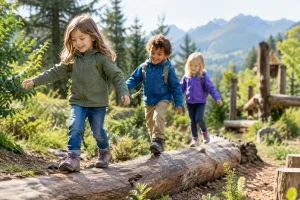
This is one reason outdoor play and movement-rich environments are so valuable. Running, climbing, balancing, digging, pouring, threading, and painting all strengthen children in ways that prepare them for more formal tasks without making childhood feel cramped.
Creativity and curiosity
Creative learning is not an extra. It is central to how young children think. Through art, music, imaginative play, construction, movement, and open-ended materials, children test ideas and express what they cannot always say directly.
A rich curriculum welcomes this kind of exploration. It understands that creativity supports language, problem-solving, confidence, and flexible thinking. It also keeps learning joyful, which should never be underestimated in the early years.
Why play belongs at the heart of the curriculum
Some parents worry that a play-based approach may be too relaxed or not academic enough. It is a fair question, especially when families want children to be well prepared for primary school. But play and strong learning are not opposites.
When a child builds a pretend shop, they may be using language, counting objects, negotiating roles, recalling real-life experiences, and solving problems all at once. When they explore a garden, they are observing change, developing vocabulary, asking questions, and refining motor skills. Guided well, play becomes one of the most effective ways for children to learn deeply.
That said, not all play-based programmes are equal. The difference lies in intentional teaching. A high-quality setting does not leave learning to chance. Teachers observe closely, ask thoughtful questions, prepare inviting environments, and introduce experiences that stretch children at the right pace.
What progression should look like
A kindergarten curriculum guide should also show progression. Parents need to know how learning develops from one stage to the next. In the early years, progression is not about piling on more content as quickly as possible. It is about building securely.
For example, before writing sentences, a child needs hand strength, visual tracking, body control, sound awareness, vocabulary, and confidence with marks and symbols. Before solving formal number problems, they need a real sense of quantity, comparison, and pattern. If these earlier steps are skipped, children may appear to move ahead quickly but struggle later.
This is why staged programmes can be so reassuring. When each year is designed around developmental milestones, children are more likely to feel successful rather than overwhelmed.
The value of nature-connected learning
For many families, one of the most meaningful parts of a kindergarten experience is the environment itself. A curriculum delivered only indoors can become narrow, especially for children who need sensory richness and room to move.
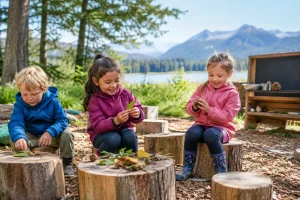
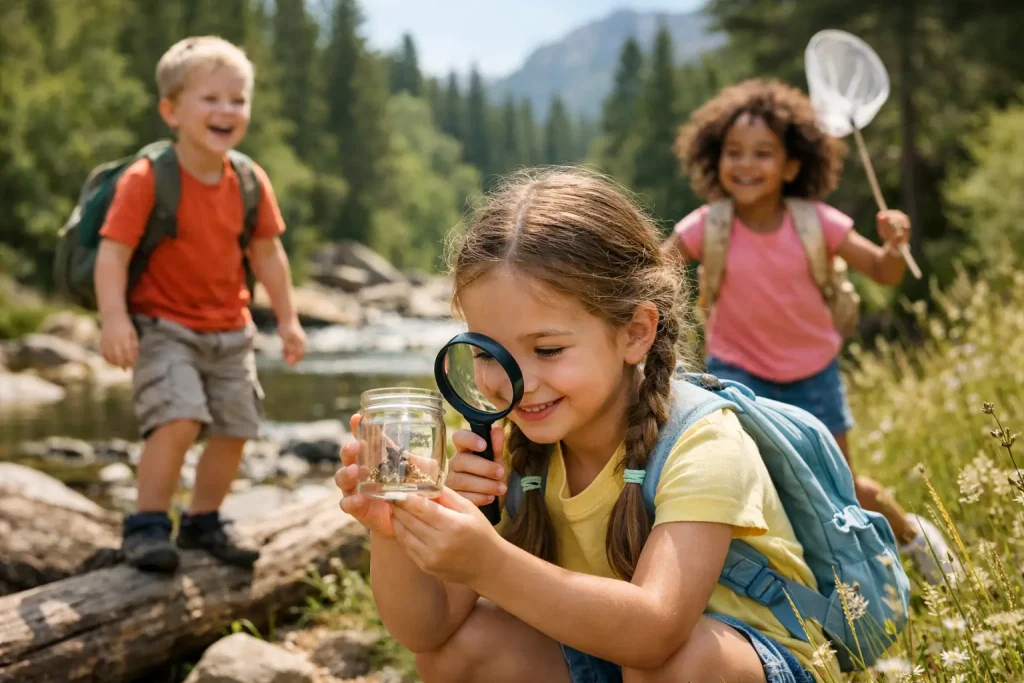
Nature-connected learning adds something special. Outdoor classrooms, green spaces, gardening, water play, nature walks, and hands-on discovery invite children to observe, question, and engage all their senses. These experiences support concentration, language, physical confidence, and emotional wellbeing.
They also give children a wider understanding of the world. Seasons, insects, textures, weather, growth, and care for living things become part of everyday learning rather than abstract topics. In a well-designed setting, the outdoors is not a break from the curriculum. It is part of it.
How parents can read a curriculum guide wisely
When comparing schools, it helps to read beyond the promises. Warm language matters, but clear evidence matters too. Ask how children spend their time, how teachers assess progress, and how the school balances school readiness with emotional wellbeing.
It is also worth noticing what is missing. If a curriculum speaks only about academics, the approach may be too narrow. If it speaks only about fun, you may want more clarity on how learning is planned. The strongest schools are able to do both – protect the magic of childhood while providing a carefully structured pathway for growth.
For families seeking that balance, a setting such as Alpine Preschool may feel especially reassuring, with its emphasis on trained teachers, purposeful learning stages, outdoor experiences, and a child-centred environment where curiosity and kindness can flourish.
Kindergarten curriculum guide questions worth asking
As you explore options, ask simple questions that reveal a great deal. How are literacy and numeracy introduced? How much time do children spend outdoors? How do teachers support children who are shy, energetic, or developing at different rates? How is progress shared with families? What does a typical day feel like for a child?
The answers should sound thoughtful rather than scripted. Good schools know that every child develops in their own rhythm. They can explain their standards clearly while still making room for individuality.
A curriculum guide should give you confidence, but your instincts matter too. When a school truly understands early childhood, you can usually feel it in the details – the calm routines, the purposeful play, the respectful conversations, the inviting spaces, and the way learning feels both joyful and carefully held.
The right kindergarten experience does more than prepare a child for the next classroom. It helps them feel capable, curious, and happy to learn, which is a very good place for any journey to begin.