A child’s early years are full of small, remarkable moments: the first time they confidently join a group game, explain why a leaf has changed colour, manage a zip independently, or tell a story with a beginning, middle and end. A thoughtful child development learning pathway gives these moments direction. It helps children grow at a pace that respects who they are, while offering the right experiences to prepare them for what comes next.
For parents, choosing a preschool is not simply about finding a place where a child will be occupied during the day. It is about finding an environment where childhood is valued, learning feels meaningful, and progress is guided by trained adults who understand how young children develop. The strongest pathways do not rush children towards worksheets or measure success only through early academic outcomes. They build the foundations that make future learning feel possible and enjoyable.
What a child development learning pathway should do
A learning pathway is a purposeful progression through the early years. Each stage responds to children’s changing abilities, needs and interests, from sensory exploration and secure relationships to language, reasoning, independence and school readiness.
This does not mean every child reaches every milestone at exactly the same time. Development is wonderfully individual. One child may be ready to speak confidently in a group while another prefers to observe first. A child who has strong number awareness may still need support navigating friendships or managing big feelings. A high-quality pathway makes room for these differences while keeping a clear view of the skills children need to develop.
The best early education balances several areas at once. Children need communication and early literacy, mathematical thinking, physical confidence, creativity, emotional security and social understanding. They also need time to wonder, move, build, make mistakes and try again. These are not extras around the curriculum. They are the experiences through which young children learn.
Beginning with belonging and sensory discovery
For children around two to three years old, a warm beginning matters enormously. Playgroup and Nursery are often a child’s first experience of spending regular time away from home. Before they can fully engage with new materials, routines or friendships, they need to feel safe and known.
At this stage, learning is deeply physical and sensory. Children learn through water, sand, paint, music, movement, stories and hands-on play. They begin to understand that their actions have an effect: a block tower can be taller, a seed can be planted, a puddle can splash, and a request can be heard when they use words.
Daily routines are quietly powerful here. Washing hands, packing away, sitting briefly for a song and choosing an activity all build independence. Children also begin to practise sharing spaces and resources, waiting for a turn and recognising simple emotions in themselves and others. These experiences form the social and emotional roots of later confidence.
A gentle transition is especially valuable for younger children. Some settle quickly; others need more time and familiar reassurance. A school should work in partnership with families rather than expect every child to adapt in the same way.
Growing language, ideas and independence
As children move through the preschool years, their curiosity becomes more detailed. They ask bigger questions, make connections and take greater pride in doing things for themselves. A carefully planned Kindergarten 1 experience can turn this natural curiosity into growing confidence with language, numbers and problem-solving.
Stories, conversations and imaginative play give children rich opportunities to build vocabulary. When a child acts out a trip to the market, describes an insect found outdoors or retells a favourite tale, they are learning far more than new words. They are organising ideas, listening to others and becoming confident communicators.
Early mathematical understanding also develops best through real experiences. Children can compare the size of sticks, count snack portions, sort natural objects by shape, notice patterns in leaves and estimate how many cups of water might fill a container. Formal concepts become more meaningful when children have touched, tested and discussed them first.
Independence grows alongside these skills. Children learn to take responsibility for their belongings, contribute to classroom routines, make choices and persevere with tasks that are not immediately easy. These are essential habits for school, but they also help children feel capable in everyday life.
Preparing for school without losing the joy
Kindergarten 2 is often the point when parents naturally begin to think about primary school. Children benefit from a clearer structure, sustained attention and opportunities to practise foundational literacy and numeracy. Yet preparation should never mean replacing play with pressure.
A child who is ready for school is not simply one who can recite the alphabet or complete a page independently. Readiness includes being able to listen, express needs, follow routines, cope with manageable setbacks and work alongside others. It includes curiosity, self-belief and the confidence to ask for help.
This is where a balanced curriculum matters. Activities may become more focused as children approach the next stage, supporting phonics awareness, writing control, number sense and logical thinking. At the same time, children still need imaginative role play, creative arts, physical challenge and unhurried outdoor exploration. Their minds are developing rapidly, but they are still young children who learn best when they are engaged and emotionally secure.
There is a trade-off worth considering. A highly academic approach may create short-term results that look reassuring on paper, particularly for children who are already confident with structured tasks. But when expectations move too far ahead of a child’s developmental readiness, learning can become something to endure rather than enjoy. A pathway that combines guided teaching with active, playful discovery is more likely to support lasting motivation.
Why nature belongs in early learning
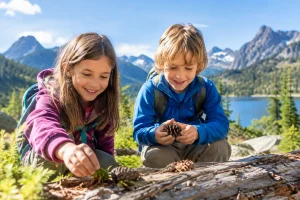
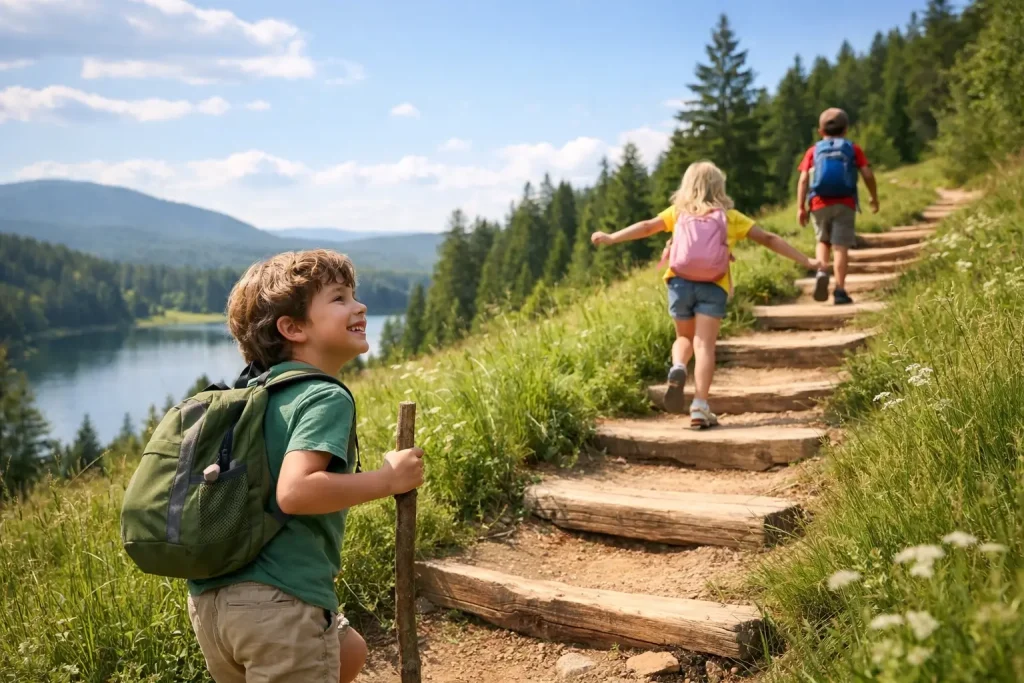
Outdoor learning is not merely a break from the classroom. It offers a different kind of classroom, one that is alive with changing weather, textures, sounds and questions. A child balancing on a log is developing coordination and risk awareness. A group building a shelter is negotiating, planning and communicating. A child watching a caterpillar is learning patience and care.
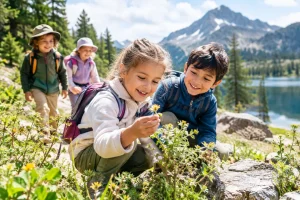
Nature also invites children to use all their senses. They can feel rough bark and soft grass, hear birdsong, notice the scent after rain and observe how light changes across the day. These experiences support language and scientific thinking, while giving children valuable space to regulate their energy and emotions.
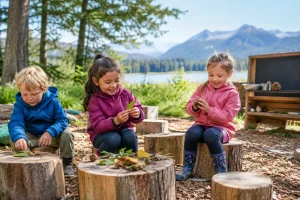
For families in Johor Bahru, a purpose-built campus with expansive green spaces can make this part of daily learning rather than an occasional outing. At Alpine Preschool, outdoor classrooms, excursions and holiday camps extend children’s learning beyond four walls, helping them see the world as a place worth investigating.
The teacher’s role in a meaningful pathway
Children need freedom to explore, but they also need adults who know when to step in. Trained teachers observe closely: who is ready for a new challenge, who needs a quieter entry point, who is beginning to show a particular interest, and who may need support joining a group.
This observation allows teachers to plan with intention. If children become fascinated by insects, a teacher might introduce books, magnifying glasses, drawing materials and opportunities to count legs or compare habitats. If a child is reluctant to speak in a group, they may be encouraged first through a small shared activity with a trusted friend.
Strong teaching is not about directing every moment. It is about creating conditions in which children can make discoveries, then adding the right question, material or encouragement to move learning forward. Parents should feel reassured that warmth and professional expertise belong together.
Choosing a pathway that fits your child
When visiting a preschool, look beyond displays of finished work or claims about academic achievement. Notice how children are greeted, how they move through the space and whether they are encouraged to ask questions. Listen for genuine conversations between teachers and children. See whether there are places to read, create, build, rest, run and explore.
It is also helpful to ask how the school supports transitions between stages. A clear pathway should not feel like a series of separate programmes. Each stage should build naturally on the last, with teachers understanding what children have experienced before and what they will need next.
Most of all, look for a place where your child can be both cared for and challenged. The right pathway honours the magic of being young while steadily building the confidence, kindness and curiosity that will carry them into their next chapter.