

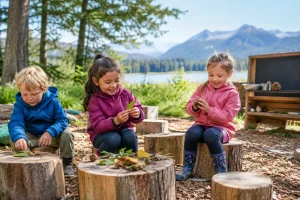
When you visit a preschool and watch children planting herbs, building stories from sticks and leaves, or confidently greeting their teachers, the question becomes more personal than financial. Is private preschool worth it? For many families, the answer depends less on the label “private” and more on what that setting gives a child during some of the most formative years of life.
Private preschool can be a wonderful investment, but it is not automatically the right choice for every family. The real value lies in the quality of the experience: the warmth of the adults, the thought behind the curriculum, the daily opportunities for movement and discovery, and the way a school helps a child feel safe enough to explore, speak, imagine and grow.
Is private preschool worth it when compared with other options?
It helps to move beyond the simple idea that private means better. A child does not flourish because a school has a certain fee structure. They flourish when their environment is carefully designed around child development and when the people guiding them understand early childhood deeply.
That said, private preschools often have more freedom to shape their programmes, invest in specialist spaces, and create a distinct educational pathway from playgroup through to the kindergarten years. For parents who want a setting that balances school readiness with creativity, emotional growth and outdoor learning, this flexibility can make a meaningful difference.
A strong private preschool usually offers smaller group experiences, trained teachers, thoughtfully planned routines, and richer learning environments. That might look like purpose-built classrooms, shaded outdoor areas, sensory stations, gardening corners, excursions and seasonal activities that make learning feel alive. These are not extras for show. In the best settings, they support language, confidence, self-regulation, problem-solving and social skills in a very natural way.
What are you really paying for?
One of the biggest concerns for parents is whether the fees reflect genuine value. That is a sensible question. A higher price should mean more than polished branding or attractive photographs.
In a high-quality private preschool, fees often support the things that are hardest to measure at first glance but most important over time. You may be paying for lower child-to-teacher ratios, which can mean more individual attention and gentler support during separation, toilet learning or social difficulties. You may be paying for trained educators who know how to observe a child’s development and respond with intention rather than routine babysitting.
You may also be paying for an environment that has been designed with children in mind rather than adapted as an afterthought. Spacious outdoor areas, safe equipment, calm and inviting classrooms, and materials that encourage open-ended play all shape a child’s daily experience. When children have room to move, wonder and experiment, they tend to become more engaged learners.
There is also the curriculum itself. A thoughtful preschool programme does not push formal academics too early, but neither does it leave development to chance. The best early years settings understand how to build foundations gradually through play, conversation, music, movement, nature exploration and hands-on discovery. That is often where private preschool can shine.
The benefits that matter most in the early years
Parents sometimes feel pressure to ask whether a preschool will help their child read sooner or count faster. Those things can matter, but the strongest long-term benefits often begin elsewhere.
A child who feels secure enough to separate confidently from home is building resilience. A child who learns to wait, listen, express feelings and cooperate with others is developing social and emotional tools that will support every later stage of learning. A child who spends time outdoors, notices textures and sounds, asks questions and tests ideas is building curiosity and attention.
These qualities are not secondary to education. They are education in the early years.
Private preschools that are genuinely child-centred often give more room for this kind of whole-child development. Rather than treating play as a break from learning, they treat play as the way young children learn best. They create a rhythm to the day that feels purposeful but not pressured. Children might move from circle time to outdoor exploration, from story-based language work to sensory play, from simple practical tasks to collaborative games. Each part supports cognitive, physical and emotional growth together.
For many families, this is where private preschool feels worth it. Not because it gives children a head start in a narrow academic sense, but because it helps them build confidence, independence and joy in learning.
When private preschool may be especially worthwhile
Some children benefit enormously from a more intentional early years environment. A shy child may need a nurturing setting with gentle routines and consistent adults who can help them find their voice. A highly active child may thrive in a programme with generous outdoor time and meaningful movement rather than long periods of sitting still. A curious child may come alive in a setting where questions are welcomed and learning extends beyond the classroom walls.
It can also be especially worthwhile for families who want continuity. A staged pathway through playgroup, nursery and kindergarten can reduce the number of transitions a child faces and allow teachers to support development with a longer view. Parents often value this too, because it creates a stronger sense of partnership with the school.
If you are looking at premium early years options in areas such as Johor Bahru, it is often worth paying close attention to how a school uses its space and time. A beautiful campus matters, but only if children are truly interacting with it. Nature-connected learning, outdoor classrooms and well-planned excursions can add real value when they are woven into the curriculum rather than offered as occasional treats.
When it might not be the right fit
Private preschool is not the right answer for every household, and that is perfectly all right. If fees would create ongoing stress, that pressure can affect family wellbeing in ways that matter. Young children do best when home and school life both feel secure.
It may also not be worth it if the preschool’s philosophy does not suit your child. Some settings look impressive but feel overly formal, overly branded or disconnected from the realities of childhood. If children seem tightly managed, rushed through activities, or pushed towards academic performance before they are ready, a higher fee does not make that beneficial.
The question is never just “Can we afford it?” but “Will this environment help our child flourish?” If the answer is uncertain, trust that instinct and keep looking.
How to tell if a private preschool is truly worth the investment
The best way to assess value is to look closely at what happens every day. Watch how teachers speak to children. Notice whether they kneel to a child’s level, listen patiently and guide behaviour with calm authority. Pay attention to whether children seem engaged, relaxed and curious.
Ask how the curriculum supports different areas of development. You want to hear about language, motor skills, social confidence, creativity, early numeracy, emotional wellbeing and opportunities for independent thinking. A good preschool should be able to explain not only what children do, but why those experiences matter.
Look at the environment too. Are there open-ended materials? Is there meaningful outdoor space? Do children have chances to explore nature, create, build, role-play and rest? A rich environment tells you a great deal about how a school sees childhood.
You should also ask how the school communicates with parents and supports transitions. Starting preschool is a big step for a young child and their family. A setting that values partnership, observation and gentle settling-in processes is often one that understands children deeply.
At Alpine Preschool, for example, the value of private early years education is shaped around more than academics alone. It is found in trained teachers, a purpose-built campus, green outdoor spaces and a developmental journey that helps children grow through play, exploration and meaningful structure.
Is private preschool worth it in the long run?
The long-term value of preschool is not always visible in the first few weeks or even the first term. Sometimes it appears quietly. A child begins speaking with more confidence. They become more willing to try new things. They learn how to join a group, solve a small conflict, care for their belongings, follow routines and delight in discovery.
These early shifts can shape how a child approaches school for years to come. When children experience learning as something safe, joyful and full of possibility, they are more likely to carry that attitude forward.
So, is private preschool worth it? It can be, deeply so, when the setting offers genuine quality, emotional warmth and a thoughtful approach to early development. The right preschool does not simply prepare children for school. It gives them the space to become confident, curious and kind within themselves.
If you are choosing for your family, look for the place where your child seems most at ease, most interested and most able to shine. That is often where the real value begins.