

A search for “preschool taman impian emas” often begins with a practical question: which school is close enough for the daily routine? Very quickly, it becomes a more meaningful one. Where will your child feel safe enough to try, speak, create, make friends and become more independent?
The preschool years are not simply a waiting room before primary school. Between the ages of two and seven, children are building the habits that shape how they approach learning for years to come. They are discovering that questions are welcome, mistakes can be tried again, and new experiences can be exciting rather than frightening.
For families in and around Taman Impian Emas, the best choice is rarely about finding the busiest timetable or the earliest worksheets. It is about finding a thoughtful environment where purposeful learning and a joyful childhood can grow together.
What a quality preschool in Taman Impian Emas should offer
A strong early years setting gives children a dependable rhythm. They know where to put their belongings, when they will gather with friends, and which adult will help when a task feels difficult. This predictable structure creates emotional security. From that security, children are more willing to explore.
At the same time, preschool should never feel overly rigid. Young children learn through movement, conversation, repetition, pretend play, building, sorting, painting and time outdoors. A child counting pebbles in a garden, for example, is not simply being entertained. They may be developing early number sense, coordination, language and concentration all at once.
Parents should look for a balance between guided activities and child-led discovery. Both matter. Teacher-planned experiences introduce children to new ideas and build essential foundations, while open-ended play gives them space to practise decision-making, imagination and collaboration.
This balance can look different at each stage. A two-year-old may need sensory play, gentle routines and lots of reassurance. An older kindergarten child may be ready for more sustained projects, phonics, early writing and problem-solving. A good school recognises these differences rather than expecting every child to progress in exactly the same way.
The value of learning beyond four walls
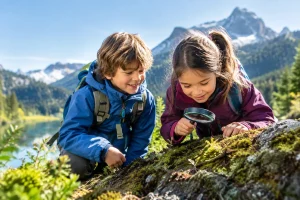
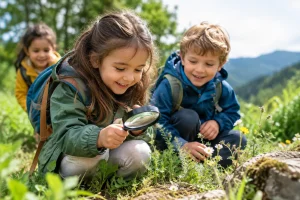
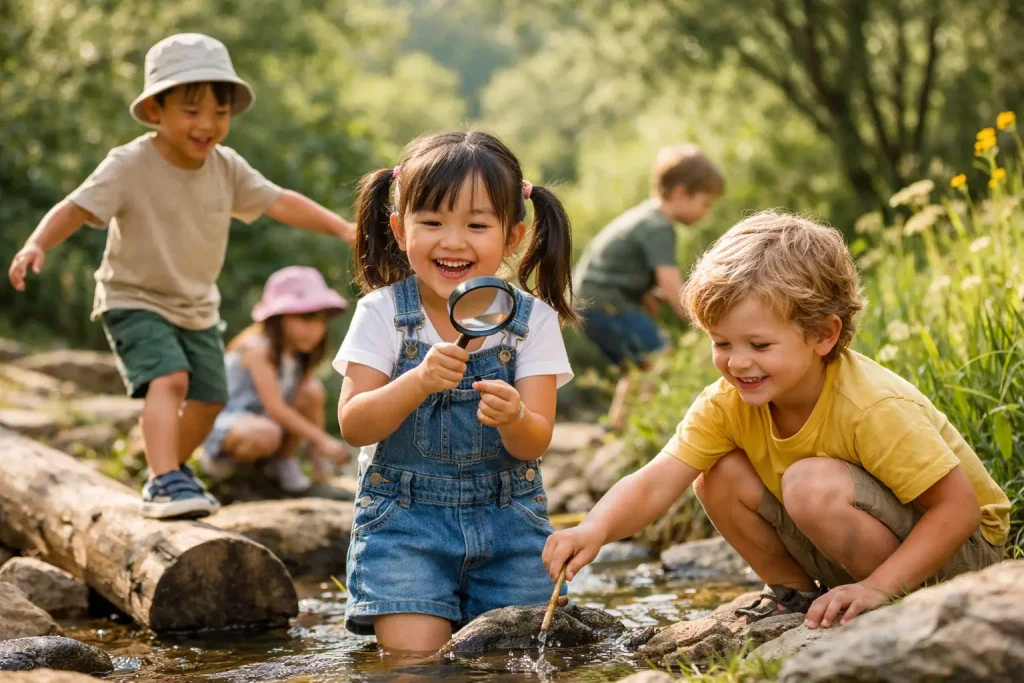
Children are naturally drawn to real things. The texture of bark, the sound of rain on a shelter, an insect moving through the grass and the challenge of carrying water all invite curiosity. Outdoor learning is not an occasional reward after classroom work. When planned with care, it is a rich classroom in its own right.
Green spaces encourage children to use their whole bodies. They can climb, balance, dig, observe and negotiate games with friends. These experiences support physical confidence, but they also build resilience. A child who persists with a tricky stepping path or helps rebuild a fallen sand structure is learning that effort has value.
Nature-connected learning can be especially helpful for children who find it difficult to sit still for long periods. Outdoor exploration gives their energy a meaningful direction while opening opportunities for language, science and creative expression. It can also offer quieter children a less pressured way to join in.
That does not mean every lesson must happen outside. Children also need welcoming indoor spaces for stories, art, small-group learning and calm reflection. The most enriching campuses offer both: thoughtfully equipped rooms and generous outdoor areas that invite daily exploration.
Caring teachers make the biggest difference
Facilities matter, yet the adults in the room shape a child’s experience more than any display or piece of equipment. Trained teachers notice the small things: a child who has become unusually quiet, a new friendship taking shape, a growing interest in drawing, or the frustration behind a sudden refusal to join an activity.
This attentiveness helps children feel seen. It also allows teachers to extend learning at the right moment. When a child is fascinated by seeds, a teacher might introduce magnifying glasses, new vocabulary, drawing materials and a chance to plant something. The child’s interest becomes the starting point for deeper learning.
Warmth and high expectations belong together. Children benefit from adults who speak kindly, set clear boundaries and encourage them to have another go. They need help naming big feelings, resolving small conflicts and caring for shared spaces. These are not extras beside academic learning. They are essential foundations for it.
When visiting a preschool, listen to how adults speak with children. Is there genuine conversation rather than constant instruction? Are children encouraged to express ideas? Does the atmosphere feel calm, engaged and respectful? A polished prospectus cannot replace the confidence a parent feels when they see caring relationships in action.
A developmental pathway, not a one-size-fits-all programme
Early education is most meaningful when each year builds naturally on the one before it. Playgroup, Nursery, Kindergarten 1 and Kindergarten 2 should form a connected journey, with increasing challenge that remains appropriate for a child’s age and development.
In the earlier years, the focus may be on separation confidence, sensory experiences, language, movement and learning alongside others. As children mature, they can begin to expand their attention, reasoning and communication through richer stories, purposeful projects and carefully introduced early literacy and numeracy.
By the later kindergarten years, children benefit from a clearer bridge towards primary school. They can develop the foundations of left-brain thinking through sequencing, memory, pattern recognition, problem-solving and early academic skills. Yet preparation for school should not mean losing playfulness. Children who enjoy learning are more likely to approach their next classroom with confidence.
A proprietary curriculum can offer valuable consistency, particularly when it is designed around real developmental milestones rather than a race through content. Ask how the curriculum supports cognitive, social, emotional, physical and creative growth. The answer should describe the whole child, not only what appears on a worksheet.
Questions worth asking at your preschool visit
A visit is an opportunity to look beyond first impressions. Notice whether children have access to materials they can choose and use independently. See if their artwork and projects reflect individual ideas, rather than every piece looking identical. Observe how transitions are managed, because arrival time, tidy-up time and mealtimes reveal a great deal about a school’s culture.
It is also sensible to ask about class routines, teacher training, communication with families and how the school supports children who need extra encouragement. Find out how outdoor play is included during the week, what happens during wet weather, and whether excursions or holiday camps are offered as meaningful extensions of learning.
Safety deserves direct questions too. Parents should feel comfortable asking about supervision, arrival and collection procedures, hygiene, first aid and how the school communicates any concerns. A reassuring school will answer openly and clearly, without making parents feel hurried.
Finally, consider your own child. A lively, highly social child may thrive in a setting with abundant group projects and outdoor challenge. A cautious child may need a gradual settling-in approach and a teacher who builds trust gently. There is no single perfect preschool for every family, but there is a setting that feels right for your child’s temperament and needs.
Choosing a preschool that honours childhood
The right preschool experience gives children more than a head start in letters and numbers. It gives them memories of muddy hands, favourite stories, brave first attempts, kind friends and teachers who believed in them. These moments are the quiet building blocks of confidence.
At Alpine Preschool, children are encouraged to flourish through a carefully structured curriculum, trained educators, creative exploration and meaningful time in nature. For parents, that combination can bring welcome reassurance: their child is being prepared for what comes next while being fully present in the magic of childhood now.
When you walk into a school, trust the details that make your child’s face soften with interest. A place that protects their wonder, gives it direction and celebrates steady growth can become an important part of their earliest, happiest years.