
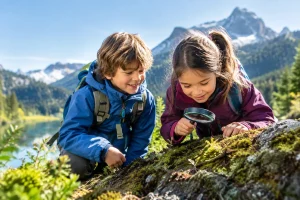
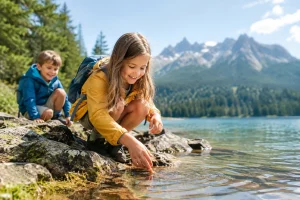
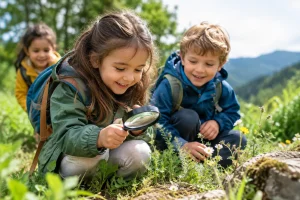
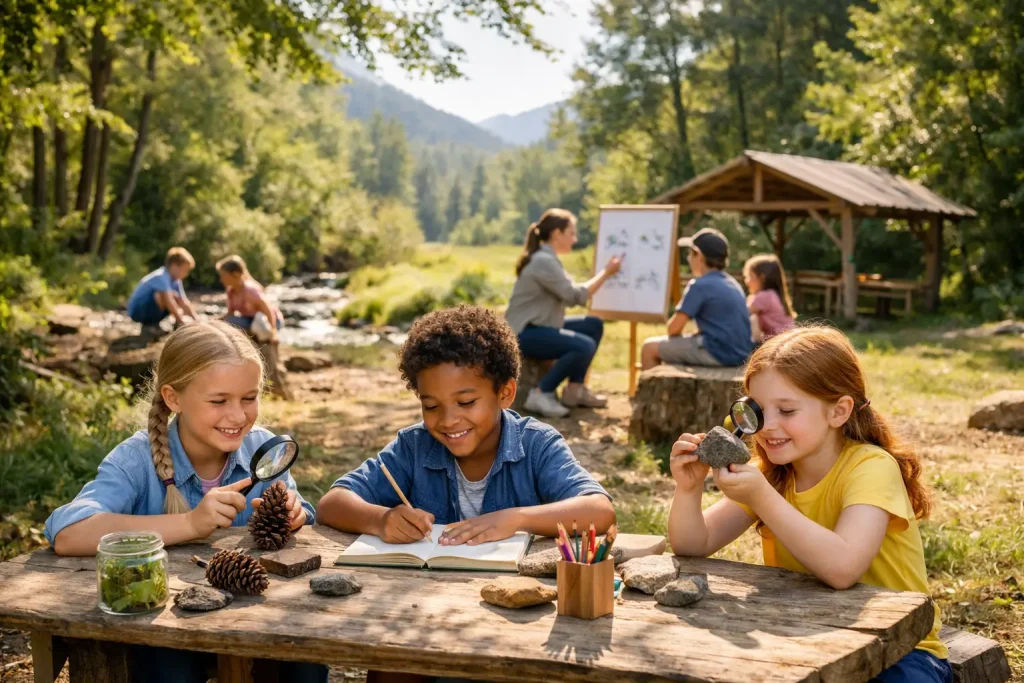
A puddle after morning rain can become a science lesson, a shared challenge and a source of enormous pride. A child notices the ripples, wonders where the water will go, works with a friend to build a small channel, and returns indoors with a story worth telling. This is one of the most immediate ways how outdoor classrooms help children becomes visible: learning is not separated from the world around them. It is lived, tested and remembered.
For children aged two to seven, outdoor learning is far more than a welcome break from the classroom. In a thoughtfully planned setting, it gives children room to move, investigate, create and connect, while trained teachers guide those experiences towards meaningful developmental goals.
How outdoor classrooms help children learn with purpose
Young children learn through their whole bodies. They need to touch, carry, climb, listen, balance, compare and repeat. An outdoor classroom makes these natural ways of learning possible on a larger scale, without asking children to sit still before they are ready.
A collection of leaves can introduce sorting by size, shape or colour. Sand and water invite children to explore volume, cause and effect, and early problem-solving. A bug spotted beneath a log can prompt careful observation, new vocabulary and respect for living things. These moments may look simple, but skilled educators recognise the thinking inside them and extend it with thoughtful questions.
This matters because early academic readiness is not only about recognising letters or counting to ten. It is also about concentration, listening, communication, memory and the confidence to try again. When learning is grounded in a real experience, children have something meaningful to talk about, draw, measure and revisit.
Nature makes curiosity feel natural
Children are born curious, but curiosity needs time and encouragement to grow. Outdoors, there is always something changing. The light moves, a flower opens, the wind lifts a scarf, ants follow a trail, and yesterday’s construction has become today’s new challenge.
Rather than giving every answer, teachers can invite children to wonder: Why has this leaf changed colour? Which materials will keep our shelter dry? How can we move this heavy branch safely together? Questions like these help children form ideas, listen to different views and test their own thinking.
Over time, this approach develops a valuable habit: children begin to see themselves as capable learners. They learn that not knowing something is the beginning of an investigation, not a reason to step back.
Confidence grows through movement and manageable challenge
The outdoors gives children the freedom to practise physical skills that are difficult to recreate at a small table. Walking along a low balance beam, climbing a slope, pedalling, digging, carrying watering cans and navigating uneven ground all strengthen coordination, balance and body awareness.
These activities also build confidence. A child who hesitates at the bottom of a climbing structure may first watch, then attempt one step, then try again tomorrow. Each small success tells them, “I can do hard things.” This sense of capability can carry into social situations, creative work and early academic tasks.
The aim is never to remove every challenge. Children need appropriately managed risk to learn judgement, resilience and care for themselves and others. A well-designed outdoor classroom offers clear boundaries, age-appropriate equipment, close supervision and consistent routines. It allows children to stretch their abilities safely, rather than leaving them either overprotected or unsupported.
Outdoor learning supports calmer, happier social development
Many of the most important preschool lessons happen between children. They learn to wait for a turn, explain an idea, repair a disagreement and recognise when a friend needs help. Spacious outdoor environments can make these lessons easier to practise.
There is room for energetic play, quiet observation and collaborative projects. One group may be building a den while another is mixing a pretend feast in the mud kitchen. Children can choose a role that suits them, then gradually step into new ones. The child who does not yet feel ready to join a large group may begin by passing sticks to a builder or collecting ingredients for a game.
Shared outdoor tasks offer a gentle reason to communicate. A heavy plank needs two children to carry it. A garden needs regular care. A nature hunt becomes more exciting when discoveries are compared. Through these experiences, children learn that cooperation is not simply a classroom rule. It helps them achieve something together.
For children who find busy indoor spaces overwhelming, fresh air and more physical room can also offer a valuable reset. This does not mean the outdoors suits every child in exactly the same way. Some children rush into exploration; others need time, a familiar adult and a predictable invitation. Attentive teachers notice these differences and help each child participate at a pace that feels secure.
Sensory experiences create richer memories
Early childhood is a sensory time. Children remember the soft give of soil, the citrus scent of a crushed leaf, the coolness of water on a warm day and the sound of rain on a sheltered roof. These experiences support language because they give children precise, personal things to describe.
They also support creative expression. After observing seed pods, children might make patterns, create a collage or invent a story about where the seeds will travel. After a windy morning, they may experiment with streamers, paper aeroplanes or music made from natural materials. The outdoor classroom supplies inspiration that cannot be fully pre-planned.
Sensory learning should be purposeful and inclusive. Some children enjoy mud and texture immediately, while others prefer to observe or use tools before touching unfamiliar materials. A nurturing programme offers choices, never pressure, so that children can build comfort and confidence over time.
A stronger foundation for focus and early learning
It can seem counterintuitive, but active outdoor play can support children’s ability to settle for quieter learning too. After moving their bodies and following their interests outside, many children are better prepared to listen to a story, draw what they observed or work with a small group.
Outdoor experiences can be carried into every area of a structured preschool curriculum. Children can count stones, compare lengths of sticks, hear initial sounds in the names of plants and use positional language as they describe a route through the garden. They can practise mark-making on clipboards, represent discoveries through drawing and build the hand strength needed for later writing through digging, scooping and moulding.
The quality of the teaching matters greatly here. Outdoor learning is most valuable when it is not treated as unstructured free time alone. Children need freedom, but they also benefit from educators who observe closely, introduce new language, set inviting challenges and connect play to the next stage of development.
What parents should look for in an outdoor classroom
Not every outdoor area offers the same learning value. A premium early years environment considers both wonder and care. Look for purposeful spaces that invite varied types of play, including active movement, imaginative play, nature exploration, gardening and quiet reflection. Ask how the environment is checked, how teachers supervise children, and how outdoor activities are adapted for different ages and weather conditions.
It is also worth asking how educators plan from children’s interests while maintaining clear developmental goals. The best outdoor classrooms do not choose between play and preparation for school. They use play to build the foundations children need for future learning.
At Alpine Preschool, outdoor spaces are part of a wider child-centred approach in which trained teachers help children explore with confidence, kindness and curiosity. The goal is not to hurry childhood along. It is to make each stage rich enough for children to flourish.
A child may not remember every worksheet from their earliest years. They are likely to remember the first seed they planted, the friend who helped build a shelter, and the thrilling moment they realised they could climb a little higher than before. Give children those meaningful moments, with caring guidance beside them, and learning gains roots that can grow for years.