
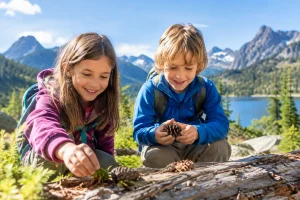
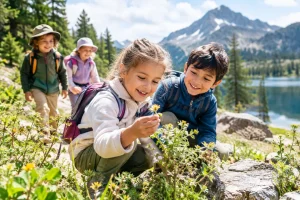
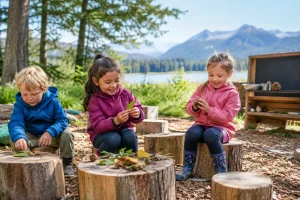
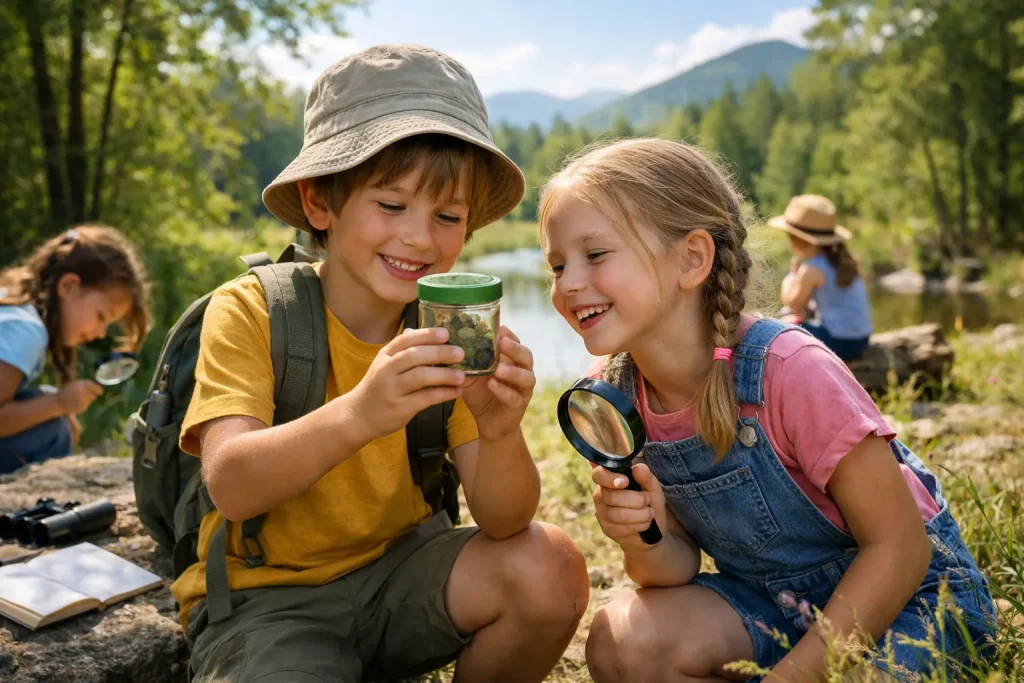
One child is balancing on a log, another is crouched beside a patch of grass watching an ant carry a crumb, and a third is filling a bucket with leaves sorted by shape. To a parent, it can look like simple play. In a preschool outdoor learning guide, though, these moments matter because they reveal how children build confidence, language, coordination, problem-solving and emotional resilience through real experience.
For children aged 2 to 7, outdoor learning is not an optional extra added on after the “real” lessons are done. It is one of the richest ways young children make sense of the world. When carefully planned by trained teachers, time outdoors becomes a living classroom where children test ideas with their whole bodies, develop social awareness, and connect learning to something they can see, hear, touch and remember.
What a preschool outdoor learning guide should help you look for
If you are choosing a preschool, the most useful guide is not a list of pretty campus features. It is a way to understand how outdoor experiences support development day by day. A good outdoor programme should feel joyful for children, but purposeful for parents.
The first thing to look for is intention. Children do not need constant formal instruction outside, but they do need adults who know how to turn outdoor moments into learning opportunities. A mud kitchen can support communication, imaginative play and social cooperation. A garden bed can introduce sequencing, patience and early science. A climbing structure can strengthen balance and risk assessment. The setting matters, but the teaching matters just as much.
It is also worth looking at rhythm. The strongest programmes do not treat outdoor time as a reward after table work. They weave it into the day so children experience movement, fresh air and open-ended discovery as part of normal learning. That tends to support better concentration, calmer behaviour and greater engagement indoors as well.
Why outdoor learning matters in the early years
Young children learn through action before abstraction. They understand big and small by lifting, carrying and comparing. They understand weather by feeling wind on their face and noticing the ground after rain. They build vocabulary more naturally when words are attached to real objects and events.
This is especially valuable in the preschool years because development is happening all at once. Physical growth, language, emotional regulation, memory and social skills are deeply connected. Outdoor environments allow children to use many of these capacities together. A child building a den is not only being creative. They are planning, negotiating, lifting, testing, adjusting and persevering.
There is also a wellbeing benefit that many parents notice quickly. Time in green spaces often helps children feel calmer and more settled. Not every child responds in the same way. Some become immediately adventurous, while others need time to observe before joining in. A thoughtful preschool respects both temperaments and helps each child grow from their own starting point.
The developmental benefits parents can expect
Outdoor learning supports gross motor development in obvious ways, but its wider benefits are often even more meaningful. Children become more willing to try, fail and try again when the environment invites exploration rather than perfection. That matters for long-term learning confidence.
Language grows powerfully outside. Children describe textures, compare sizes, ask questions about insects, explain their pretend scenarios and respond to what friends are doing. For younger children, this may begin with naming and pointing. For older preschoolers, it can become storytelling, prediction and collaborative problem-solving.
Social development also tends to deepen outdoors. Open spaces create different kinds of interaction from indoor classrooms. Children negotiate turns on equipment, invent shared games, and work out group roles in imaginative play. Teachers still guide and support, but the environment gives children room to practise independence and cooperation more naturally.
Then there is early academic readiness. Outdoor learning can strengthen counting, sorting, pattern recognition, mark-making and scientific thinking in ways that feel meaningful. The trade-off is that these moments may look less tidy than worksheet-based tasks. For many parents, that can take a small shift in mindset. Children are still learning structure and foundations, but through experiences that are active, memorable and developmentally appropriate.
What quality outdoor classrooms include
A strong preschool outdoor learning guide should make it easier to tell the difference between occasional outdoor play and a well-designed outdoor classroom. The best settings offer variety rather than one single type of activity.
Children benefit from open green space for running and movement, but they also need quieter corners for observation and imaginative play. Natural materials such as sand, water, stones, leaves and logs encourage sensory exploration and creativity. Gardens or planting areas help children see change over time. Covered outdoor areas are equally important because they allow learning to continue in different weather, rather than limiting outdoor time to perfect mornings.
Safety should feel visible without feeling restrictive. Good supervision, secure boundaries, age-appropriate equipment and clear routines all matter. At the same time, children need chances to take manageable risks. Climbing, balancing and using simple tools under guidance help them develop judgement. A completely risk-free environment may look reassuring, but it can limit confidence and practical learning.
Questions to ask when visiting a preschool
When parents visit a school, outdoor spaces can be impressive at first glance. The more useful question is how those spaces are used. Ask how often children learn outdoors and whether that happens across age groups. Ask what teachers are observing and planning for in outdoor sessions. Ask how the school supports children who are cautious, energetic, highly social or more sensitive to noise and change.
It is also sensible to ask about progression. Outdoor learning for a two-year-old will look very different from outdoor learning for a six-year-old. Younger children need secure routines, sensory experiences and simple exploration. Older children can handle more complex projects, extended investigations and greater responsibility. A well-structured preschool should show how outdoor experiences grow with the child, rather than repeating the same activities each year.
If excursions, gardening, seasonal events or holiday programmes are part of the school experience, those can be a meaningful sign of a wider learning culture. They show that nature-connected learning is not being treated as a marketing phrase, but as part of how the school sees childhood.
How outdoor learning and school readiness work together
Some parents worry that outdoor learning sounds lovely but may not prepare children for primary school. In practice, the opposite is often true when the programme is well balanced. School readiness is not only about sitting still and recognising letters. It is also about listening, following routines, managing feelings, using language clearly, solving problems and approaching new tasks with confidence.
Outdoor classrooms can support all of these. Children learn to wait, share, observe, compare, predict and persist. They strengthen the core muscles and coordination needed for writing. They build attention through hands-on investigation. They become more secure in themselves, which often makes academic learning easier to absorb later.
That said, balance matters. Parents should look for a preschool that combines nature-based learning with a thoughtful curriculum and trained educators who understand child development. Outdoor learning is most effective when it sits within a wider educational pathway, not when it replaces structure altogether.
Choosing a setting that feels both joyful and dependable
For many families, the ideal preschool is one where childhood still feels spacious and magical, yet learning remains intentional and well guided. That combination can be surprisingly rare. Some settings offer warm, open-ended play but limited developmental structure. Others provide academic routine but very little room for curiosity, movement or sensory discovery.
The most reassuring option is a school that brings both together: trained teachers, a clear developmental journey, and outdoor environments designed for real exploration. In places such as Johor Bahru, where families are looking for premium early years education with strong pastoral care, that blend can make a genuine difference to a child’s daily experience. Alpine Preschool is one example of this approach, with outdoor classrooms and green spaces shaped to support play-based, nature-connected learning in a purposeful way.
A good preschool outdoor learning guide should leave you with more than a checklist. It should help you picture your child in an environment where curiosity is welcomed, safety is thoughtfully managed, and learning feels alive. When children are given room to move, wonder, build and belong, they are not stepping away from education. They are growing into it in the most natural way possible.
The right preschool will help your child come home with muddy shoes, bright ideas and the quiet confidence that comes from discovering the world for themselves.