
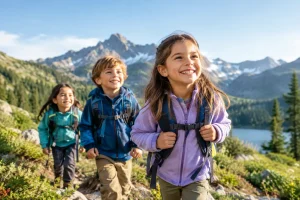
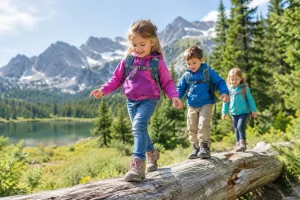
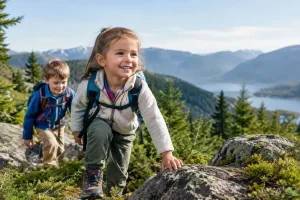
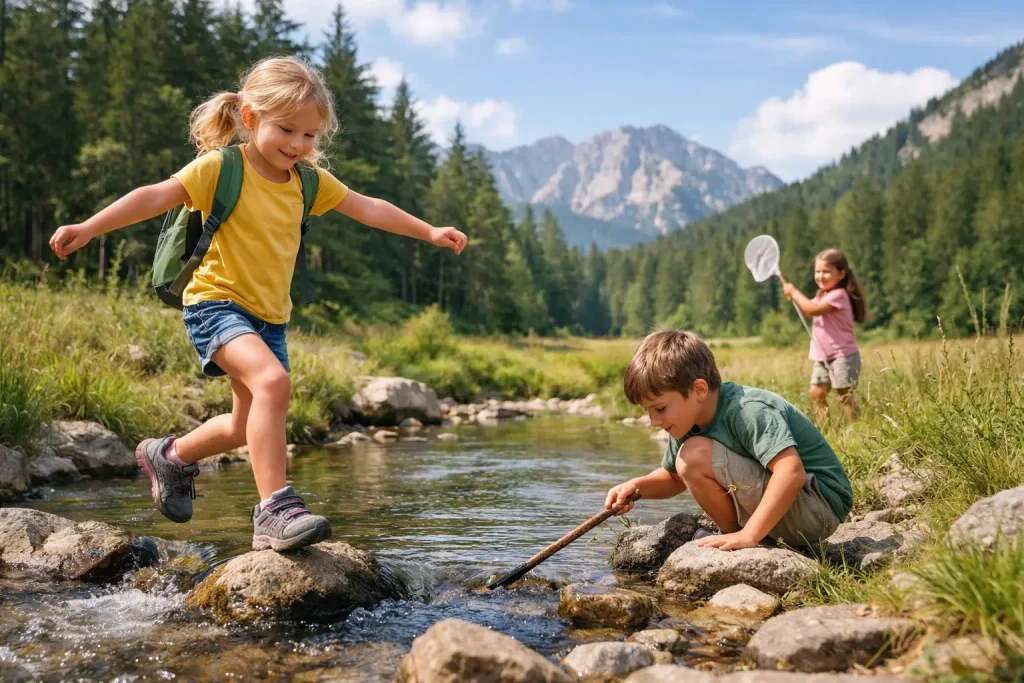
A child balancing on a log, crouching to inspect an ant trail, or racing across open grass is not simply passing time. Those moments are full of learning. When parents ask why is outdoor play important, the answer reaches far beyond fresh air and a chance to burn energy. Outdoor play supports the whole child – body, mind, emotions, relationships and confidence.
For young children especially, the outdoors offers something indoor spaces cannot fully replicate: room to move freely, explore with all the senses, and make sense of the world through direct experience. It is where curiosity becomes action. It is also where many children feel most alive, capable and joyful.
Why is outdoor play important in early childhood?
Early childhood is a period of rapid growth. Children are building muscle strength, language, self-control, problem-solving ability and social awareness all at once. Outdoor play supports these areas together rather than in isolation.
When a child climbs, runs, digs, pours, balances or builds outside, they are strengthening gross motor skills and coordination. At the same time, they are making decisions, managing risk, negotiating with others and testing ideas. A muddy patch can become a science lesson, a storytelling prompt and a teamwork exercise in the space of ten minutes.
That is one reason outdoor play matters so deeply in the early years. It meets children where they are – active, curious and eager to learn by doing. For children aged 2 to 7, that kind of learning is not a break from development. It is development.
Movement builds the brain as well as the body
Parents often notice the physical benefits of outdoor play first. Children sleep better, eat better and seem more settled after time outside. Those effects are real, but the impact goes further.
Active outdoor play helps children develop balance, posture, coordination and spatial awareness. These are the foundations for everyday confidence. A child who can jump, climb steps securely, steer a tricycle or carry materials from one place to another feels more capable in their own body.
That physical confidence often supports learning in other areas. Children who have strong core strength and body control may find it easier to sit comfortably, hold a pencil with stability and participate in classroom routines. Outdoor movement does not replace structured learning, but it often prepares children for it.
There is also an important difference between moving indoors and moving outdoors. Outside, children tend to move in more varied and challenging ways. Uneven ground, slopes, loose parts, natural textures and wider spaces invite the body to adapt. That variety is valuable. It helps children become more resilient, flexible and aware.
Outdoor play encourages real curiosity
Children are natural investigators. They want to know what happens when sand is wet, why leaves fall, where insects hide and how shadows change. Outside, these questions appear naturally.
This is where outdoor play becomes a powerful learning environment. Rather than receiving information first, children encounter something interesting and begin asking questions. They compare, predict, test and observe. That process builds early scientific thinking in a very genuine way.
It also supports language. Children describe textures, explain ideas, retell events and learn new vocabulary through meaningful experiences. Words like smooth, slippery, enormous, fragile and crunchy make more sense when a child can touch, lift or hear the thing being described.
For some children, outdoor spaces also reduce pressure. They may feel more comfortable speaking, imagining and experimenting when they are not confined to a desk or expected to produce a perfect answer. The openness of the environment can lead to more original thinking.
Confidence grows when children try, assess and try again
One of the quieter benefits of outdoor play is self-belief. Children build confidence when they face manageable challenges and discover that they can cope.
Climbing a low structure, stepping across stones, carrying a watering can or joining a group game all involve a degree of uncertainty. Children have to judge, adjust and persist. Sometimes they succeed immediately. Sometimes they wobble, rethink and try once more. Both outcomes are useful.
This kind of challenge is different from being pushed too far. Good outdoor environments are carefully prepared so children can take age-appropriate risks with adult guidance nearby. That balance matters. Too little challenge can leave children hesitant. Too much can feel overwhelming. The goal is not fearless children. It is capable children.
Over time, these experiences help children develop resilience. They learn that not getting something right at first is normal. They learn to keep going. That lesson carries into friendships, school routines and later academic learning.
Social skills often develop more naturally outside
Outdoor play gives children a reason to interact. They need to take turns on equipment, decide the rules of a game, work together to move materials or share space in a pretend scenario. Because play is purposeful and engaging, social learning tends to feel natural rather than forced.
For younger children, outdoor play can reduce some of the tension that appears in more enclosed settings. There is simply more space to spread out, observe others, join gradually or take a short break before re-entering play. That can be especially helpful for children who are still learning how to manage big feelings.
Outdoor play also supports empathy and cooperation. A child helping a friend up a slope, waiting while someone else climbs, or collecting leaves together is practising social awareness in real time. These are early building blocks for kindness, confidence and belonging.
Nature supports emotional wellbeing
Many parents sense that children feel calmer after spending time outdoors. There is good reason for that. Natural spaces can be soothing, and outdoor play offers children a healthy outlet for energy, emotion and sensory needs.
Some children need movement to regulate themselves. Others benefit from sensory experiences such as water play, digging, listening to birds or watching clouds drift overhead. These moments may look simple, but they can have a settling effect.
Outdoor play can also restore a sense of wonder. Childhood should include room for delight – the excitement of spotting a butterfly, splashing in a puddle or discovering that a seed has grown. These experiences matter emotionally. They make childhood feel rich, memorable and connected.
That said, outdoor play is not always peaceful. Sometimes it is loud, messy and energetic. That is part of its value too. Children need opportunities to express themselves fully, not only to remain neat and quiet.
Why outdoor play should be part of a child’s routine
A trip to the park at the weekend is lovely, but regular outdoor play has a different impact. Children benefit most when outdoor experiences are part of daily life rather than an occasional treat.
Consistency allows skills to develop over time. A child who spends time outdoors each day has repeated chances to build stamina, confidence and independence. They become familiar with natural change as well – weather, seasons, textures, growth and movement.
Routine also helps children see the outdoors as a normal place for learning, not just recreation. That shift matters in early education. In thoughtfully designed settings, outdoor classrooms can support everything from early maths and storytelling to gardening, art and imaginative play.
This is where quality makes a difference. Not all outdoor time is equally meaningful. Simply being outside is helpful, but children gain more when the environment is safe, spacious and intentionally prepared by attentive adults. At Alpine Preschool, outdoor learning is valued because it gives children room to flourish with nature while still being supported by trained teachers and a clear developmental approach.
It depends on the child – and that is perfectly normal
Some children run outside eagerly. Others need a little time. Some love mud kitchens and climbing frames, while others prefer collecting leaves, watering plants or sitting quietly with a friend. Outdoor play should not look identical for every child.
That is why responsive adults matter. The aim is not to force one type of play, but to offer rich possibilities and gentle encouragement. A confident environment respects personality while still broadening experience.
Parents sometimes worry about mess, minor tumbles or children spending more time outside than on formal academics. Those concerns are understandable. Yet in the early years, outdoor play and learning are not opposites. When thoughtfully woven into a child’s day, outdoor experiences strengthen many of the same foundations that later support reading, writing, attention and independence.
A good early childhood setting does not ask children to choose between joy and learning. It understands that, very often, they arrive together – in a patch of grass, under a shady tree, with muddy hands and bright, curious eyes.
If you are choosing an early years environment for your child, it is worth looking beyond the classroom walls. The places where children can move, explore, wonder and play may tell you just as much about how they will grow.