


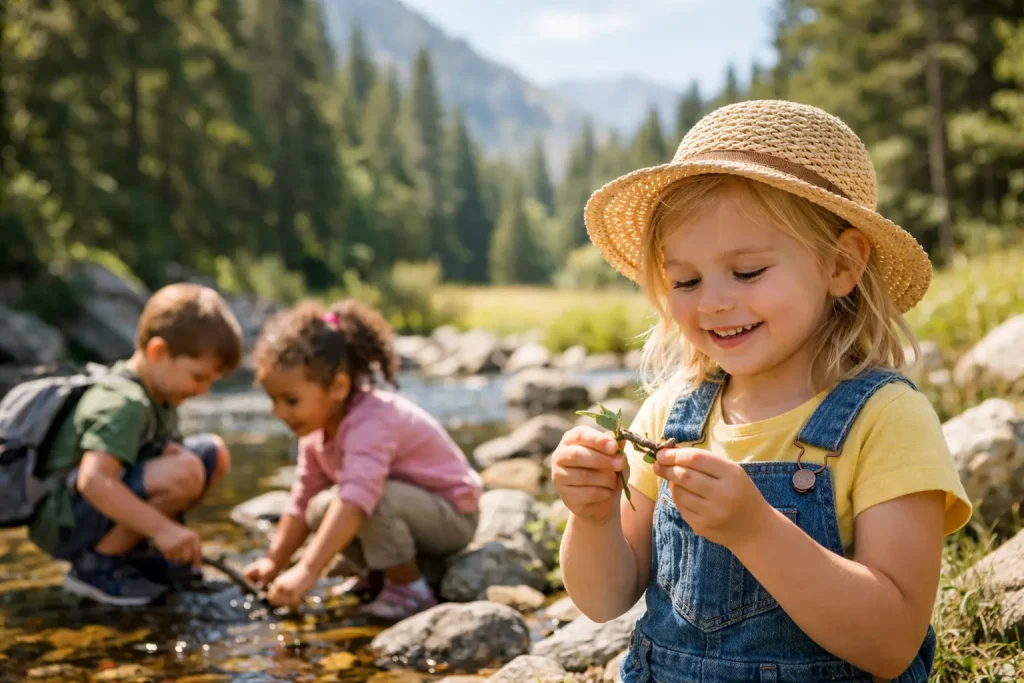
The first time you step into a preschool, you usually know something within minutes. It may be the way teachers greet children at eye level, the calm rhythm of the classroom, or the sight of little ones investigating leaves, paint, water and stories with complete absorption. For many parents, how to choose a preschool is not only about academics. It is about finding a place where your child feels safe, seen and excited to return the next day.
That is what makes the decision both emotional and practical. A beautiful classroom means very little if the teaching lacks depth. Equally, a strong curriculum can feel too rigid if children have no room to explore, move and wonder. The best choice is usually a thoughtful balance – one that supports school readiness while still protecting the joy of childhood.
How to choose a preschool by starting with your child
Before comparing schools, begin at home. Every child arrives with a different temperament, pace and set of needs. Some children settle quickly and thrive in busy social settings. Others need gentler transitions, smaller groups or more reassurance from familiar adults.
A preschool should not ask your child to become someone else in order to fit in. It should offer enough structure to build confidence, while making space for personality, curiosity and emotional development. If your child is highly active, an environment with meaningful outdoor time may matter more than polished worksheets. If your child is quieter, warm teachers and predictable routines may shape the experience more than any brochure ever could.
This is also the right moment to think about your family’s priorities. Some parents want a strong academic foundation before primary school. Others place equal value on independence, language development, social confidence, creativity or nature-connected learning. Most families want all of these, but knowing what matters most will help you ask better questions.
Look beyond the classroom decor
It is easy to be charmed by attractive spaces, themed walls and neatly arranged resources. Presentation does matter, because it reflects care and intentionality. Still, the real question is how the space is used.
A strong preschool environment invites children to do, not simply to sit. You want to see materials within reach, spaces designed for conversation and play, and areas that support different kinds of learning – reading, building, sensory exploration, imaginative play and quiet rest. Outdoor areas deserve the same attention. Green space, natural textures and room to move can transform the preschool day, especially for young children who learn with their whole bodies.
Purpose-built campuses often have an advantage here because they can support a fuller range of experiences. Outdoor classrooms, shaded play zones and carefully planned learning corners tend to create a richer daily rhythm than spaces adapted as an afterthought.
Ask what children actually do all day
One of the most useful ways to understand how to choose a preschool is to ask about the daily experience, not just the school philosophy. Many schools describe themselves as play-based, child-centred or holistic. Those words can mean very different things in practice.
Ask what a typical morning looks like. How much time is spent in teacher-guided learning, free play, outdoor exploration, group activities and rest? How are early literacy and numeracy introduced? How do teachers support communication, turn-taking and emotional regulation?
A high-quality preschool does not treat play and learning as opposites. It uses play with purpose. Children may build early maths concepts through sorting and measuring, develop language through storytelling and role play, or strengthen concentration through hands-on sensory work. The most effective settings understand that young children learn deeply when they are engaged, active and emotionally secure.
That balance matters even more in the years before formal schooling. A programme that is too loose may leave gaps in readiness. One that is too pressured can flatten confidence and curiosity. The strongest settings guide children steadily through developmental milestones without rushing them.
The curriculum should feel clear, not crowded
Parents do not need pages of educational jargon. What you do need is clarity. A preschool should be able to explain what children are learning at each stage and why it suits that age group.
For younger children, that may include social confidence, routine, sensory development and language-rich experiences. As children grow, the programme should expand into stronger cognitive skills, problem-solving, early reading and writing readiness, and habits such as listening, persistence and independence. A staged pathway can be especially helpful because it shows how learning builds over time rather than appearing as disconnected activities.
Teaching quality matters more than any facility
Even the most beautiful preschool depends on the adults within it. Teachers shape the emotional climate, model behaviour and turn everyday moments into learning opportunities. That is why qualifications, training and classroom presence deserve close attention.
When you visit, watch how teachers speak to children. Are they patient and respectful? Do they guide gently, or mostly correct? Do they notice individual needs? A confident teacher can hold structure and warmth together. Children know where the boundaries are, but they also feel encouraged to ask questions, try again and express themselves.
It is also worth asking about staff continuity. Young children form strong attachments, and frequent turnover can unsettle them. Consistent educators often mean more secure relationships and better understanding of each child’s development.
How the school handles behaviour tells you a great deal
Every preschool can describe its happy moments. The better test is how it responds when things are hard – when a child struggles to share, becomes overwhelmed, or finds separation difficult.
Look for an approach that is calm, respectful and developmentally informed. Young children need guidance, not shame. A preschool should help them name feelings, practise boundaries and build self-control gradually. This kind of emotional coaching is not separate from education. It is part of it.
Safety should feel visible and calm
Parents are right to ask detailed questions about safety. Entry procedures, supervision, hygiene, emergency planning and child protection policies all matter. But safety is not only about locked gates and checklists. It is also about the atmosphere.
In a well-run preschool, safety feels woven into the day. Children move through routines confidently, teachers are attentive without being tense, and spaces are organised to reduce unnecessary risk. Cleanliness, secure outdoor areas and thoughtful transitions all contribute to that sense of trust.
If you are visiting schools in areas such as Taman Impian Emas, Bandar Dato Onn, Johor Bahru or Setia Tropika, practical factors like traffic flow, travel time and drop-off arrangements may also shape your decision more than you expect. A long, stressful commute can affect the whole family routine.
Notice the partnership with parents
The right preschool does not treat families as spectators. It sees parents as partners in a child’s development. That does not mean constant messages throughout the day, but it does mean clear communication, thoughtful feedback and a sense that your questions are welcome.
Ask how the school shares progress. Do teachers offer regular updates on learning, adjustment and wellbeing? Is there a clear process if concerns arise? Good communication builds confidence, especially in the early weeks when both child and parent are adjusting.
Schools that value partnership also tend to understand the bigger picture of childhood. They know that sleep, routines, toilet training, friendships and confidence all influence learning. A nurturing preschool works with families, not around them.
Trust the atmosphere, but test it with questions
Sometimes parents feel they must choose between their instincts and the school’s credentials. In truth, you need both. Warmth without quality is not enough. Quality without warmth rarely feels right for very young children.
That is why visiting matters. Observe a class if you can. Listen to the noise level. Notice whether children seem busy in a healthy way or overstimulated and adrift. See whether displays celebrate children’s own work rather than perfect adult-made crafts. If a school speaks often about curiosity, kindness and confidence, you should be able to see those values in action.
At Alpine Preschool, this balance is at the heart of the experience: structured early education shaped by trained teachers, with room for outdoor discovery, creativity and meaningful childhood moments. For many families, that combination is what turns a school from merely suitable into truly special.
A simple question to keep in mind
As you compare options, keep returning to one question: can my child flourish here? Not just cope, not just perform, but flourish.
The right preschool will challenge your child in age-appropriate ways, protect their sense of wonder and help them grow into themselves with confidence. When a school offers both strong foundations and a joyful environment, you are not simply choosing a place for the next year or two. You are choosing the tone of your child’s early learning story.
Take your time, ask direct questions and pay attention to the small details. The best preschool choice often feels reassuring for a reason – because care, quality and childhood joy are all present in the same place.