


When parents ask what is early childhood education diploma, they are often really asking a deeper question – what kind of training helps a teacher truly understand young children. In the early years, qualifications matter because these are the formative stages when confidence, communication, curiosity and emotional security begin to take shape.
An early childhood education diploma is a professional qualification that prepares someone to work with young children, usually from infancy to around age eight, depending on the country and training provider. It focuses on child development, learning through play, classroom practice, behaviour guidance, health and safety, observation, and partnership with families. In simple terms, it teaches future educators how to support children in thoughtful, age-appropriate ways rather than simply supervise them.
For parents choosing a preschool, this matters more than it may first seem. A warm smile and a cheerful classroom are lovely, but they are not the whole picture. Behind a truly high-quality early years setting, there is usually careful professional knowledge about how children learn, what they need emotionally, and how to create an environment where they can flourish.
What is early childhood education diploma training designed to do?
The purpose of this diploma is not just to help someone manage a class of young children. It is designed to build a strong foundation in how children grow, think, communicate and relate to the world around them.
A well-structured programme usually teaches students how to recognise developmental milestones, plan meaningful activities and respond to individual needs. That includes everything from language development and early numeracy to social confidence, sensory learning and self-help skills. In many courses, students also learn how to observe children carefully, document progress and adapt activities when a child needs more support or more challenge.
This is especially valuable in preschool education because young children do not learn in isolated boxes. A painting activity may build fine motor control, language, confidence and creativity all at once. Outdoor play may support physical coordination, problem-solving, risk assessment and cooperation. Diploma-level training helps educators see those connections and use them intentionally.
What students usually learn in an early childhood education diploma
Although course content varies, most diplomas cover several core areas. Child development sits at the heart of the qualification. Students learn about physical, cognitive, social and emotional growth, and how development can differ from one child to another.
There is usually a strong focus on play-based learning. This is important because in quality early years settings, play is not treated as empty time. It is recognised as one of the most natural and effective ways young children make sense of their world. Through guided and open-ended experiences, children practise language, build resilience, test ideas and develop independence.
Another common area is curriculum planning. This means learning how to create experiences that are engaging, purposeful and suitable for a child’s age and stage. A good educator does not simply fill the day with activities. They plan with intention, knowing why a sensory tray, story session or nature walk may support a particular area of growth.
Students are also often trained in safeguarding, nutrition, hygiene and health practices. In an early years environment, care and education are closely connected. Children learn best when they feel safe, settled and physically well.
Family engagement is another important part of the diploma. Young children do best when parents and educators work together with trust and consistency. Training often includes communication skills, reporting methods and ways to build respectful partnerships with families from different backgrounds.
Why this qualification matters in a preschool setting
It is possible for someone to be kind, energetic and good with children without formal training. But working in early childhood education asks for more than good intentions. It requires judgement, patience, observation and the ability to respond to children with both warmth and expertise.
A diploma helps bridge that gap. It gives educators a framework for understanding behaviour, designing learning experiences and supporting different personalities. For example, a trained teacher is more likely to see that a child who seems withdrawn may need time, security and gentle encouragement rather than pressure. They are also more likely to recognise when a child is ready for a new challenge and how to introduce it confidently.
For parents, this can make a real difference to daily school life. It influences how routines are managed, how conflicts are handled, how learning spaces are organised and how each child’s progress is noticed. In settings that value nature, creativity and whole-child development, trained educators are especially important because these approaches still require structure, observation and clear developmental purpose.
What is early childhood education diploma practice like?
Most diploma programmes include practical placements in nurseries, preschools or kindergartens. This is where theory meets real life. Students begin to apply what they have learned by observing classrooms, interacting with children and planning supervised activities.
This practical element is essential. Young children are wonderfully unpredictable, and no textbook can fully prepare someone for the rhythm of a real early years environment. During placement, future educators learn how to guide transitions, respond calmly to big feelings, encourage participation and build trust with children who may need different kinds of support.
They also begin to understand the pace of the job. Early childhood education is joyful, but it is not passive. It calls for presence, emotional steadiness and consistent care. A diploma should help students build those professional habits gradually and thoughtfully.
Is a diploma the same as a degree?
Not quite. A diploma is generally a more focused vocational qualification, while a degree is usually broader and more academic. A diploma often prepares someone directly for hands-on work in early years settings, whereas a degree may open doors to advanced study, leadership roles or specialised fields.
That said, one is not automatically better than the other in every context. It depends on the person’s goals, the country’s education system and the role they want to pursue. Many excellent early years educators begin with a diploma and go on to build meaningful, skilled careers. What matters most is the quality of the training, the practical experience and the educator’s ability to apply their learning with care.
What parents should understand about teacher qualifications
Parents do not need to become experts in course structures to ask thoughtful questions about a preschool team. It is perfectly reasonable to ask whether teachers are trained in early childhood education, whether they understand child development and how the school supports continuous professional learning.
A qualification alone does not guarantee a magical classroom experience. The environment, leadership, teacher-child relationships and daily programme all matter too. Even so, a strong diploma is often a sign that an educator has been taught to approach young children with intention, respect and developmental understanding.
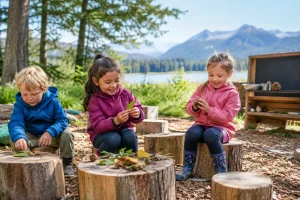
This matters especially in the preschool years, when children are building early literacy foundations, self-regulation, confidence and social awareness. A trained educator can turn ordinary moments into meaningful learning – a conversation at snack time, a garden exploration, a story circle under the trees, a shared problem between friends.
In schools that blend structured learning with sensory play and outdoor discovery, this training becomes even more valuable. Children benefit from adults who know when to guide, when to step back and when to let curiosity lead.
Who is an early childhood education diploma suitable for?
This qualification usually suits people who genuinely enjoy being with young children and want to build a professional career in early years education. It tends to attract those who are patient, observant, creative and emotionally steady.
It is not only for people who imagine traditional classroom teaching. Diploma holders may work in nurseries, preschools, kindergartens, childcare centres and other child-focused settings. Some later move into curriculum support, family services or further study.
The work itself is rewarding, but it also asks for commitment. Early years educators shape routines, relationships and first learning experiences. They help children feel secure enough to explore and confident enough to try. That is meaningful work, and it deserves proper preparation.
At places such as Alpine Preschool, where children are encouraged to learn through play, movement, nature and caring guidance, the value of trained early years educators is especially clear. A beautiful campus and inspiring activities matter, but it is the teacher’s knowledge and presence that bring those experiences to life.
When you hear the question what is early childhood education diploma, the simplest answer is this: it is a qualification that helps adults become thoughtful, capable guides in a child’s earliest years of learning. And for families choosing where their child will spend those precious years, that knowledge is never just a detail. It is part of the foundation children stand on as they grow.