
Choosing a private kindergarten Setia Tropika parents feel confident about often comes down to more than academics. At this age, children are building language, confidence, friendships, self-help skills and their first relationship with learning itself. The right environment should feel warm and joyful, but it should also be thoughtfully structured, safe and guided by educators who understand early childhood development.
For many families, that balance is the real question. A beautiful classroom may catch your eye, and a busy timetable may sound impressive, but what matters most is how a school helps a child grow across the whole day – socially, emotionally, physically and cognitively. A strong kindergarten experience should never feel rushed or overly rigid. It should give children room to explore while gently preparing them for the next stage of school.
What to look for in a private kindergarten Setia Tropika
When parents begin comparing kindergartens, it is easy to focus on surface details first. Fees, distance from home and class schedules matter, of course, but they are only part of the picture. The deeper questions tend to reveal more.
Start with the school’s view of childhood. Does it treat the early years as a race to memorise facts, or as a foundational stage where children learn through guided play, conversation, movement, creativity and hands-on discovery? The best settings understand that school readiness is not only about recognising letters and numbers. It is also about listening, following routines, expressing needs, managing emotions and feeling secure enough to participate.
Teacher quality is another major factor. Young children need adults who are calm, observant and well trained, not simply friendly. A strong teacher knows when to step in, when to encourage independence and how to shape learning around developmental milestones. This is especially important in mixed abilities, where one child may be ready to write simple words while another is still strengthening fine motor control.
The physical environment also deserves close attention. Spacious classrooms, safe outdoor areas, child-sized facilities and well-organised learning corners can make a noticeable difference to a child’s daily experience. For many parents, outdoor space is no longer a bonus. It is part of a healthy early years setting, giving children opportunities for movement, sensory play, social development and a more natural rhythm to the day.
A strong kindergarten is more than early academics
Some parents understandably worry about whether a play-based environment will prepare their child for primary school. The answer depends on how that play is planned.
Good early years programmes are not aimless. They are carefully designed so that children build pre-literacy, numeracy, problem-solving and communication skills through meaningful activity. A storytelling session develops listening and vocabulary. Water play can introduce comparison, measurement and scientific thinking. Building with blocks strengthens spatial awareness, persistence and cooperation. Creative activities support hand strength, concentration and self-expression.
This is where structure matters. A well-run kindergarten does not simply offer play and hope learning happens by chance. It provides a clear pathway, with experiences matched to age and stage. Children should be challenged, but not pressured. They should feel proud of progress, not burdened by expectations beyond their readiness.
There is also a trade-off worth recognising. Highly academic environments may produce quick visible results, such as worksheets completed neatly or facts recited confidently. Yet if the pace is too fast, some children become anxious, passive or dependent on constant instruction. A more balanced approach may look gentler from the outside, but often supports stronger long-term confidence, curiosity and resilience.
Why outdoor learning matters in the early years
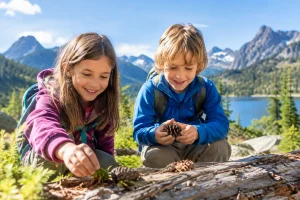
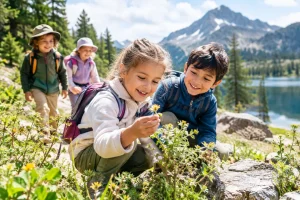
For young children, learning does not begin and end at a table. They learn with their whole bodies. They climb, sort, collect, imagine, notice, ask, test and repeat. That is why access to green space and outdoor learning can be so valuable in a kindergarten setting.
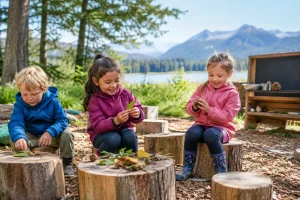
Nature-connected experiences bring a different quality to the day. Children who spend time outdoors often have more opportunities to practise balance, coordination, teamwork and independent exploration. They can observe insects, leaves, weather and seasonal change in ways that make learning feel real rather than abstract. Even simple moments, such as planting, splashing, or drawing what they see, build attention and wonder.
Outdoor time also supports emotional wellbeing. Many children regulate better when they can move freely between focused tasks and active exploration. This can be especially helpful for children who are energetic, cautious in new settings, or still learning to manage big feelings. A school with purposeful outdoor spaces is often creating more than a pleasant campus. It is creating room for children to flourish.
Questions worth asking on a school visit
A visit can tell you far more than a brochure. As you walk through the school, notice how it feels. Are children engaged? Do teachers speak with warmth and clarity? Does the environment feel orderly without being overly strict?
It helps to ask how the curriculum is organised across the different age groups. A well-planned pathway from playgroup to kindergarten should reflect changing developmental needs. Two-year-olds need security, sensory exploration and simple routines. Older kindergarten children need richer language experiences, stronger cognitive challenge and growing independence. The progression should feel intentional.
Ask how children are supported if they settle slowly, need extra encouragement socially or show different learning patterns. Not every child adapts at the same pace, and a thoughtful school will have practical ways to guide that transition. It is also worth asking how teachers communicate with families. Regular updates, clear observations and an open partnership with parents often make a significant difference.
Health, safety and hygiene are non-negotiable, but they should be handled with calm professionalism rather than fear. You want to see systems that are consistent and sensible, from arrival routines to supervision and cleanliness, without the setting feeling clinical or restrictive.
The value of a staged early years pathway
One of the clearest signs of quality in a private kindergarten Setia Tropika parents can rely on is a staged programme that respects how children develop over time. The early years are not one single phase. A child of two learns very differently from a child of six, even if both benefit from play, connection and encouragement.
A staged pathway allows each year to build naturally on the one before. Early classes may focus on routine, sensory learning, social confidence and language exposure. Nursery can extend this with broader exploration, imaginative play and early concept development. Kindergarten years can then strengthen foundational literacy, numeracy, reasoning and independence in a way that still feels joyful and age-appropriate.
This kind of progression often reassures parents because it brings clarity. You can see not only what your child is doing now, but how today’s experiences support tomorrow’s readiness. It creates continuity, and continuity matters in the early years.
At Alpine Preschool, this approach is shaped through a structured pathway from Playgroup to Kindergarten 2, supported by trained teachers, purpose-built spaces and nature-connected learning experiences that help children grow with confidence and curiosity.
Finding the right fit for your child and family
There is no single perfect formula for every child. Some children thrive in a lively, highly social environment. Others need a gentler start with more reassurance and quieter transitions. Some families want a school very close to home, while others are willing to travel slightly further for the right philosophy, environment and teaching quality.
That is why fit matters as much as reputation. A school may be excellent on paper, but the best choice is the one where your child feels secure, seen and inspired to participate. Parents often sense this quickly when they visit. You can see it in the way children enter the classroom, the way teachers respond to questions, and the way the day is organised around real childhood rather than performance.
If you are looking at kindergartens around Setia Tropika, it helps to think beyond short-term convenience. The early years set the tone for learning, relationships and self-belief. A nurturing, thoughtfully structured setting can give a child not only a strong start for primary school, but a happy memory of what school feels like.
That is worth choosing with care, because the best early education does not push childhood aside – it protects it, enriches it and helps it shine.