
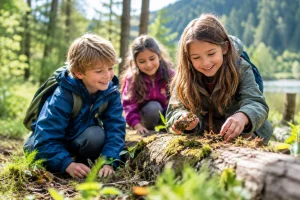
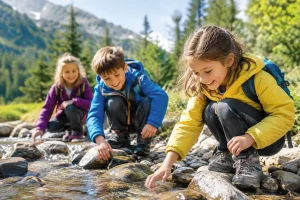
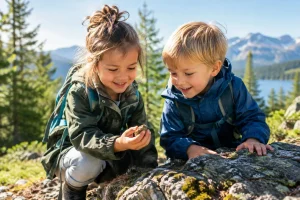
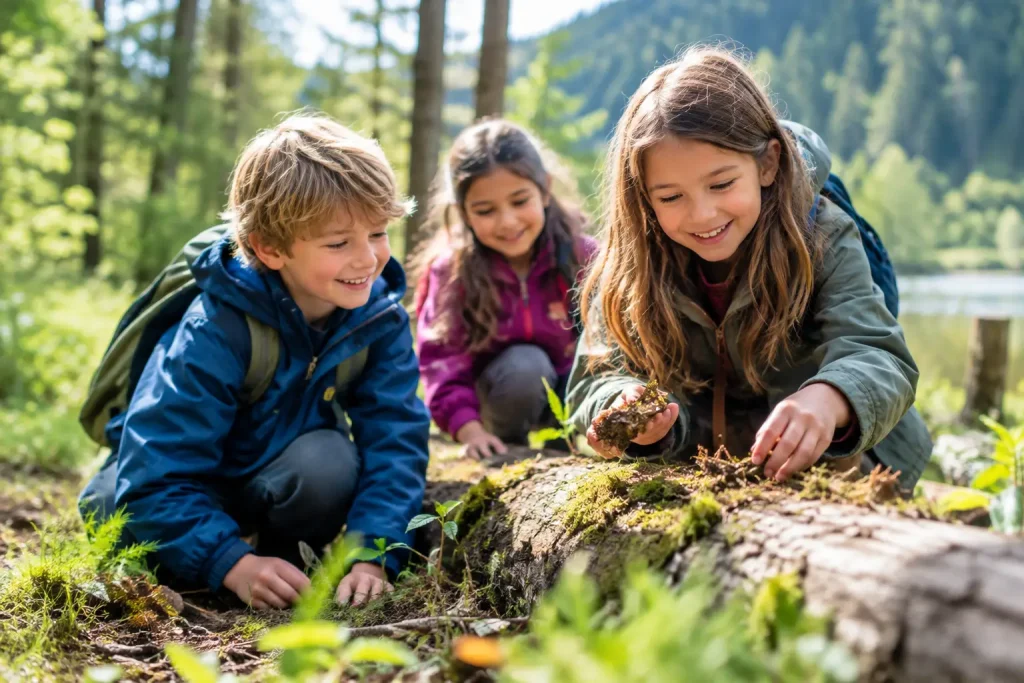
A child crouches beside a fallen branch, noticing the tiny trails beneath the bark. Another works with friends to balance logs into a shelter. There may be muddy knees and damp sleeves, but there is also deep concentration, rich language and real pride. For parents asking, what is forest school, this is the heart of it: meaningful learning that happens through regular, supported experiences in nature.
Forest school is not simply taking a lesson outside or having extra playtime in the garden. It is an approach to early education that gives children time, freedom and skilled guidance to explore natural environments. Through repeated visits, children build confidence in their own abilities, develop a respectful relationship with the living world and learn through experiences they can see, touch and test for themselves.
What Is Forest School?
Forest school is a long-term, child-centred approach to learning in an outdoor natural setting. It is usually led by trained educators who observe children closely, introduce appropriate challenge and help them assess manageable risks. The woodland does not have to be vast or remote. A thoughtfully designed green space with trees, plants, natural materials and room to explore can offer valuable forest school experiences.
The key word is regular. Children return to the same outdoor environment across weeks, months or even seasons. They notice that a bare branch becomes covered in leaves, that rain changes the ground beneath their feet, and that insects appear in different places at different times of year. This familiarity gives children the confidence to investigate more deeply rather than merely rushing from one activity to another.
Forest school is often child-led, meaning educators follow children’s interests while holding clear boundaries for safety and care. If a group becomes fascinated by a snail, that interest can lead naturally to questions about movement, habitats, patterns, kindness and living things. If children want to make a den, they practise planning, collaboration, balance and perseverance as they bring their idea to life.
Why Nature-Based Learning Matters in the Early Years
Young children learn with their whole bodies. They need to move, carry, climb, listen, negotiate and make sense of what they encounter. Natural spaces offer sensory experiences that cannot be fully recreated by plastic equipment or worksheets: the roughness of bark, the sound of wind through leaves, the changing texture of soil after rain and the scent of herbs growing nearby.
These experiences support physical development, including balance, coordination, strength and fine motor control. Picking up small stones, threading leaves, digging, pouring and using child-appropriate tools all ask little hands to work with purpose. At the same time, uneven ground and open-ended materials invite children to judge distance, adapt their movement and become more aware of their bodies.
Just as importantly, nature gives children room to feel capable. A child who initially watches from the side may one day decide to step across a low log, speak up during a group project or carry a bucket of leaves for the first time. These small moments matter. Confidence grows not from being told that everything is easy, but from meeting a challenge with encouragement and discovering, “I can try.”
Learning without forcing the lesson
Forest school does not mean academic learning is forgotten. Rather, early literacy and numeracy emerge in meaningful ways. Children may count sticks for a shelter, compare the sizes of leaves, recognise shapes in a spider’s web, make marks in mud or retell a story around a tree stump. Vocabulary becomes richer when children have genuine experiences to describe.
A skilled educator knows when to extend these moments. They might ask, “What do you think will make the bridge stronger?” or “How could we find out which puddle is deepest?” Such questions invite prediction, problem-solving and conversation without turning curiosity into a test.
This matters especially during the preschool years, when a strong foundation is built through active, joyful learning. Children who feel safe to ask questions and make mistakes are more likely to approach new ideas with confidence.
Forest School Builds More Than Outdoor Skills
Parents sometimes imagine forest school is mainly about climbing trees, collecting leaves and getting muddy. These can certainly be part of the experience, but the developmental value reaches much further.
Socially, children learn to share space and materials, listen to one another and cooperate towards a common goal. Building a shelter, creating a pretend café from natural materials or deciding how to transport a heavy branch all require communication. There may be disagreements, too, which become valuable opportunities to practise expressing needs, taking turns and finding a fair solution.
Emotionally, regular outdoor learning can support resilience. Nature is wonderfully unpredictable: a carefully built tower may topple, a planned activity may change because of rain, or a child may find a task harder than expected. With patient adult support, children learn that frustration can be worked through. They begin to understand that trying again is part of learning.
There is also a quieter benefit. Many children find that time outdoors helps them slow down, focus their attention and regulate big feelings. A peaceful corner of a garden, the rhythm of sweeping leaves or the simple act of watching ants can create welcome space in a busy week.
Is Forest School Safe for Young Children?
A high-quality forest school programme does not remove all challenge. It manages risk carefully so children can learn to make sensible decisions. There is an important difference between a hazard and a healthy challenge. A hidden broken object is a hazard that should be removed. Climbing a low, sturdy log with an educator nearby can be a challenge that helps a child develop judgement and confidence.
Educators should assess the environment, establish clear routines and select activities that suit each child’s stage of development. Children learn practical expectations such as carrying sticks carefully, using tools only with guidance, staying within agreed boundaries and respecting plants and creatures.
Weather also needs thoughtful planning. Outdoor learning is not about sending children outside regardless of conditions. Very hot weather, storms, poor air quality or unsafe ground call for sensible adjustments. On suitable days, however, light rain or cooler temperatures can become part of the experience when children have appropriate clothing, warm support and a comfortable place to dry off afterwards.
Forest School and Structured Preschool Can Work Together
Forest school is sometimes misunderstood as an alternative to all structure. In reality, the strongest early years education often combines purposeful routines with generous opportunities for child-led exploration.
Children benefit from knowing what to expect: welcoming routines, caring relationships, clear boundaries and a developmentally appropriate curriculum. They also benefit from time to follow an idea, experiment with materials and learn outdoors. One does not need to replace the other.
At Alpine Preschool, nature-connected learning can sit alongside a carefully planned educational pathway for children aged two to seven. Outdoor classrooms, green spaces, excursions and sensory play add depth to a child’s learning journey, while trained teachers ensure that experiences remain safe, intentional and suited to each stage of development.
For a younger child, this may mean filling and emptying containers with leaves, listening for bird sounds or learning to wait for a turn. For an older child, it may involve planning a nature hunt, recording observations, taking greater responsibility for equipment or working with peers on a shared project. The activity may look simple, yet the learning can be wonderfully layered.
What to Look for in a Forest School-Inspired Setting
If outdoor learning is important to your family, look beyond photographs of children in a garden. Ask how often children spend time outside and whether they return to the same spaces across the year. Find out how educators support different confidence levels, including children who are cautious, highly energetic or sensitive to certain textures and weather conditions.
It is also worth asking about staff training, supervision, safety routines and the balance between free exploration and guided learning. A quality programme should feel joyful, but never careless. It should allow children to take age-appropriate risks while knowing that attentive adults are nearby.
Most of all, notice how the setting speaks about children. The best nature-based programmes do not expect every child to climb, talk loudly or love mud immediately. They offer gentle invitations, celebrate individual progress and make room for each child to flourish in their own way.
A forest school experience may begin with a muddy boot or a pocket full of leaves. Over time, it can become something much more lasting: a child who looks closely, asks bravely, cares deeply and trusts that they can find their way through the world.