
A two-year-old balancing on a low log, a four-year-old carefully pouring water between jugs, and a six-year-old explaining how she built a shelter with friends may look like simple play. Yet these moments reveal what the best preschool learning environments do so well: they give children room to wonder, practise, make choices and grow with confidence.
For parents, choosing a preschool is about far more than attractive classrooms or an early introduction to letters and numbers. The environment becomes part of a child’s daily experience at a formative age. It shapes how safe they feel away from home, how they relate to others, and whether learning feels like a joyful invitation or a source of pressure.
A child feels safe enough to be curious
A wonderful learning environment begins with emotional security. Children are more likely to explore, communicate and persist with a challenge when they trust the adults around them. This comes through in gentle greetings, predictable routines and teachers who take time to listen closely to each child.
Safety is both physical and emotional. Parents should expect clean, well-maintained spaces, careful supervision and clear arrival and collection procedures. Just as importantly, look for a culture where children’s feelings are taken seriously. A child who is disappointed, hesitant or struggling to share needs guidance, not dismissal. When teachers name emotions calmly and help children find a way forward, they build the foundations for resilience and kindness.
Consistency matters, especially during the first weeks of preschool. Familiar routines for meals, rest, play and transitions help young children understand what comes next. That sense of security frees their energy for learning.
The best preschool learning environments invite active play
Young children learn with their whole bodies. They need to touch, move, create, test ideas and repeat experiences until they understand them. A thoughtfully prepared classroom offers open-ended materials that can become many things: blocks, clay, fabric, natural objects, puzzles, books and materials for drawing or making.
The value lies not in having the most toys. It lies in selecting resources that encourage imagination and thought. A set of wooden blocks can support early mathematics as children compare size, balance structures and recognise patterns. In a pretend kitchen, children develop language, negotiate roles and make sense of familiar life experiences. Painting, cutting and moulding strengthen fine motor control while allowing children to express an idea in their own way.
Play-based learning does not mean children are left without direction. Skilled teachers observe closely, introduce new vocabulary, pose a timely question and extend an activity when a child is ready. A teacher might ask, “What do you think will make your bridge stronger?” rather than immediately showing the answer. This preserves the child’s ownership while supporting deeper thinking.
There is a balance to seek. Too much adult direction can make every activity feel like a test, while too little intention can leave some children without the encouragement they need to progress. The strongest settings combine freedom to explore with a clear understanding of developmental goals.
Outdoor space is a daily classroom, not a bonus
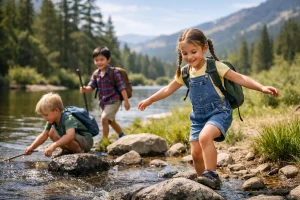
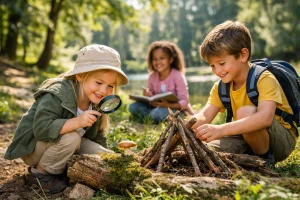
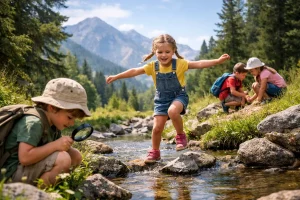
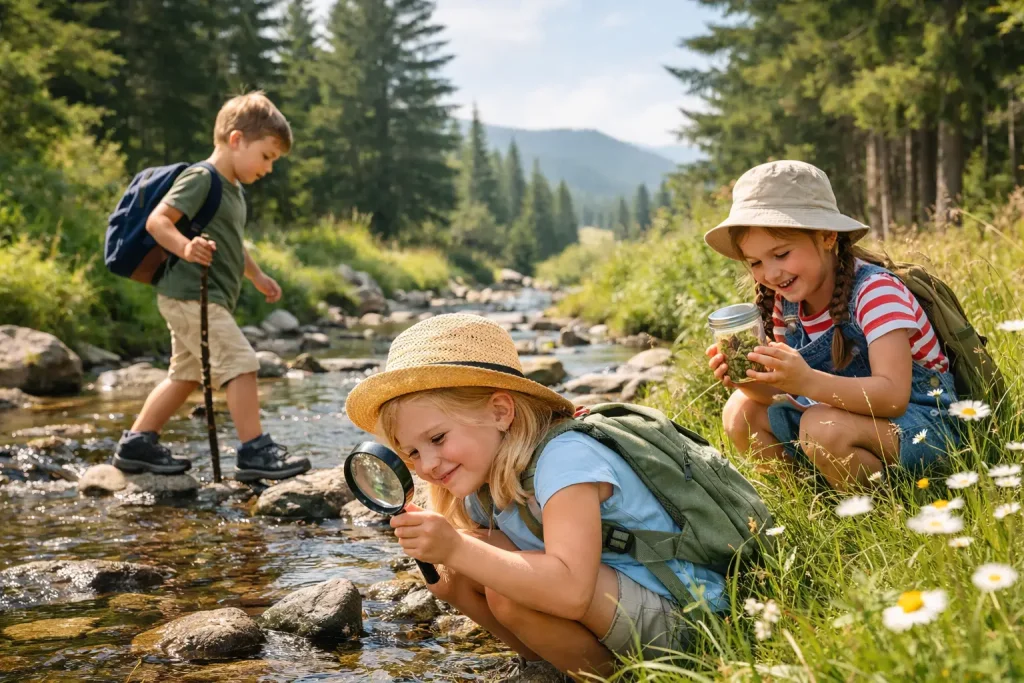
Outdoor learning gives children experiences that cannot be recreated fully indoors. They can feel changing weather, watch insects at work, hear birdsong, run with purpose and assess manageable physical risks. These encounters develop sensory awareness, coordination and respect for the natural world.
A meaningful outdoor area has more to offer than a slide and a few ride-on toys. Look for shade, varied surfaces, planting spaces, opportunities for water and sand play, places to climb, and quieter corners for observation or conversation. Green space can become a setting for storytelling, early science, problem-solving and cooperative games.
Outdoor learning also supports children who do not flourish during long periods of seated activity. Movement can help them regulate their energy and return to focused tasks with greater ease. Rainy days may require a different plan, but nature-connected learning should not disappear whenever the weather is less than perfect. With sensible preparation and supervision, children can still enjoy the changing seasons.
For families in Johor Bahru, a purpose-built campus with generous green outdoor areas can make this part of childhood feel possible every day rather than only on a weekend outing.
Teachers turn a beautiful setting into meaningful learning
The quality of teaching is often the deciding factor between a pleasant preschool and an exceptional one. Warmth is essential, but it should sit alongside professional knowledge of child development. Trained educators understand that children do not all reach milestones at the same moment or in the same way.
They notice the quiet child who is ready to contribute but needs an inviting opening. They recognise when a confident child needs a more challenging task. They help children resolve small conflicts with increasing independence rather than solving every disagreement for them. These everyday interactions shape social confidence as powerfully as planned lessons.
Ask how teachers observe and assess progress. Good assessment in the early years is not a stream of worksheets sent home for proof of learning. It is a careful record of what children can do, what interests them and where they may need support. Parents should receive thoughtful communication that makes their child’s development visible and creates a genuine partnership between home and school.
A low child-to-teacher ratio can allow for more individual attention, although ratios alone do not tell the whole story. A calm, engaged team with clear responsibilities and continuity of care is equally valuable. Children thrive when the adults in their classroom know them well.
Structure should support independence, not rush childhood
Many parents want reassurance that preschool will prepare their child for primary school. This is a sensible concern. Children benefit from developing early literacy, numeracy, listening skills, concentration and the ability to follow routines. However, school readiness is bigger than recognising letters or completing a page of sums.
A ready child can communicate needs, manage simple belongings, take turns, recover after a mistake and try again. They can listen to a story, ask questions and stay engaged in a task for an age-appropriate length of time. These capabilities grow through purposeful daily routines and carefully planned experiences.
The right level of structure depends on age and temperament. A Nursery child may need more time for sensory play, movement and secure relationships. A Kindergarten child may be ready for longer projects, more intentional early writing and activities that strengthen logical thinking. A staged programme gives children a clear path forward without expecting them to leap ahead before they are ready.
At Alpine Preschool, this kind of developmental journey is supported through programmes from Playgroup to Kindergarten 2, combining a structured curriculum with nature-connected exploration. The aim is not to make childhood smaller in pursuit of academic results, but to give each stage the experiences that help a child grow into the next.
Diversity and belonging widen a child’s world
Preschool may be a child’s first regular community beyond family. It is a valuable place to learn that people may speak, celebrate, eat, look and think differently, while all deserve respect. Books, music, classroom displays and festivals should reflect a broad, welcoming view of family and culture.
Belonging also means adapting to individual needs. A child learning more than one language, a child who is slow to settle, or a child with a particular sensory preference should be met with patience and informed support. Inclusion is not about making every child do the same thing. It is about ensuring every child can participate meaningfully in the life of the class.
What parents can notice during a visit
A school visit is most useful when you look beyond the display boards. Notice whether children appear absorbed and comfortable. Listen to how adults speak to them. Are instructions respectful? Do children have chances to choose, move and talk, as well as moments to listen together?
Look at the spaces from a child’s height. Can children reach materials and help care for their environment? Is there evidence of real child-made work, imperfect experiments and evolving projects? A pristine room can be appealing, but a learning space should also show that children are actively using it.
Finally, ask how the school handles the ordinary but important parts of the day: settling in, toileting, meals, rest, conflict, illness and communication with parents. These practical details reveal whether a setting can provide the calm, attentive care that allows learning to flourish.
The best choice is rarely the preschool with the busiest timetable or the most impressive promise. It is the place where your child is known, encouraged and gently challenged – where curiosity is protected, friendships are nurtured and every ordinary day holds a reason to learn.