



A child can only explore bravely when they feel safe first. That is why preschool safety and wellbeing are never just background concerns for parents – they are the foundation of every happy morning drop-off, every confident new friendship, and every small leap towards independence.
When families visit a preschool, they often notice the obvious details first: bright classrooms, smiling teachers, a lovely garden, shelves of inviting resources. Those things matter. Yet what truly shapes a child’s daily experience is less visible. It lives in routines, supervision, staff judgement, emotional support, hygiene habits, and the quiet consistency that helps young children feel secure enough to flourish.
What preschool safety and wellbeing really mean
Safety in a preschool setting is not only about locked gates and softened corners, although physical protection is certainly part of it. It also includes how spaces are arranged, how transitions are managed, how children are supervised outdoors, and how staff respond when something unexpected happens.
Wellbeing goes even further. It covers a child’s emotional security, sense of belonging, confidence, regulation, and ability to express needs. A preschool may look impressive on paper, but if a child feels anxious, overlooked, or overwhelmed each day, the environment is not truly supporting their development.
The strongest early years settings understand that these two ideas belong together. A child who feels emotionally safe is more willing to speak, try, imagine, negotiate, and learn. A child who trusts the adults around them is better placed to build resilience. That is why thoughtful preschools do not separate care from education. They know both must work hand in hand.
Why safety and wellbeing shape learning so deeply
Young children learn with their whole bodies and emotions. They do not neatly separate play, feeling, movement, curiosity, and relationships. If a child is unsettled, hungry, frightened, overstimulated, or unsure what comes next, learning becomes harder. Attention drifts. Confidence shrinks. Small frustrations can quickly become large ones.
By contrast, when children are in a calm and dependable environment, they are more open to discovery. They can move from one activity to another with greater ease, build trust with teachers, and recover more quickly from challenges. This is especially important in the preschool years, when children are still learning how to share, wait, problem-solve, and manage big feelings.
There is also a long-term benefit. Good early experiences help children build an inner sense of security. They begin to understand that adults will listen, routines can be trusted, and new experiences can be approached with confidence. For parents considering a premium preschool, this is often what matters most – not just whether a child can count or recognise letters, but whether they are becoming settled, capable, and joyful learners.
What parents should look for in a safe preschool environment
A well-designed setting often reveals its standards through practical details. Entrances should feel secure and well-managed. Outdoor spaces should invite active play while still being carefully supervised. Toilets, eating areas, and classrooms should feel clean, orderly, and suitable for young children rather than adapted as an afterthought.
Staff presence is just as important as the physical environment. Children need attentive adults who notice quickly when someone is tired, upset, unwell, or at risk of conflict with another child. Good supervision does not feel harsh or restrictive. It feels calm, confident, and present.
Parents should also pay attention to how the day is organised. Predictable routines help children feel safe because they know what to expect. That does not mean every minute should be rigidly controlled. In fact, the best environments balance structure with freedom. Children need room to explore, create, and move, but within boundaries that are clear and reassuring.
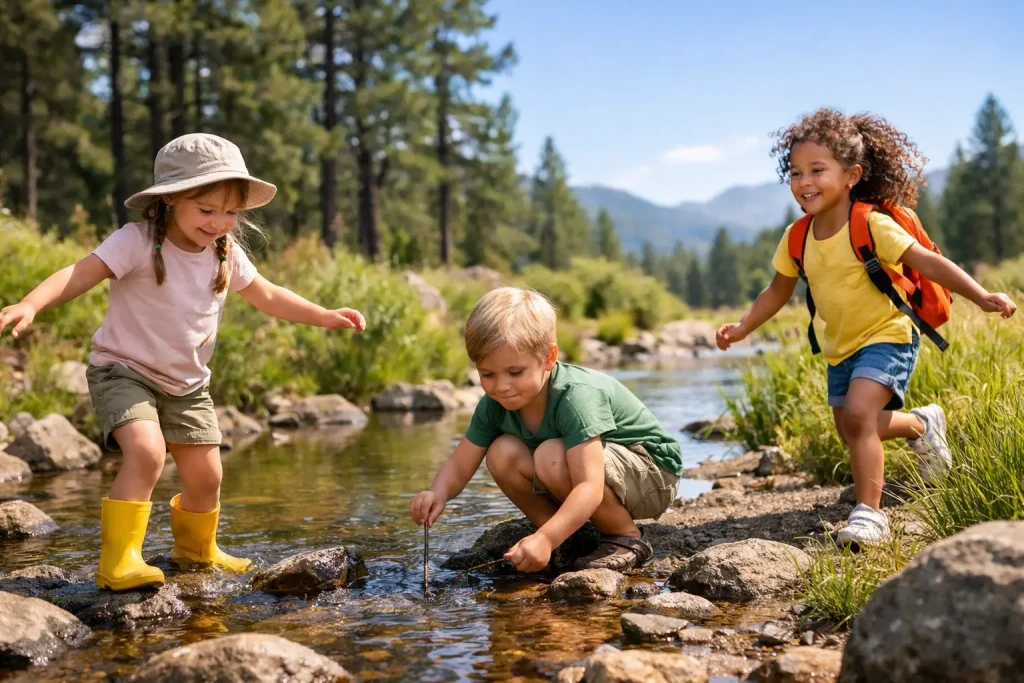
Nature-based learning, for example, can be wonderfully enriching for young children. It supports sensory development, imagination, physical confidence, and curiosity. But outdoor learning must be planned well. Open green spaces, garden areas, and excursions offer tremendous value when risk is understood and managed properly. The goal is not to remove every challenge. It is to create age-appropriate experiences where children can develop judgement, coordination, and confidence with trusted adults close by.
Emotional wellbeing is not an extra
Parents sometimes think of wellbeing as a softer idea than safety, but in practice it is just as essential. A preschool should help children feel seen, respected, and known as individuals. That starts with warm relationships. Teachers should understand that some children settle quickly, while others need gentler transitions, extra reassurance, or time to observe before joining in.
Emotional wellbeing is supported through hundreds of small moments each week. A teacher kneels to listen. A child is helped to name a feeling rather than being hurried past it. Kind behaviour is modelled consistently. Differences in language, personality, and culture are welcomed. These daily experiences tell children, “You belong here.”
This matters because preschool is often a child’s first sustained experience of being part of a wider community. They are learning how to separate from parents, trust other adults, form friendships, and cope with disappointment. A nurturing environment does not remove all discomfort. Children will still have difficult mornings, friendship wobbles, and moments of frustration. What matters is how the adults guide them through those moments.
The role of trained teachers in preschool safety and wellbeing
Facilities matter, but people matter more. Even the most beautiful campus cannot compensate for inconsistent care or weak classroom leadership. Trained early years teachers bring knowledge that parents may not always see immediately, yet it makes an enormous difference.
They understand child development and can recognise what is age-appropriate, what needs support, and when a behaviour might signal tiredness, stress, or an unmet need. They know how to set boundaries kindly, how to encourage independence without pushing too far, and how to prepare children for transitions that can otherwise feel unsettling.
They also know that safety is proactive. It lives in thoughtful room setup, clear expectations, careful observation, and communication with families. When educators work with intention, the day feels smoother for children. Fewer issues escalate, and children spend more time engaged in meaningful play and learning.
How wellbeing looks in daily practice
A preschool that takes wellbeing seriously does not rely on slogans. You can usually feel it in the rhythm of the day. Mornings are welcoming rather than hurried. Classrooms are stimulating but not chaotic. Children have opportunities to move, rest, imagine, talk, and create. Teachers notice both the lively child who needs help slowing down and the quiet child who needs help joining in.
Meals and snack times are handled with care. Toileting and hygiene routines are respectful and age-appropriate. Rest periods, where needed, are protected rather than treated as an inconvenience. There is room for joy, but also room for calm.
This balanced rhythm is especially valuable for children aged 2 to 7, whose needs can vary greatly even within the same class. Some children thrive with immediate independence. Others need repeated reassurance before they feel secure. A strong preschool recognises those differences while still maintaining a shared sense of routine and community.
Questions worth asking when choosing a preschool
Parents do not need to become inspectors, but asking thoughtful questions can reveal a great deal. You might ask how staff support children during settling-in, how outdoor play is supervised, how the school responds to illness or minor accidents, and how teachers communicate concerns about emotional or social development.
It is also useful to ask how children are supported through conflict, change, or anxiety. The answer should sound compassionate and practical, not vague. A good preschool will be able to explain its approach clearly because these situations are part of daily life with young children.
If you are visiting settings in areas such as Johor Bahru, it can be especially helpful to look beyond glossy impressions and focus on how children actually move through the space. Do they seem confident? Do adults speak to them with warmth and respect? Does the environment feel purpose-built for children to explore safely? Those details often tell you more than any brochure can.
One of the reasons families are drawn to schools such as Alpine Preschool is that they are seeking more than supervision. They want a place where children can enjoy the best parts of childhood – movement, nature, creativity, friendship, wonder – while being held within a carefully managed and genuinely nurturing environment.
The right preschool does not simply keep children occupied until they are older. It gives them a secure place to grow roots and wings at the same time. When safety and wellbeing are treated as the heart of early education, children do far more than cope – they begin to shine.