A kindergarten or preschool choice can feel surprisingly weighty. You are not simply choosing a timetable or a classroom. You are choosing the place where your child may make their first close friendships, learn to trust another caring adult, get muddy outdoors, ask bold questions and begin to see themselves as capable.
For many families, the right answer is not the school with the most worksheets or the busiest activity calendar. It is the setting where your child is known, encouraged and gently challenged at the stage they are in now. A thoughtful choice balances practical needs with a bigger question: will this environment help my child flourish?
Start with your child’s readiness, not their age alone
Age requirements matter, but children develop at different rates. One child may be eager for a larger group and a predictable routine, while another may still need more time to build confidence away from home. Neither is ahead or behind. They simply need a setting that responds well to their individual development.
Notice how your child manages short separations, unfamiliar adults and small changes in routine. Consider whether they enjoy being alongside other children, can communicate their needs in a way adults can understand and are beginning to take part in everyday tasks such as washing hands, packing away toys or putting on shoes. These are useful signs, not a pass-or-fail checklist.
A strong early years programme makes room for different starting points. Children should be supported to settle gradually, with teachers who understand that confidence grows through consistent relationships, familiar routines and repeated small successes.
What a meaningful kindergarten or preschool choice looks like
The most appealing prospectus cannot tell you everything. A visit is where you begin to understand the feeling of a school day. Listen to the language adults use with children. Watch whether teachers come down to a child’s level, allow time for answers and guide behaviour with calm, clear boundaries.
Look beyond whether the classroom appears neat. Young children need spaces that invite them to investigate, create and move. Purposeful learning can look wonderfully active: a child measuring water in an outdoor kitchen, negotiating roles in imaginative play, sorting natural materials or carefully building a bridge with blocks. Play is not a break from learning at this age. It is one of the ways children make sense of the world.
A high-quality programme combines this freedom with thoughtful structure. Children benefit from a rhythm they can rely on, including welcome time, shared stories, meals, outdoor exploration, focused small-group experiences and opportunities to rest or reset. Within that rhythm, skilled teachers observe each child and plan experiences that stretch their thinking without taking away the joy of discovery.
Ask how learning is planned and noticed
A school should be able to explain its curriculum in clear, parent-friendly language. You do not need a long list of educational terms. You do need to understand what children are learning, why it is appropriate for their age and how teachers respond when a child needs extra encouragement or a greater challenge.
In the early years, progress includes far more than recognising letters and numbers. It includes listening, using language, controlling movement, managing feelings, taking turns, solving problems and developing independence. These foundations support future academic learning because children are learning how to learn.
Ask how observations are shared with families and how teachers work with parents when questions arise. Regular, honest communication helps home and school offer children a consistent sense of security.
Give outdoor learning proper weight
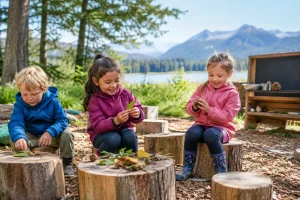
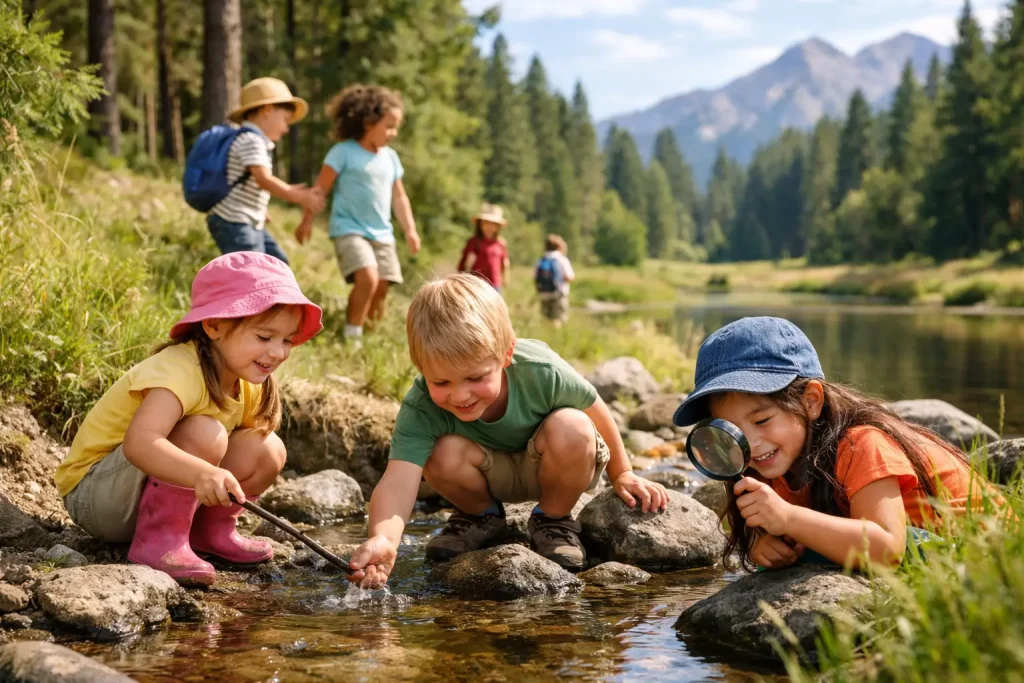
Outdoor time should be more than a quick run around before collection. Nature-connected learning gives children rich, sensory experiences that cannot be recreated fully at a table. They can feel the texture of bark, notice an insect, test how water travels through sand and learn that a rainy morning can still hold adventure.
Green space also supports physical development. Climbing, balancing, carrying, digging and running build strength, coordination and confidence. For children who find it hard to sit still, being outdoors can make it easier to regulate energy and return to quieter activities with renewed focus.
When visiting a preschool or kindergarten, ask how often children go outside, what they do there and what happens in wet weather. The answer reveals whether outdoor learning is treated as a valued part of the curriculum or simply as an occasional extra. In Johor Bahru’s warm climate, shaded, well-planned outdoor areas and sensible safety routines are especially important.
Consider the adults as carefully as the facilities
A beautiful campus is valuable, but the quality of relationships will shape your child’s daily experience. Trained teachers bring knowledge of child development, yet warmth, patience and close observation matter just as much. The best educators know when to step in, when to stand back and when a child’s question is more valuable than a quick answer.
Ask about staff qualifications, first-aid procedures, safeguarding practices and staff continuity. Frequent changes of teacher can be unsettling for young children, particularly during the first months of school. It is also reasonable to ask about class size and adult-to-child ratios. Smaller groups or well-supported classrooms make it easier for teachers to notice quieter children as well as those who naturally demand attention.
Safety should feel calm and embedded rather than restrictive. You want secure arrival and collection procedures, attentive supervision, clean facilities and clear communication around illness and emergencies. At the same time, children need manageable opportunities to take age-appropriate risks, such as climbing low structures, using real tools with guidance or trying again after a tower falls down. Confidence is built through doing.
Think beyond school readiness
It is understandable to wonder whether a programme will prepare your child for primary school. The answer should include early literacy and numeracy, but it should not end there. A child who can recite numbers but feels unable to join a group, ask for help or recover after disappointment may find the transition harder than expected.
Real readiness grows when children practise independence, communication, concentration and resilience. They learn to care for their belongings, follow a routine, contribute to a group and express an idea. They begin to understand that effort matters, mistakes are part of learning and adults will support them when something feels difficult.
This is why a balanced programme is often more valuable than one that pushes formal academics too soon. Some children enjoy early reading and number work and should be offered meaningful challenge. Others need more time to develop language, fine-motor control or confidence through play. The right school does not force every child into the same pace.
Let the practical details support the right decision
A school can be deeply nurturing and still need to work for family life. Consider travel time, drop-off routines, session length, meals, holiday provision and how the school manages transitions between programme stages. A long, stressful journey can affect even the happiest child, while a routine that fits your family can make mornings more settled.
Fees deserve a clear conversation too. Ask what is included and whether there are separate costs for materials, excursions, meals, uniforms or holiday camps. Value is not simply the lowest fee. It is the confidence that your investment gives your child skilled care, meaningful experiences and an environment designed for their development.
If possible, visit more than once or attend an introductory session with your child. Their response matters, though a shy child may not show enthusiasm immediately. Watch for small signals: do they become curious about the materials, look towards a teacher for reassurance or relax once they begin to play? A gentle settling process can make all the difference.
At Alpine Preschool, the journey from Playgroup through Kindergarten 2 is designed to give children this sense of continuity while allowing their curiosity, creativity and independence to grow at each stage.
The right choice should leave you with more than a list of impressive features. It should give you a quiet sense that your child will be safe to be themselves, encouraged to explore and supported by people who see childhood as a meaningful time, not merely preparation for what comes next.