



A child who hangs up their own bag, chooses an activity with confidence, or tells a teacher they need help is doing far more than following a routine. They are learning that school is a place where they belong and can cope. Knowing how to build school independence begins with recognising these small, everyday moments as meaningful steps towards confidence.
For children aged two to seven, independence is not about expecting them to manage alone before they are ready. It is about offering the right support, then gradually making space for them to try. When children feel safe, seen and capable, they are more willing to take those important first steps away from a parent’s hand and into the wider world.
What school independence looks like in the early years
School independence develops in layers. A younger child may begin by carrying their own water bottle, putting a toy back in its basket, or sitting with a teacher for a short activity. An older child may independently prepare for outdoor play, take responsibility for a classroom job, join a group conversation, or persevere with a creative task when it becomes difficult.
It also includes emotional independence. Children need to learn that they can miss a parent and still have a happy morning, feel frustrated and find a way forward, or make a mistake without feeling that they have failed. These skills do not appear overnight. They grow through repeated experiences of being supported calmly, trusted appropriately and praised for effort.
A child can be highly independent at home but need more reassurance at school, or the other way around. New surroundings, different expectations and a busy group setting all make a difference. Rather than comparing children, it is more helpful to notice each child’s next manageable step.
How to build school independence through everyday routines
Predictable routines give young children a sense of control. When they know what happens when they arrive, where their belongings go and what comes next, they can spend less energy worrying about the unknown. This leaves more room for play, friendships and learning.
At home, invite your child to take part in a simple morning routine. They might choose between two suitable outfits, place their snack box in their bag, carry their shoes to the door or practise fastening a zip. Allow extra time where possible. Doing a task for a child is usually quicker, but practising it together sends a more valuable message: “I believe you can learn this.”
At school, consistency matters too. A warm goodbye ritual can be especially helpful. Keep it short, loving and reliable – perhaps a hug, a familiar phrase and a wave at the door. Lengthy goodbyes can accidentally suggest that school is unsafe or that your child cannot manage the separation. If tears come, remain calm and let the teacher take over with confidence and care.
Give choices without giving too much control
Choices help children practise decision-making, but too many options can feel overwhelming. Offer two clear, acceptable choices instead of asking an open-ended question. “Would you like to put on your sun hat or your shoes first?” is easier to answer than “What do you need to do now?”
This approach works beautifully in the classroom as well. A child may choose whether to begin with painting or building, which book to look at in a quiet corner, or whether to work beside a friend or independently. Purposeful choice gives children ownership while adults continue to provide the safe structure they need.
Let children complete the last step
When a task is challenging, it can be tempting to take over. Instead, offer just enough help for your child to succeed. You might start a zip and let them pull it up, loosen the lid of a lunchbox and let them open it, or hold a sleeve steady while they push their arm through.
This is often called scaffolding, but at home it simply looks like patient partnership. Over time, reduce your help as their coordination and confidence grow. The goal is not perfect independence every day. The goal is for your child to feel the pride of saying, “I did it.”
Independence grows through play, not pressure
Play gives children a natural way to practise being independent. In imaginative play, they negotiate roles, solve little problems and care for dolls, animals or made-up customers in a shop. In construction play, they test ideas, adapt when a tower falls and decide what to try next. Outdoors, they assess manageable risks, balance on uneven ground and discover what their bodies can do.
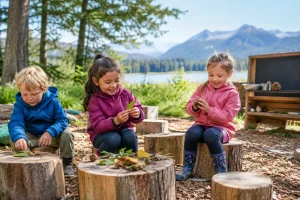
Nature-connected experiences are especially rich in these opportunities. Collecting leaves, tending a plant, searching for insects or preparing for a muddy outdoor activity all involve real decisions and responsibilities. The world does not always behave as planned, and that is part of the learning. A puddle may be deeper than expected; a seed may take time to grow. Children learn patience, observation and resilience alongside joy.
A thoughtfully prepared preschool environment supports this without rushing childhood. Materials that children can reach, clearly labelled spaces and inviting activity areas encourage them to make choices and care for their surroundings. At Alpine Preschool, outdoor classrooms and play-based experiences are designed to help children explore with confidence while trained teachers remain close by to guide, encourage and keep them safe.
Build the language of confidence
The words adults use can either strengthen a child’s belief in themselves or make them wait for permission. Rather than saying, “You can’t do that,” try, “Let’s work out how you can do it safely.” Instead of immediately praising the result, notice the process: “You kept trying even when that puzzle piece was tricky.”
Useful phrases include:
- “Have a go, and I am here if you need me.”
- “What could you try next?”
- “You remembered what to do.”
- “It is alright to ask for help.”
Asking for help is an important part of independence, not the opposite of it. A child who can tell an adult that they cannot find their jumper, feel worried about joining a game or need the toilet is showing self-awareness and trust. Encourage children to use simple, direct words for their needs, particularly before they start a new class or school term.
Support social independence gently
Making friends is one of the most exciting and challenging parts of school life. Some children walk into a group happily; others watch from the edge until they understand the game. Both responses are normal.
You can prepare your child with a few easy phrases: “Can I play?”, “What are you making?”, or “Would you like to build with me?” Role-play these at home through dolls, soft toys or everyday conversation, keeping it light rather than turning it into a lesson.
It is also helpful to avoid speaking for your child when they are able to answer. If a teacher asks what they would like to do, pause and give them time. Quiet children may need a little longer to form an answer. Stepping in too quickly can make the moment easier, but waiting patiently shows that their voice matters.
When independence feels difficult
Progress is rarely a straight line. A child who has happily separated for weeks may become clingy after illness, a holiday, a new sibling or a change in routine. They may need extra comfort when moving into a new classroom or adjusting to a more demanding day. This does not mean earlier progress has disappeared.
Return to familiar routines, keep expectations realistic and share useful information with teachers. A favourite comfort object for the journey, a photograph in a bag or a clear explanation of who will collect them can help children regain their footing. Consistency between home and school is reassuring, especially during periods of change.
If your child regularly seems distressed, withdrawn or unable to participate, speak with their teacher. A caring early years team can observe patterns, suggest practical strategies and create small opportunities for success. Independence should feel empowering, never like a test a child must pass.
The most lasting confidence comes when children know that adults will not rush in at the first wobble, but will always be nearby when support is truly needed. Offer the time, trust and gentle encouragement for one small task today, then watch your child carry that growing sense of capability into tomorrow.