A child who points at a snail on the path, waits for an adult to notice, then proudly says, “It is going home,” is doing far more than naming an animal. They are sharing an idea, making sense of what they see and discovering that their voice matters. Nursery language development is built in these small, meaningful moments – through connection, curiosity and many chances to be heard.
For young children, language is not a subject reserved for a short lesson at a table. It develops as they talk with friends, listen to stories, sing familiar songs, negotiate whose turn it is and describe the world around them. A rich nursery environment gives children words for their experiences while protecting the joy and freedom that make them want to communicate.
What language development looks like in nursery
Language development includes much more than clear pronunciation or learning the alphabet. Children gradually learn to understand what others say, express their needs and feelings, build a wider vocabulary, take turns in conversation and use words to imagine, question and solve problems. These foundations later support reading, writing and confident participation in school.
At nursery age, progress is wonderfully individual. One child may speak in long, detailed sentences yet still need help listening in a group. Another may observe quietly for weeks before suddenly beginning to use new words with confidence. Children growing up with more than one language may also distribute their vocabulary across the languages they hear. This is a strength, not a delay, and deserves encouragement at home and school.
The goal is not to rush children towards adult-like speech. It is to create a safe, language-rich setting where every child has time to listen, respond and experiment. When adults are genuinely interested in what a child means, even a one-word answer can become the beginning of a real conversation.
Why warm conversation matters most
Children learn language through relationships. They need adults who come down to their level, notice their interests and respond with care. Rather than testing a child with repeated questions, an educator can extend what the child has already communicated.
If a child says, “Big digger,” an adult might reply, “Yes, the enormous digger is carrying soil. Where do you think it is taking it?” This adds useful vocabulary without correcting or taking over. It also invites the child to think, predict and contribute.
These exchanges work best when there is no pressure to perform. A child may need a pause before answering, particularly in a busy group. Skilled teachers give that thinking time. They listen closely to gestures, facial expressions and partial words, then model language that helps children say a little more next time.
At Alpine Preschool, trained educators use everyday routines as valuable opportunities for language. Welcoming a friend, washing hands, preparing for outdoor play and sharing lunch all create natural reasons to speak, listen and build independence. Repetition within these familiar moments helps new words settle securely.
Play gives children a reason to use words
Purposeful play is one of the most effective settings for early communication because language has a job to do. In a home corner, children may take on roles, explain a recipe, comfort a doll or agree on who will be the shopkeeper. In block play, they discuss plans, compare sizes and work through the disappointment of a tower that falls down.
Creative activities offer a different kind of language. While painting, modelling or making collages, children can describe texture, colour, shape and process. There is no single correct answer, which makes space for original thinking: “Mine is a storm cloud,” or “This is the river for the dinosaurs.” Adults can honour these ideas by asking open invitations such as, “Tell me about your picture.”
Small-world play, puppets and dressing up are especially helpful for children who are still finding their voice. Speaking through a character can feel less exposing than speaking as themselves. It lets children rehearse social situations, explore feelings and use new words in imaginative ways.
There is a balance to strike. Adults should enrich play, but not direct every moment or turn it into a vocabulary drill. Sometimes the best support is to observe, wait and join only when a child welcomes the interaction.
Outdoor learning expands the conversation
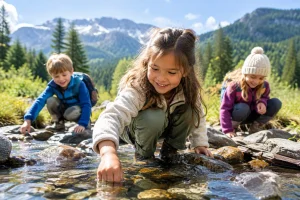
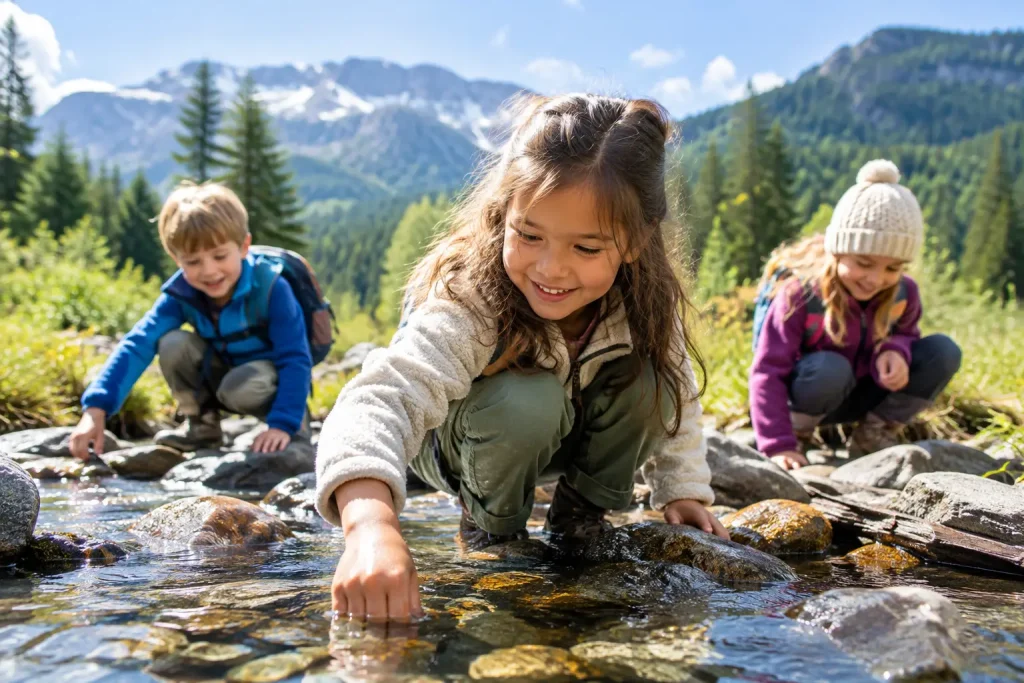
A green outdoor space offers language that cannot be fully recreated indoors. A child can feel the rough bark of a tree, hear leaves rustle overhead, watch an insect disappear under a stone and then search for words to describe each discovery. Sensory experiences give vocabulary a real and memorable meaning.
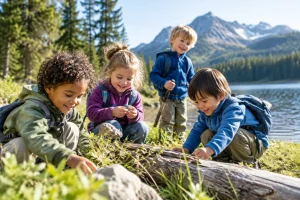
Outdoor classrooms also invite lively collaboration. Children building a den need to share ideas and negotiate: “This stick is too short,” “Let us put it here,” or “We need a roof.” On an excursion, a new setting sparks questions and storytelling. These experiences nurture the curiosity behind strong language development – children speak because they have something worth saying.
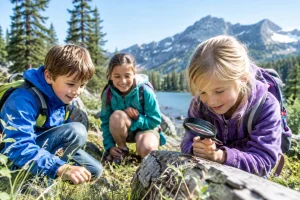
Nature-based learning is not only about learning the names of plants and animals. It introduces descriptive language, positional words, comparisons and early scientific thinking. Is the puddle shallow or deep? Which leaf is smooth? Why has the ice melted? The adult does not need to supply every answer. Wondering aloud shows children that questions are welcome.
Stories, songs and rhymes build strong foundations
A much-loved story becomes richer each time it is shared. Children begin to anticipate what comes next, notice repeated phrases and retell events in their own words. This strengthens listening, memory and an understanding that stories have a beginning, middle and end.
Reading aloud is most powerful when it is conversational. Pause to look at an illustration, welcome a child’s observation or link an event in the book to something they have experienced. Even children who are not yet speaking much are learning from the rhythm, vocabulary and emotional language of the story.
Songs and rhymes have their own special value. Their repetition and predictable patterns help children hear the sounds within words, while actions give meaning and invite participation. For some children, singing feels easier than speaking at first. A familiar rhyme can become a gentle bridge into group confidence.
A varied book collection matters. Children should encounter stories that reflect their own families and cultures, as well as lives and places beyond their immediate experience. Seeing themselves represented supports belonging; meeting difference with warmth builds empathy and widens the language available for understanding others.
How families can support language at home
Parents do not need specialist resources or long formal activities to support communication. The everyday moments already shared at home are often the most valuable. Talk through what you are doing while preparing supper, sorting washing or travelling home. Notice what your child is looking at, and follow their interest rather than steering every conversation towards a lesson.
Reading together regularly is a wonderful habit, but it need not mean finishing every page. Let children turn back, linger over a picture or tell the story in a different way. Offer choices in daily life, such as whether they would like the red cup or the blue cup, then give them time to respond.
Try to reduce the urge to correct every mispronounced word. Instead, repeat it naturally in the right form: if your child says, “I goed park,” you might say, “Yes, you went to the park.” This protects their confidence while giving them a clear model to hear.
If your child uses another language at home, continue to speak it with pride and warmth. A secure home language supports identity, family relationships and future learning. Sharing songs, stories and conversations in the language that feels most natural to your family is a meaningful gift.
When to seek additional guidance
Children develop at different rates, and a quiet child is not necessarily a child with a language difficulty. However, it is sensible to speak with your child’s teacher or a health professional if they rarely respond to sounds or their name, seem unable to understand simple everyday requests, become consistently distressed when trying to communicate, or lose words and skills they previously used.
Early support is not about applying labels too quickly. It is about understanding what a child needs and making sure they have the right help at the right time. A thoughtful nursery team can share observations from daily interactions and work in partnership with families.
The most encouraging truth is that language grows where children feel known. Give them stories to enter, mud to investigate, friends to talk with and adults who listen patiently. In those ordinary, magical exchanges, a child learns that their thoughts can travel beyond themselves – and that others are glad to hear them.