

A toddler who watches from the edge of a game, holds tightly to a favourite toy or says “mine” with great conviction is not falling behind. They are practising. Toddler social development grows through hundreds of small, ordinary moments: waiting for a turn on the slide, noticing another child is upset, joining a song circle and learning that their ideas can matter alongside someone else’s.
For parents, these moments can bring both pride and worry. One day your child may offer a friend a biscuit; the next, they may protest when someone comes near their building blocks. This is a normal part of learning how to belong. With patient adult guidance, meaningful play and opportunities to spend time with peers, toddlers gradually build the confidence, kindness and communication skills that support them well beyond the early years.
What toddler social development really looks like
Social development is not simply about having friends or behaving quietly in a group. It is the gradual process through which children learn to understand themselves and other people. A toddler begins to recognise emotions, express needs, read simple social cues and discover that other children may have different wishes from their own.
Between the ages of two and four, children often move from playing beside one another to playing more actively together. At first, two children may sit close by with separate toys, occasionally observing or copying each other. This is valuable social learning. In time, they may begin to exchange objects, take on simple roles in pretend play and create shared games, although an adult may still need to help them manage disagreements.
Progress is rarely neat. A confident child may be hesitant in a busy new setting, while a quieter child may show remarkable empathy with a familiar friend. Temperament, language development, sleep, family routines and previous experiences all shape how a child approaches others. The goal is not to make every toddler outgoing. It is to help each child feel secure enough to connect in their own way.
The social skills toddlers are learning
Communicating needs and feelings
Before children can negotiate a game, they need ways to communicate. A toddler may use words, gestures, facial expressions or tears to say, “I want a turn”, “I am worried” or “Please help.” Adults can support this by calmly putting feelings into words: “You wanted the red lorry, and you are disappointed it is being used.”
Naming the feeling does not remove the boundary, but it helps children make sense of what is happening inside them. Over time, they can borrow this language for themselves instead of relying only on grabbing, shouting or withdrawing.
Learning to share space, not always possessions
Sharing is often treated as the defining toddler skill, yet expecting a young child to happily surrender a treasured toy can be unrealistic. Toddlers are still learning ownership, fairness and delayed gratification. Rather than insisting on instant sharing, adults can guide turn-taking: “Maya is using it now. You can have a turn when the timer rings.”
This approach protects both children’s dignity. It teaches that other people’s needs matter while showing that their own needs will be heard too. A child who feels secure that they will get a turn is usually more able to wait.
Building empathy and kindness
Empathy begins with noticing. A toddler might pause when another child cries, bring them a toy or simply stare with concern. These early responses should be warmly acknowledged without pressure. “You saw that he was sad. Your gentle pat helped him feel cared for.”
Young children do not need a lecture on kindness. They need repeated experiences of being treated kindly, seeing kindness modelled and being invited to consider another person’s feelings in simple, concrete ways.
Finding a place in a group
Group experiences teach children that routines belong to everyone. Putting toys away, choosing a song, sitting together for a story or helping prepare fruit can all create a sense of contribution. A toddler who has a small, achievable role begins to see themselves as a capable member of a community.
Why play is the best practice ground
Play gives toddlers a low-pressure way to explore social rules. A pretend café invites them to offer food, take orders and decide who will be the customer. A sandpit encourages children to negotiate tools and collaborate on a road. Building a den requires ideas to be shared, changed and sometimes abandoned.
Adults do not need to direct every interaction. In fact, children need time to experiment, make mistakes and find their own responses. Yet thoughtful adult presence matters. A trained teacher can observe when children are managing well, step in before frustration escalates, and use language that moves a conflict towards a solution.
For example, rather than asking, “Who started it?”, an adult might say, “You both want the same spade. What can we do?” For very young toddlers, the solution may need to be offered: another spade, a short wait or a new activity. As children mature, they can take more responsibility for finding a fair next step.
The value of outdoor social learning
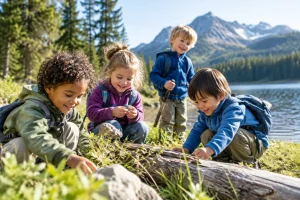
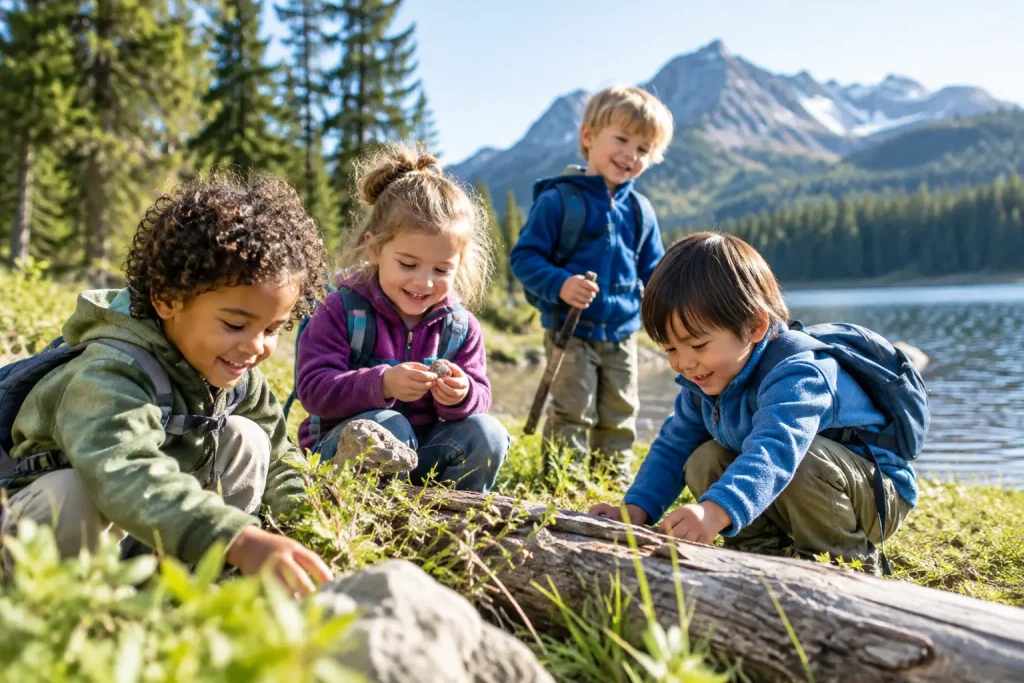
Outdoor spaces offer a different kind of social opportunity. There is room to move, explore and reset. Children who find a busy indoor activity overwhelming may feel more at ease walking alongside a friend, collecting leaves or carrying water together.
Nature also creates shared purpose. Children can search for insects, care for plants, build with sticks or watch rain gather in puddles. These experiences invite conversation without demanding it. They encourage co-operation, wonder and a respect for living things.
Risk-aware outdoor play also supports confidence. When a child climbs a low structure, balances on a log or navigates uneven ground, they practise assessing their own abilities. Encouragement from a trusted adult or peer can strengthen their sense of courage, while learning to wait at the bottom of a climbing frame introduces patience and consideration.
At Alpine Preschool, outdoor classrooms and green spaces are part of the everyday learning experience, giving children meaningful opportunities to play, communicate and flourish with nature alongside others.
How parents can nurture social confidence at home
Social learning does not require a packed diary of playdates. A calm, predictable home life provides an essential foundation. When children feel safe and understood, they are more ready to explore relationships beyond the family.
Start with everyday connection. Involve your toddler in small household moments, such as carrying napkins to the table or choosing a book for bedtime. Talk about what you notice: “Grandad is laughing because that song is funny,” or “I can see you are waiting while I finish speaking.” These short conversations build emotional vocabulary and awareness.
When arranging time with other children, keep expectations gentle. Short, familiar meet-ups are often more successful than long, highly structured gatherings. Have enough similar toys available where possible, but do not expect conflict-free play. Disagreements are not evidence that the visit has failed. They are an opportunity for children to practise with support.
It also helps to model the behaviour you hope to see. Let your child hear you say please, apologise when you make a mistake and show consideration for others. Toddlers learn far more from repeated observation than from reminders delivered in the heat of the moment.
When a child prefers to observe
Some toddlers need time before joining a group. They may stand close to a parent, watch other children carefully or prefer parallel play for longer. This can be a healthy temperament, not a problem to fix.
Avoid labelling a child as shy in front of them. Instead, describe what they are doing positively: “You are watching first. When you are ready, we can go together.” Offer a bridge into play, such as carrying a ball to another child or joining an activity beside a familiar friend.
Gentle encouragement is useful, but forcing participation can make social situations feel less safe. The right balance depends on the child and the setting. A caring early years environment should provide both inviting group experiences and quiet spaces where children can pause, observe and return when ready.
When to seek additional guidance
Every child develops at their own pace, and one difficult week does not signal a lasting concern. However, it can be helpful to speak with your child’s teacher or a health professional if your toddler consistently seems distressed around people, rarely responds to familiar adults, loses skills they previously had, or finds communication so difficult that daily interactions are frequently upsetting.
A conversation is not a label. It is a way to understand what support may help, whether that means adjusting routines, building language skills or creating more predictable opportunities for connection.
The most reassuring truth is that social confidence is built slowly. Give your child time, warm boundaries and plenty of chances to play alongside others. Each shared laugh, repaired disagreement and brave first hello becomes part of the foundation they carry into the wider world.