A child arranging pebbles into a winding path, retelling a story with leaf puppets, or carefully pouring water between jugs is doing far more than keeping busy. These creative preschool learning activities give young children a joyful way to test ideas, use language, practise control and feel proud of what they can do. For children aged two to seven, meaningful learning often begins with their hands, their senses and a question: “What happens if I try this?”
The most valuable activities are not the ones that produce the neatest worksheet or the most photogenic craft. They are experiences with a purpose – playful enough to invite curiosity, yet thoughtfully guided so children build the foundations for independence, communication, early literacy, numeracy and positive relationships.
Why creative preschool learning activities matter
Early childhood is a period of rapid growth. Children are learning how to take turns, express a feeling, notice patterns, solve small problems and persist when something does not work at first. Creativity supports all of these skills because it gives children choices. A painting can become a rainy-day sky, a family portrait or an imagined planet. There is room to explain, adapt and begin again.
This matters because confident learners are not created through answers alone. They grow when they are trusted to explore, supported when they meet a challenge and encouraged to share their thinking. A trained teacher can extend a simple moment of play with gentle prompts: “How could we make it taller?”, “What do you notice?”, or “Can you tell me about your picture?”
Creative learning also allows children with different strengths to participate fully. One child may love speaking in a group, while another may show their ideas through building, movement or drawing. A well-planned preschool environment gives each child more than one route into learning.
Start with open-ended materials
Open-ended materials have no single correct use. They invite children to imagine, compare, sort, build and transform. A basket of pinecones, fabric pieces, wooden blocks, shells and cardboard tubes can become a shop, a bridge, a garden or a home for tiny animal figures.
Unlike toys designed for one outcome, these resources can grow with the child. A two-year-old may fill and empty containers, developing coordination and an understanding of space. An older child may create a pattern, negotiate roles in a small-world game or design a structure strong enough to hold toy animals.
At Alpine Preschool, purposefully prepared spaces help children move naturally between sensory discovery, imaginative play and focused activity. The adult’s role is not to take over the design. It is to provide appealing materials, observe closely and introduce just enough challenge to keep learning moving forwards.
Create art that values process, not perfection
Art becomes more meaningful when children can make decisions. Offer a small selection of materials – perhaps thick paint, sponges, natural objects and large paper – rather than showing everyone one finished model to copy. Children can dab, print, layer, mix colours and discover that blue and yellow make green through experience.
This approach develops fine motor strength, visual awareness and expressive language. It also protects a child’s confidence. When adults ask, “What would you like to add next?” instead of correcting the picture, children learn that their ideas matter.
There is a balance to strike. Occasionally, a guided craft can help children practise a particular technique or contribute to a seasonal display. But if every creative activity has a predetermined result, children have fewer chances to take initiative. The richer experience leaves space for individual interpretation.
Bring learning outdoors
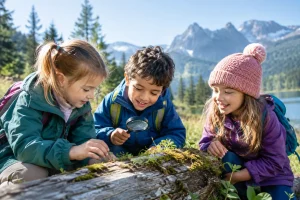
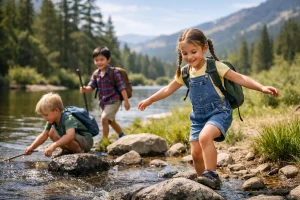
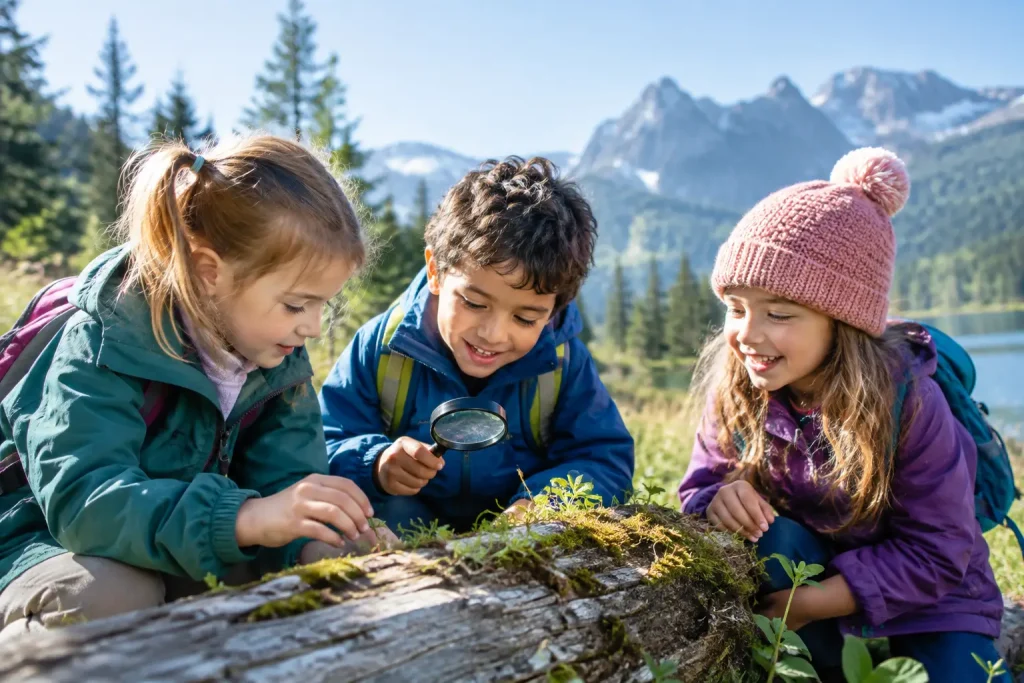
Outdoor classrooms offer an ever-changing invitation to learn. A puddle introduces reflection and floating. A fallen branch becomes a measuring tool. A patch of soil encourages digging, observing insects and caring for living things. Fresh air and movement can also help young children regulate their energy and return to quieter tasks with greater focus.
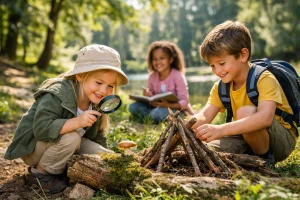
Nature-connected learning does not require elaborate equipment. Children can collect leaves by colour, arrange stones from smallest to largest, make a temporary nature collage or listen for different sounds on a slow walk. These activities strengthen early mathematical language, attention and respect for the natural world.
Outdoor play is especially valuable when it includes sensible, supported challenge. Climbing, balancing and carrying give children opportunities to assess risk and develop body awareness. The aim is not to remove every difficulty, but to create a safe setting where children can say, “I can try,” with a caring adult nearby.
Turn stories into active play
Story time can continue long after the final page. After reading a familiar tale, children might use scarves and puppets to act out key moments, build a setting from blocks, or create a new ending together. This helps children understand sequence, character and emotion while making language feel alive.
For younger children, repetition is reassuring. Repeating a favourite rhyme with actions builds listening skills, vocabulary and memory. For older preschoolers, invite predictions: “What do you think the character will do?” Their answers reveal how they are beginning to reason, empathise and use increasingly detailed language.
Role play is equally powerful. A pretend café, clinic, market or building site encourages children to use new words, write early marks for menus and signs, count objects and co-operate with friends. It may look like simple make-believe, but it brings literacy, numeracy and social learning together in a way children understand.
Make everyday routines part of the curriculum
Some of the most effective learning moments happen during ordinary routines. Setting the table prompts counting and one-to-one correspondence. Tidying resources develops responsibility and sorting skills. Serving a snack gives children a chance to pour, spread, wait, request politely and talk with friends.
These moments are particularly important for independence. When children are given time to put on their own shoes, choose a book, pack away materials or solve a small disagreement, they begin to see themselves as capable contributors to a community.
Adults can make routines more creative by using songs, visual cues and simple challenges. “Can we find all the circular blocks?” or “How shall we organise these crayons so everyone can choose one?” keeps the task purposeful without turning it into pressure.
Choose activities with the child in mind
Parents often ask whether preschool activities should be more academic as children approach kindergarten. The answer depends on the child’s stage of development. Early phonics, number awareness and pencil control are valuable, but they are strongest when rooted in play and real understanding.
For example, children may recognise letters by forming them in sand, finding them in their names or making them with twigs. They may explore number through sharing fruit, counting steps or comparing towers. These experiences build meaning before children are asked to work more formally on paper.
Watch for signs that an activity is pitched well. A child should be interested, able to make some progress and occasionally need to think a little harder. If a task is too easy, it can become repetitive. If it is too difficult, frustration may take over. Skilled educators adjust materials, language and expectations so every child can experience success while still growing.
What parents can look for in a creative preschool
A creative programme is not measured by colourful displays alone. Look for children who are engaged in purposeful play, teachers who listen and respond, and spaces where materials are accessible at a child’s level. Notice whether outdoor learning is treated as an occasional treat or a meaningful part of the day.
It is also reassuring to see structure alongside freedom. Children flourish with predictable rhythms, clear boundaries and kind guidance. Within that security, they need time to investigate, create, move and connect with others. This balance supports the whole child – curious minds, capable hands and caring hearts.
The best childhood learning experiences do not rush children past wonder. They make room for muddy hands, thoughtful questions, shared laughter and small achievements that gradually become lasting confidence.