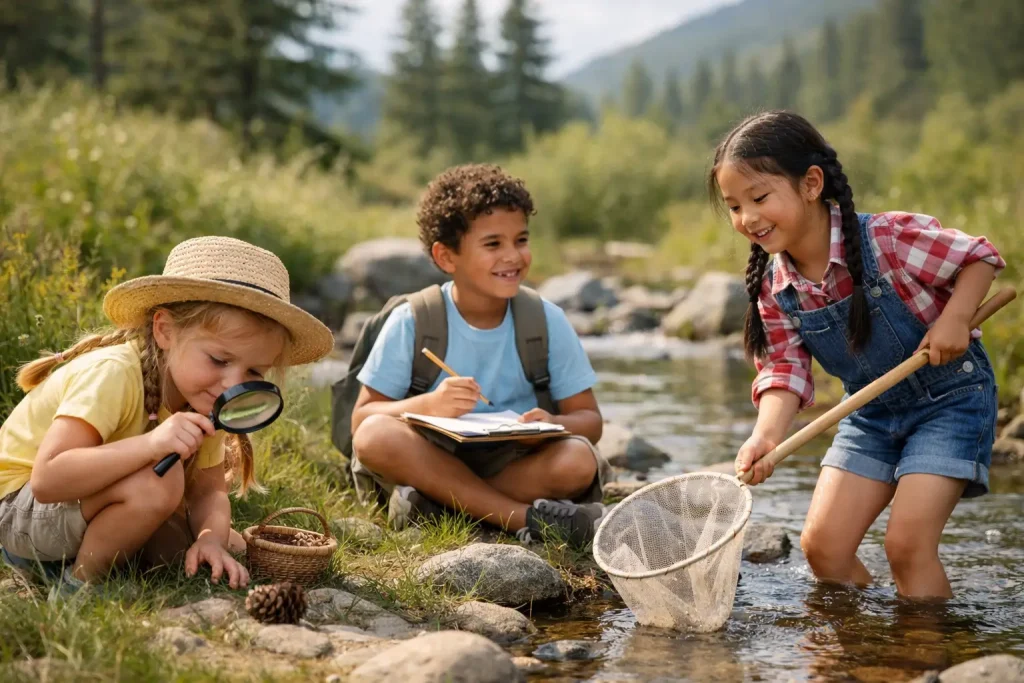
A child who comes home talking about a leaf they examined, a friend they helped, or a story they created has been learning far more than a single lesson. For parents, a preschool curriculum comparison is not simply about choosing the most impressive-sounding approach. It is about finding the place where your child can feel safe, capable and excited to return each morning.
The early years shape how children approach learning, relationships and new challenges. A strong preschool experience should give them meaningful structure while protecting the wonder, movement and play that childhood needs. The best fit depends on your child’s temperament, your family’s values and how thoughtfully a school brings its educational philosophy to life.
What a Curriculum Should Offer in the Early Years
A curriculum is more than a timetable of letters, numbers and themed activities. It is the school’s considered plan for supporting a child’s social, emotional, physical and cognitive development over time.
For children aged two to seven, this means creating daily experiences that build language, early mathematical thinking, coordination, independence, creativity and kindness. It also means allowing children to ask questions, make choices, practise solving small problems and learn how to be part of a community.
Academic readiness matters, but it should not come at the cost of confidence or curiosity. Children learn best when new skills feel connected to real experiences: counting seeds before planting, recognising sounds in a favourite song, or using rich vocabulary to describe what they see outdoors. Look for a curriculum that understands this connection rather than treating learning as a series of worksheets to complete.
Preschool Curriculum Comparison: Common Approaches
Most quality preschools blend ideas from more than one approach. Rather than selecting a school purely because it uses a familiar label, parents should ask what children actually do, how teachers guide them and whether progress is observed with care.
Play-based learning
In a play-based curriculum, children learn through purposeful play, imaginative scenarios, construction, art, conversation and hands-on exploration. A shop role-play can develop communication and early maths. Building a tall structure with blocks can involve planning, balance, persistence and collaboration.
This approach is particularly valuable for young children because play is how they naturally test ideas and make sense of the world. The strongest play-based settings are not unplanned. Teachers prepare inviting materials, notice children’s interests and extend learning with thoughtful questions. The trade-off is that parents may need to look beyond visible worksheets to recognise progress. Ask how the school records development and introduces foundational literacy and numeracy within play.
Montessori-inspired learning
Montessori settings are often recognised for carefully prepared environments, practical life activities and materials designed for independent use. Children may choose from a range of purposeful tasks, learning to concentrate, care for their surroundings and work at their own pace.
For children who enjoy order, repetition and hands-on mastery, this can be deeply satisfying. It can also foster an impressive sense of independence. However, Montessori practice varies widely between schools. Some follow the approach closely, while others borrow selected elements. Parents should consider whether the environment also offers enough imaginative play, group connection and outdoor movement for their child.
Reggio Emilia-inspired learning
Reggio Emilia-inspired programmes place strong value on children’s ideas, creative expression and longer-term projects. Teachers may build learning around questions that emerge from the group, such as how shadows move or what makes a garden thrive. Art, storytelling, construction and documentation help children explore their thinking in many forms.
This approach can be wonderfully responsive and expressive, especially for curious children who enjoy sharing ideas. Its success relies heavily on skilled educators who can listen closely, plan sensitively and link open-ended exploration to clear learning goals. Ask to see examples of projects and how teachers ensure every child is included.
Structured academic programmes
A more structured curriculum often follows planned sequences for phonics, handwriting, reading, maths and knowledge topics. It may appeal to parents who want clear milestones and regular evidence of progress towards primary school.
A well-designed structured programme can provide reassuring consistency and strong foundations. The concern arises when formal instruction is introduced too early or delivered in ways that leave little room for movement, play and individual readiness. Young children do not all develop at the same pace. A quality school uses structure as support, not pressure.
Nature-connected learning
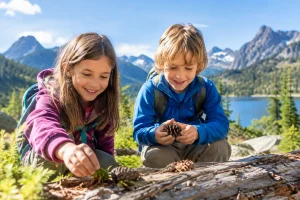
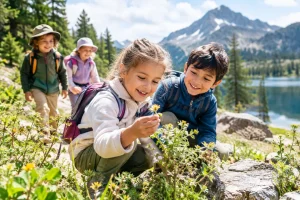
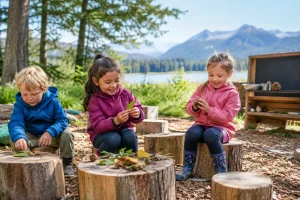
Nature-connected learning brings children outdoors to observe, investigate, create and move. Gardens, outdoor classrooms and excursions become places for scientific curiosity, sensory exploration and physical development. A muddy morning can include language, problem-solving, resilience and joyful teamwork.
Outdoor learning is not an optional extra when it is woven into the curriculum with intention. It gives children space to take manageable risks, notice seasonal changes and develop a lasting sense of care for the natural world. In a warm climate, parents should also ask practical questions about shade, hydration, safety routines and how outdoor activities are adapted for the weather.
Look Beyond the Curriculum Name
Two schools can use the same educational label and provide very different experiences. The quality of teaching, the warmth of relationships, the environment and the school’s understanding of child development matter just as much as the framework itself.
During a visit, observe whether teachers speak to children with respect and genuine interest. Notice if the classroom feels calm but alive, with materials children can access and spaces that invite different kinds of learning. Look at the outdoor area too. Is it simply somewhere to run around at break time, or is it an extension of the classroom where children can explore, collaborate and create?
A thoughtful staged pathway is another reassuring sign. Children’s needs change rapidly from Playgroup through Nursery, Kindergarten 1 and Kindergarten 2. Younger children need security, sensory discovery and language-rich interaction. As they grow, they need increasing opportunities to reason, communicate ideas, develop early academic skills and take responsibility. The curriculum should evolve with them rather than expecting every age to learn in the same way.
Questions That Make Comparison Easier
When comparing preschools, a few well-chosen questions reveal more than a brochure can. Consider asking:
- How do teachers balance child-led exploration with planned learning goals?
- How are literacy, numeracy and school-readiness skills introduced without rushing children?
- What does a typical outdoor learning session look like?
- How does the school support a child who is shy, highly active or still developing confidence with peers?
- How are parents kept informed about their child’s progress, interests and next steps?
Listen for specific examples rather than broad promises. A school should be able to describe how teachers adapt activities, support emotional moments and recognise each child’s progress. It is also useful to ask about staff training and continuity. Young children flourish when caring adults know their personalities, strengths and routines well.
Finding a Balanced Early Years Experience
For many families, the most meaningful choice is not an entirely academic school or an entirely free-play environment. It is a place where purposeful structure and joyful discovery work together. Children need opportunities to listen, practise and build foundations, but they also need time to climb, paint, question, imagine and simply be children.
At Alpine Preschool, the curriculum is designed around this balance, combining developmental milestones with play-based, nature-connected experiences. Purpose-built spaces and green outdoor areas give children room to learn with their whole bodies, while trained teachers provide the guidance and reassurance that helps confidence grow.
The right preschool should feel like more than preparation for the next classroom. It should feel like a magical place where your child is known, encouraged and free to flourish. When a curriculum honours both childhood wonder and meaningful progress, it gives children a gentle, confident beginning they can carry forward.