


The morning drop-off can reveal more than a brochure ever could. Are children being welcomed into a day of purposeful play, conversation and discovery, or simply being settled into care while parents work? When weighing up private preschool vs daycare, both can be caring choices, but they are designed to meet different family needs.
For children aged two to seven, the right environment can shape how they see themselves as learners, friends and capable little people. The decision is not about finding a universally “better” option. It is about finding a place where your child feels safe, known and inspired, while the daily routine works for your family.
Private preschool vs daycare: the central difference
Daycare is primarily designed to provide reliable care and supervision for young children, often across longer working hours. Many daycare settings offer play, meals, rest time and group activities, and a high-quality provider can give children a warm, sociable start outside the home.
A private preschool is centred more deliberately on early education. It usually follows a planned curriculum led by trained educators, with activities chosen to support development at each stage. Children still play – play is how young children learn best – but the play has a clear purpose. A water tray may strengthen early maths language, a garden hunt may build observation and vocabulary, and a shared story may support empathy as well as communication.
The distinction can overlap. Some daycares offer excellent educational activities, while some preschools provide extended-day arrangements. Rather than relying on the label alone, parents should ask what happens during the day, who guides it and how progress is understood.
What children gain from a structured preschool experience
A thoughtfully designed preschool day gives children a gentle rhythm. They know when it is time to arrive, choose an activity, join a small group, explore outdoors, eat, rest and reflect. Predictable routines help children feel secure, particularly when they are learning to manage big feelings, share attention and separate from parents.
Structure does not mean sitting at a table for hours or rushing children towards formal academics. At this age, meaningful structure makes room for movement, imagination and choice. The teacher observes each child, introduces new challenges at the right moment and encourages them to keep trying when something feels difficult.
In a private preschool, learning goals are usually mapped across the year. A younger child may be building confidence, hand strength and language through sensory play. An older child may be developing phonics awareness, number sense, reasoning and the independence needed for the next stage of school. This developmental pathway can give parents a clearer view of what their child is learning and why it matters.
Just as importantly, a strong preschool experience supports social and emotional growth. Children practise taking turns, expressing needs respectfully, repairing small disagreements and caring for others. These are not extras to academic readiness. They are foundations for it.
The value of learning beyond four walls
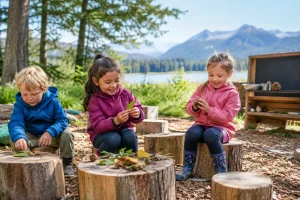
Young children understand ideas with their whole bodies. They need to climb, carry, dig, listen, collect, wonder and make a little mess. Outdoor learning creates opportunities that are difficult to recreate in a classroom: balancing across uneven ground, noticing insects, feeling the change in weather and working together to build something ambitious.
A preschool with green spaces and outdoor classrooms can make nature part of the learning experience rather than an occasional treat. Gardening can introduce responsibility and patience. A muddy puddle can lead to questions about water and movement. An excursion can turn a familiar community place into a source of curiosity.
For many families, this balance of guided learning and open-ended exploration is a defining advantage of private preschool. It allows children to develop concentration and early knowledge without losing the joyful, sensory richness of childhood.
When daycare may be the right fit
Daycare can be an excellent choice when a family needs full-day care over a broad range of hours, especially for younger children who benefit most from a calm, responsive caregiving routine. A familiar team, unhurried meals, restful naps and plenty of affection can make a real difference during the earliest years.
It may also suit a child who is not yet ready for a more structured group environment. Readiness is individual. Some children thrive with a gradual introduction to short preschool sessions; others need more time with a smaller, steadier routine. There is no prize for moving too quickly.
The quality of the setting matters more than the category. Look for warm interactions, clean and well-organised spaces, attentive supervision and adults who speak to children with patience and respect. Ask how staff comfort a distressed child, manage conflict and share information with families. Their answers will tell you a great deal.
Questions to ask on a visit
A visit lets you see whether the promises on paper come alive in the rooms, outdoor spaces and faces of the children. Notice whether adults are down at the children’s level, whether activities invite participation and whether children appear comfortable enough to explore independently.
Ask how educators plan for different ages and abilities, and how they record or communicate children’s development. Find out about staff qualifications, ratios and continuity of care. Consistent adults help young children build trust, especially during the settling-in period.
It is also worth asking how much time children spend outside, what happens when it rains and how the setting approaches screens, meals, naps and toileting. These practical details shape your child’s experience every day. If your child has additional needs, allergies or a language spoken at home, ask how the team will include and support them.
Finally, listen to how the setting talks about behaviour. A nurturing school will not expect perfect compliance from young children. It will help them name feelings, understand boundaries and learn kinder ways to respond.
Consider your child, not only the timetable
It is easy to make this choice around opening hours, fees or proximity, and those factors are real. Yet your child’s temperament deserves equal weight. An energetic, curious child may flourish in a programme rich in outdoor exploration and project work. A cautious child may need a gentle settling plan, a familiar key teacher and time to observe before joining in.
Think about what you hope the next year will bring. Do you mainly need dependable full-day care? Are you looking for a deliberate bridge towards kindergarten and primary school? Would your child benefit from more opportunities to communicate, create, move and make friends? The answer may point clearly towards daycare, preschool or a combination of both.
For parents seeking a staged early-years journey, programmes such as Playgroup, Nursery, Kindergarten 1 and Kindergarten 2 can be especially reassuring. Each stage should meet children where they are, then extend them with care. The goal is not to produce a child who can recite the most facts. It is to nurture a child who is ready to ask questions, attempt new things and enjoy learning.
A choice that should feel both practical and hopeful
The best setting will make your family’s day manageable, but it should offer your child more than a place to pass the hours. Look for a community where childhood is treated as precious and capable: where trained teachers plan with intention, where play is valued as real learning and where children are encouraged to flourish with confidence and kindness.
At Alpine Preschool, this belief is reflected in a child-centred curriculum, nature-connected experiences and purposeful progression across the early years. Whether you choose private preschool or daycare, trust the setting that helps you picture your child arriving with growing confidence – and leaving each day with a story they cannot wait to share.