
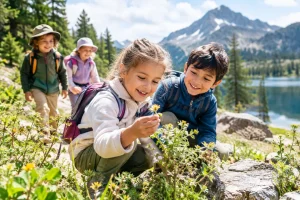
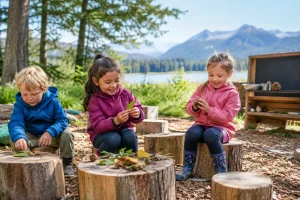
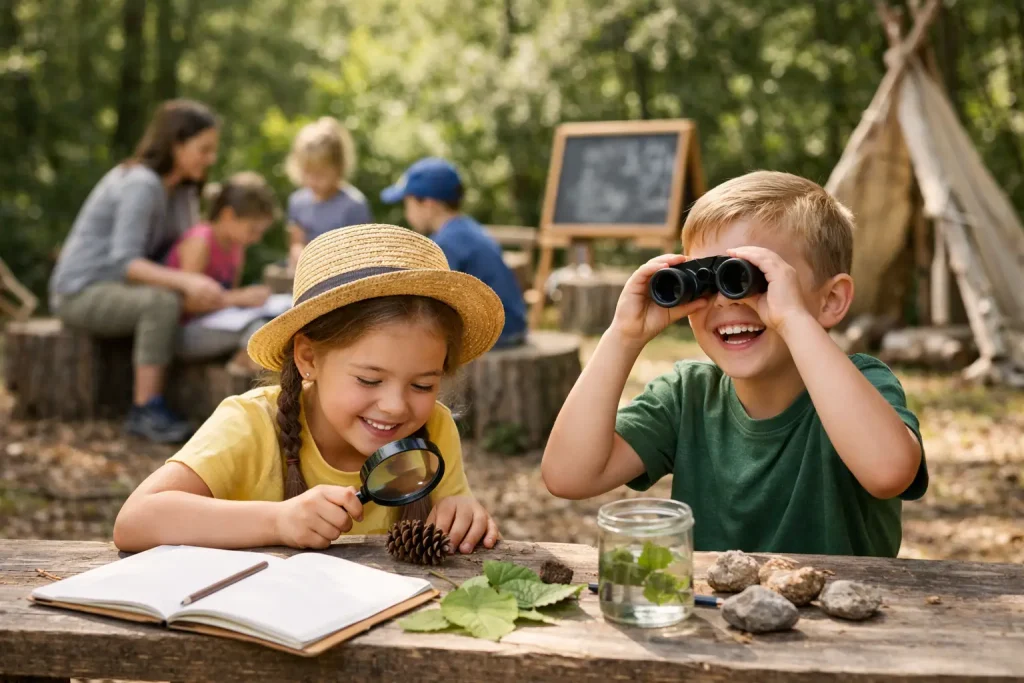
A child balancing across a low log, listening for birds after rainfall, or carefully carrying leaves to a mud kitchen is doing more than playing. They are learning how their body moves, how nature changes, and how to make small decisions with growing confidence. But for every parent who sees the joy, there is a sensible question: are outdoor classrooms safe for young children?
The honest answer is that safety does not come simply from being indoors or outdoors. It comes from thoughtful design, capable adults, clear routines and an environment that is checked and cared for every day. A well-managed outdoor classroom can be a wonderfully safe place for children aged two to seven to explore, take age-appropriate risks and flourish with nature.
Are outdoor classrooms safe when children are free to explore?
They can be – provided freedom is matched with supervision and structure. Outdoor learning should not mean leaving children to manage unfamiliar spaces alone. It means creating purposeful opportunities for movement, sensory discovery and imaginative play within boundaries children can understand.
Young children need chances to climb, run, dig, pour, build and investigate. These experiences strengthen coordination and body awareness, while also teaching children to judge distance, wait for a turn and notice what feels steady or slippery. A child who is always protected from manageable challenge has fewer opportunities to develop those skills.
That does not mean every risk is acceptable. There is a meaningful difference between a challenge that helps a child learn and a hazard that offers no developmental value. A low climbing structure with a stable landing surface may support confidence and balance. Damaged equipment, standing water, sharp debris or an unsupervised gate are hazards that must be removed or addressed immediately.
The strongest outdoor programmes use what educators often call a balanced approach to risk. Teachers allow children to try, observe closely, offer guidance when needed and step in promptly when safety requires it. This approach respects both a child’s curiosity and a parent’s need for reassurance.
Safety starts before children step outside
A safe outdoor classroom is planned, not improvised. Before the day begins, educators should inspect play spaces, pathways and equipment. They look for changes that may have happened overnight, from loose branches and wet surfaces to damaged fencing or insects nesting near a play area.
The environment itself should also suit the age of the children using it. Toddlers need spaces with secure boundaries, low-level features and close access to shade, drinking water and toilets. Older preschoolers can enjoy more complex loose-parts play, gardening activities and climbing challenges, but still need clear sightlines and adult supervision.
Purpose-built outdoor areas make this easier. Separate zones for active movement, quiet exploration, water play, sand, messy art and gardening help teachers organise the flow of the day. Children are less likely to collide or become overwhelmed when they understand where different activities happen. Good storage matters too, as resources such as tools, ropes and small loose parts should be brought out intentionally and checked before use.
At Alpine Preschool, outdoor experiences are designed as part of a wider, child-centred learning journey rather than as an occasional break from the classroom. This matters because children learn routines best through repetition. When outdoor time is a familiar, carefully prepared part of the day, they know how to move through the space with confidence.
Trained educators make the greatest difference
The quality of adult supervision is central to outdoor safety. Teachers need to be actively present, not simply standing nearby. They scan the whole area, position themselves where they can see key zones, count children during transitions and respond to individual needs.
This is especially important in early years settings, where one child may be confidently climbing while another is still learning to navigate a step. Trained educators know when to encourage independence and when to offer a hand, a reminder or a different activity. They also understand that a quiet child can need as much attention as a busy one.
Appropriate adult-to-child ratios allow teachers to build relationships as well as maintain oversight. When educators know a child’s confidence level, allergies, sensory sensitivities and developing physical skills, they can make safer decisions without making the experience feel restrictive.
Weather, heat and hygiene need everyday attention
In Johor Bahru, outdoor learning must be responsive to a warm, humid climate and sudden rain. Children can still enjoy nature in many weather conditions, but the plan should change with the conditions. Safety is not insisting that outdoor time happens exactly as scheduled; it is knowing when to adapt.
Shade is essential, particularly for energetic play and longer activities. Children should have regular access to water, light and suitable clothing, and educators should watch for signs that a child is becoming too warm or tired. Time outdoors can be adjusted throughout the day, with more active experiences planned for cooler periods and calmer nature activities offered when the sun is stronger.
Rain brings its own learning opportunities, from listening to droplets to watching puddles form. Yet wet surfaces can be slippery, and thunderstorms require children to move indoors without delay. Clear weather routines help children feel calm because they know what will happen when a teacher calls them in.
Hygiene deserves the same practical care. Sand, soil and water play are valuable sensory experiences, but they need clean resources, handwashing routines and regular maintenance. Water trays should be refreshed, shared tools cleaned, and children supported to wash their hands before meals and after messy play. These simple habits protect health while allowing children to enjoy the rich textures of the natural world.
Managing insects, plants and allergies
Outdoor spaces naturally include insects, plants and changing seasonal conditions. The aim is not to remove every trace of nature, but to manage the environment wisely. Staff should identify plants that are unsuitable for young children, keep rubbish covered, check for nests and teach children gentle, respectful ways to observe living things.
Children also benefit from clear, simple rules: look closely but do not touch unfamiliar insects; ask an adult before picking a leaf or berry; use garden tools only in the designated area. These are not rules that take away wonder. They give children a safe framework for exploring it.
For children with allergies, asthma or individual medical needs, families and educators should share information openly. A well-prepared setting keeps relevant care plans accessible, ensures staff understand them and makes practical adjustments where needed. For example, a child may need closer monitoring during high-pollen days, a different sunscreen arrangement, or a calm shaded activity after vigorous running.
Safety also includes emotional security
Physical safety is only one part of the picture. A young child needs to feel emotionally safe enough to join an activity, ask for help, recover from a small disappointment and try again. Outdoor classrooms can be particularly supportive because they offer more space, varied choices and natural moments for cooperation.
Not every child will rush towards climbing, mud play or a group game. Some will prefer to watch first, collect small natural treasures or sit with an educator in a quieter corner. A nurturing programme does not force participation. It gently invites children forward at a pace that helps them build trust.
Clear expectations also protect children socially. When teachers model kindness, guide turn-taking and help children use words during disagreements, outdoor play becomes a setting for developing empathy as well as independence. The goal is not a perfectly tidy playground. It is a community where children can be active, curious and cared for.
Questions parents can ask about outdoor learning safety
When visiting a preschool, look beyond whether the garden appears attractive. Ask how staff inspect the area each day, how children are counted during transitions, and what happens when the weather changes. It is also helpful to ask about staff training, first-aid procedures, allergy management and the school’s approach to climbing, water play and excursions.
Notice how educators speak to children outdoors. Are they warm and attentive? Do they explain boundaries calmly? Are children encouraged to solve small problems while adults remain close enough to help? These everyday details reveal far more than a brochure ever could.
A truly safe outdoor classroom does not promise a childhood without scraped knees, muddy socks or moments of uncertainty. It offers something more valuable: a thoughtfully held space where children can test their abilities, discover the living world around them and return home proudly carrying the stories of what they learned.