


A child’s first playgroup experience can shape how they feel about learning, friendships and being away from home. This playgroup age guide helps parents look beyond a birthday alone and consider the small but meaningful signs that a child may be ready to begin this exciting next chapter.
For many families, playgroup is the first step into a wider community. It offers a gentle rhythm of songs, stories, sensory play, outdoor discovery and shared routines, all guided by caring adults. The right time is not about expecting a child to be fully independent. It is about finding an environment where they can feel safe enough to explore, connect and flourish.
What age do children start playgroup?
Many children begin playgroup at around two years old, although the right starting point varies between children and schools. Some little ones are ready to join a group setting shortly after their second birthday, while others benefit from a little more time at home or a gradual settling-in approach.
At this age, children are developing quickly. They are becoming more aware of other people, eager to move and investigate, and increasingly able to communicate what they want or need. A thoughtfully designed playgroup meets them at this lively stage through short, engaging activities rather than long periods of formal instruction.
For children aged two to three, the focus should be on belonging, confidence and joyful discovery. They learn through touching, building, pouring, climbing, singing, pretending and repeating. These experiences may look simple, but they support language, coordination, early problem-solving and emotional security.
The playgroup age guide: readiness matters too
Age is a useful starting point, but it is not the whole picture. Children do not develop on an identical timetable, and readiness can look different from one family to another. A child does not need to speak in full sentences, share perfectly or use the toilet independently before starting playgroup.
Instead, parents can look for a growing ability to take an interest in the world beyond home. Perhaps your child watches other children with curiosity at the park, enjoys a familiar story or song, or can stay engaged with a favourite activity for a few minutes. They may begin to cope with short separations from a trusted parent or carer, even if they need reassurance at first.
A child who is shy, sensitive or cautious can still thrive in playgroup. In fact, a warm and predictable setting can be particularly valuable for helping them build confidence. The key is that teachers understand settling-in is a process, not a test of independence.
Signs your child may be ready
Readiness often appears in everyday moments rather than one big milestone. Your child may be ready for playgroup if they are showing several of these signs:
- They are curious about new toys, places, sounds and people.
- They can spend short periods with another trusted adult.
- They are beginning to communicate through words, gestures or facial expressions.
- They enjoy moving, exploring and taking part in simple routines.
- They show an interest in other children, even if they prefer to play alongside rather than with them.
Parallel play, where children play near one another without directly cooperating, is completely natural at this stage. It is an early form of social learning. With sensitive teacher guidance, children gradually begin to notice one another, practise taking turns and experience the pleasure of belonging to a group.
What children learn in a quality playgroup
A meaningful playgroup programme does much more than keep young children busy. Its daily experiences should be carefully planned around the way toddlers learn best: through their bodies, their senses, relationships and repeated opportunities to try.
Language grows when a teacher narrates a child’s play, introduces new words during a nature walk and pauses to listen to their response. Early mathematical thinking begins when children sort leaves by size, fill and empty containers at the water tray, or notice that there are not enough paintbrushes for everyone. Creativity develops when there is room to experiment, make a mess and proudly explain a creation.
The social and emotional learning is just as valuable. In a small group, children begin to recognise routines, wait briefly, express frustration with support and receive comfort from a trusted teacher. These are foundations for later learning because a child who feels understood is more able to concentrate, participate and try again.
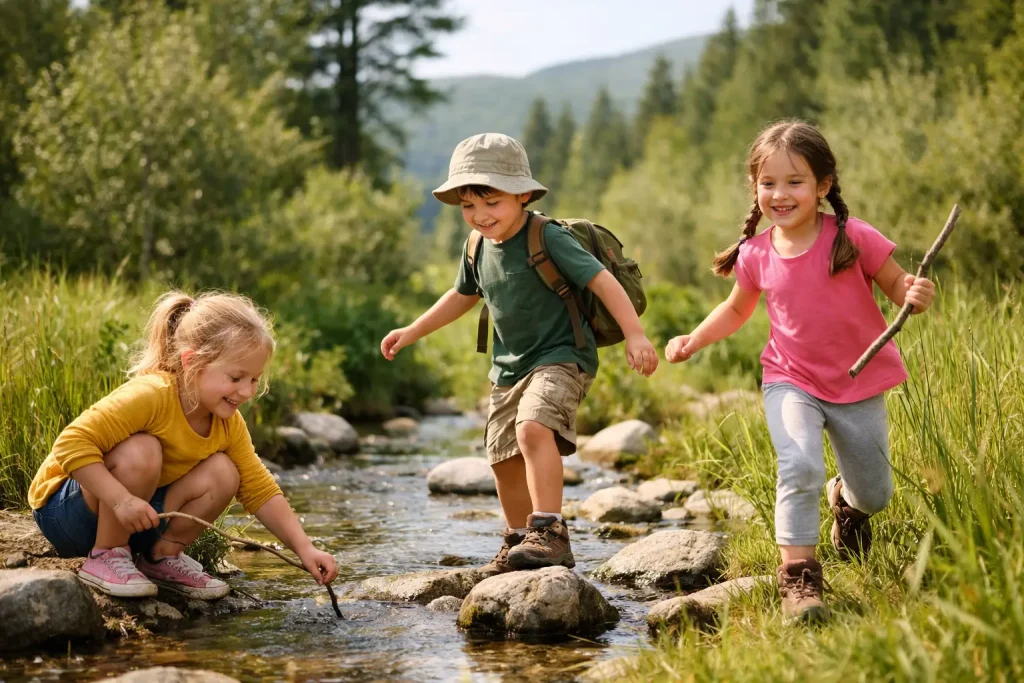
Outdoor play deserves a central place in the day. Fresh air, open space and natural materials invite a different kind of learning from indoor activities. A puddle can become a science investigation. A slope offers a chance to build balance and courage. Collecting seed pods can lead to conversation, comparison and imaginative play. Nature gives children space to use their senses fully and follow their curiosity.
Choosing the right first setting
When comparing playgroups, look beyond colourful classrooms and activity timetables. The quality of adult-child relationships will have the greatest impact on your child’s experience. Notice whether teachers come down to children’s level, speak with kindness and allow time for children to respond.
A strong programme combines freedom with a reassuring structure. Children need choices in their play, but they also benefit from predictable moments such as arrival, snack time, outdoor exploration, story time and home time. Familiar routines help young children understand what comes next, which can make separation easier.
It is also worth asking how the setting supports a child who needs time to settle. A flexible transition may include shorter initial sessions, a consistent key teacher or a comfort item from home. There is no advantage in rushing a child through their first separations. A patient start creates trust that can last throughout their early years.
Consider the physical environment too. Young children need safe spaces that encourage movement and independence, with child-sized furniture, accessible materials and room for energetic play. Green outdoor areas are especially valuable, giving children regular opportunities to climb, dig, observe and develop a genuine connection with the natural world.
For families in Johor Bahru, a purpose-built campus can make this first school experience feel both exciting and secure. At Alpine Preschool, play-based learning and outdoor discovery are woven into a structured early years journey, helping children experience school as a magical place where curiosity is welcomed.
If your child is not ready at two
Starting later is not a setback. Some children need more time to develop comfort with unfamiliar adults, manage big feelings or adjust to a new routine. Family circumstances matter too. A child who has had little opportunity to be apart from their main carer may simply need a slower introduction.
You can prepare gently at home without turning readiness into pressure. Practise small routines such as putting a water bottle in a bag, washing hands before a snack or tidying toys together. Read books about starting school, visit new parks and allow your child to spend short, happy periods with a familiar relative. Talk positively about playgroup, while leaving room for their feelings: it is all right to be excited and a little unsure.
Avoid promising that they will never miss you or insisting that they must not cry. Tears at drop-off can be a normal expression of change, not evidence that a child is not ready. What matters is whether the adults respond calmly, consistently and with genuine care.
Helping the first weeks feel easier
The first few weeks are a time of adjustment for parents as well as children. Keep goodbyes warm and brief, using the same simple phrase each day. Long, uncertain departures can make it harder for a child to understand that you are leaving and will return.
Give teachers useful information about your child’s comfort items, sleep patterns, favourite interests and any words they use for important needs. This helps the team build connection quickly. At collection time, ask about one specific moment from the day, such as an activity they enjoyed or a new friend they noticed, rather than expecting a full account from a tired toddler.
The best playgroup age is the age at which your child can be welcomed as they are: curious, growing, sometimes hesitant and full of potential. With patient guidance, rich experiences and a nurturing community, their first steps into playgroup can become the beginning of a happy, confident relationship with learning.