One of the most common questions parents ask when comparing early years options is about preschool vs kindergarten differences. On paper, the two can look similar: caring teachers, playful classrooms, songs, stories, art, outdoor time. But in practice, they often serve slightly different purposes in a child’s development, and that distinction matters when you are choosing a setting where your child will grow in confidence, curiosity and readiness.
The right choice is not about finding the “more advanced” option. It is about understanding what your child needs now, what kind of environment helps them flourish, and how each stage supports the next.
What are preschool vs kindergarten differences?
At the simplest level, preschool is usually the earlier stage of structured early education, while kindergarten is often the later stage before formal primary school. Preschool tends to focus on helping younger children settle into group learning, build routines, strengthen communication, and develop social and sensory confidence. Kindergarten usually builds on that foundation with more intentional preparation for school readiness, including early literacy, numeracy, attention skills and greater independence.
That said, the exact definitions vary from one school to another. In some settings, “kindergarten” is used broadly for the whole early years programme. In others, it refers to the final one or two years before primary school. This is why parents benefit from looking beyond the label and asking what the programme is truly designed to do.
Age range is only the starting point
In most cases, preschool is aimed at younger children, often around ages two to four, while kindergarten is for children closer to five and six. Age, however, is only part of the picture.
A confident three-year-old may be ready for a more structured preschool routine than another child of the same age. Likewise, a five-year-old does not necessarily need a rigid academic setting to be well prepared for school. Development in the early years is wonderfully uneven. A child might be highly verbal but still working on patience, or physically adventurous but hesitant in group conversations.
That is why thoughtful schools group children not only by age, but by developmental milestones. A staged pathway can make a real difference because each year has a clear purpose. Younger children need security, sensory exploration and gentle guidance. Older children need challenge, responsibility and opportunities to connect ideas more independently.
Preschool focuses on foundations
A good preschool programme is less about formal academics and more about creating the conditions in which learning can happen naturally. Children at this stage are learning how to separate comfortably from parents, follow simple routines, express needs, take turns, listen to others and engage with the world around them.
This is also the stage where play does serious work. Through imaginative play, loose parts, music, movement, water, nature walks and creative activities, children begin to make sense of language, relationships, patterns and cause and effect. They are not “just playing”. They are building attention, confidence, memory, fine motor control and emotional resilience.
For many families, this is one of the most valuable preschool vs kindergarten differences to understand. Preschool should not feel like a race towards worksheets. It should feel like a rich, responsive environment where children become eager learners.
Kindergarten brings greater structure and readiness
Kindergarten usually introduces a stronger sense of progression. The day may still be playful and warm, but learning goals become more defined. Children are often encouraged to manage their belongings, complete short tasks, take part in group projects, and develop the habits that will support a smoother move into primary school.
This is where early reading, writing and maths concepts often become more visible. Children may practise letter recognition, sound awareness, pencil control, counting, sequencing and simple problem-solving. Just as importantly, they learn how to stay with an activity for longer, cope with challenge, ask for help appropriately and work with peers.
The best kindergarten settings keep this balanced. School readiness is not only about knowing letters and numbers. It is also about confidence, self-regulation, communication and adaptability. A child who can think, wonder, persist and collaborate is in a far stronger position than a child who has memorised facts but feels anxious or shut down.
The daily rhythm often feels different
If you walked into a preschool class and a kindergarten class, the atmosphere might tell you as much as the timetable. Preschool often has softer transitions, more open-ended exploration and a strong emphasis on settling, sensory engagement and guided discovery. The routine matters, but flexibility is still key.
In kindergarten, the rhythm is often more defined. There may be longer group sessions, clearer project outcomes and more expectation that children participate with increasing focus. This does not mean children should be sitting still for long stretches. It means the day gradually asks a little more of them in ways that match their growing capabilities.
Parents sometimes worry that more structure means less joy. In a high-quality early years setting, it should mean the opposite. Structure gives children a secure frame in which curiosity can expand.
Social and emotional development remain central in both
One misunderstanding is that preschool is for social skills and kindergarten is for academics. In reality, both stages should support the whole child.
In preschool, social and emotional learning often begins with simple but meaningful milestones: joining a group, naming feelings, waiting for a turn, coping with frustration, and building trust with teachers. In kindergarten, those same skills deepen. Children begin to negotiate, solve small conflicts, show empathy more consistently and take greater responsibility within the classroom community.
This is especially important because emotional readiness affects every other form of learning. A child who feels safe and seen is more likely to try, speak, create and persevere.
Outdoor and experiential learning matter at both stages
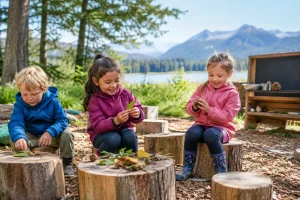
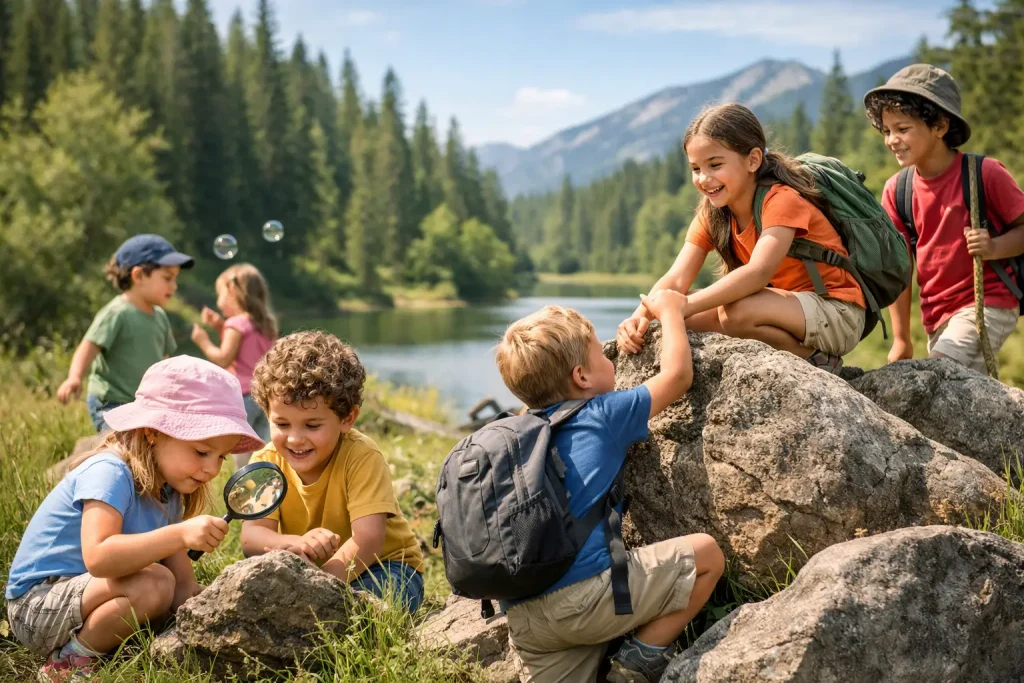
Whether a child is in preschool or kindergarten, learning should not be confined to tables and chairs. Young children learn through movement, texture, weather, conversation, observation and real experiences. Outdoor classrooms, gardening, nature play and excursions can enrich both stages because they engage the senses and make learning memorable.
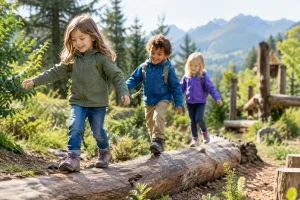
For preschool children, nature-based experiences support wonder, coordination and language development. For kindergarten children, they can also support scientific thinking, problem-solving, teamwork and early independence. Mud kitchens, planting beds, obstacle courses and open green spaces may look simple, but they offer powerful developmental value when guided by skilled teachers.
This is where parents should look carefully at a school’s environment, not just its prospectus. A beautiful early years programme is one where children are invited to explore fully, safely and joyfully.
How to choose between preschool and kindergarten well
The best question is not, “Which one is better?” It is, “Which stage is right for my child now?” If your child is still learning to separate from you, communicate needs, and feel secure in a group setting, preschool may be the right next step. If your child is already confident in routines and ready for broader challenge, a kindergarten programme may be more appropriate.
It also helps to look at the school’s approach rather than the name of the class. Ask how the curriculum develops from one stage to the next. Ask how teachers balance play with intentional learning. Ask how they support different personalities, because a lively child and a cautious child may need different kinds of encouragement.
For families exploring premium early years education, continuity can be especially reassuring. A school with a clear pathway from early preschool stages into kindergarten often creates smoother transitions, because children are known well, expectations build gradually, and learning is designed as a journey rather than a series of disconnected years.
At Alpine Preschool, this staged approach is part of what helps children move forward with confidence, from early exploration to growing independence, while still protecting the magic of childhood.
What matters most beyond the label
When parents search for preschool vs kindergarten differences, they are often really asking a deeper question: where will my child be understood, challenged and cared for? That is the heart of the decision.
A strong preschool gives children roots. A strong kindergarten gives them wings. The most thoughtful early years settings do both, in the right order, at the right pace, with warmth and skill.
If you are weighing options, trust yourself to look past glossy terms and ask what daily life will actually feel like for your child. The right environment will not simply prepare them for school. It will help them love learning, feel at home in themselves, and step into the next stage with bright confidence.