


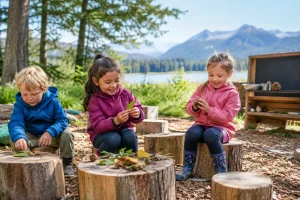

A child’s first group setting is more than a practical answer to a parent’s working day. It is where they may learn to wave goodbye with confidence, share a paintbrush, notice a ladybird in the garden and find their voice among new friends. When weighing up nursery versus daycare, the most helpful question is not which label sounds best. It is which environment will help your child feel secure, curious and ready to flourish.
The terms are often used interchangeably, and their meaning can vary between providers. Yet the daily experience can be very different. Looking beyond the name helps parents choose a setting that supports both family life and a meaningful early childhood.
Nursery versus daycare: the core difference
Daycare is usually centred on dependable, supervised care while parents work, study or manage other commitments. Many daycare settings offer warm, valuable activities, including songs, free play, meals, rest and outdoor time. The length of the day and convenient wraparound hours are often a central part of their appeal.
A nursery is more commonly designed as an early education setting, although it may also offer longer care hours. Its day is typically shaped around developmental goals: language, social confidence, early number awareness, movement, creativity, independence and emotional regulation. Learning should still feel joyful and playful, particularly for young children, but trained educators plan experiences with a clear understanding of what children are ready to explore next.
This distinction is not absolute. An excellent daycare may have a thoughtful educational programme, while some nurseries prioritise extended care. Rather than relying on a brochure heading, ask what happens between arrival and home time. The quality of those ordinary moments tells parents far more than the label on the door.
What a purposeful nursery day can look like
In a strong nursery, routine gives children a reassuring rhythm without making the day feel rigid. A child might arrive to a welcoming free-play session, join a small-group story, investigate leaves and textures outdoors, create a collage, help tidy a learning area and enjoy a calm meal with friends.
Each activity can have a developmental purpose. Building a tower develops problem-solving and hand control. Pretend play supports language, empathy and imagination. Carrying watering cans in the garden strengthens coordination and confidence. Listening to others at circle time lays foundations for communication and belonging.
The best learning is rarely about asking children to sit still for long periods or complete worksheets before they are ready. It is about offering carefully prepared invitations to explore, then allowing children to test ideas, make choices and return to what interests them. This is especially valuable between the ages of two and seven, when children learn through their bodies, senses, relationships and play.
At Alpine Preschool, this kind of learning is supported through a staged pathway from Playgroup to Kindergarten 2, with trained teachers guiding children through age-appropriate milestones. Nature-connected experiences and purposeful outdoor play make room for both childhood wonder and growing capability.
When daycare may be the right choice
Daycare can be an excellent choice when a family needs longer, reliable hours and the setting provides attentive care in a safe, welcoming environment. For a very young child, a calm space with familiar carers, a predictable nap routine and unhurried comfort may be exactly what they need at that stage.
It may also suit families looking for a gradual introduction to group care rather than a more structured educational timetable. Children develop at different rates. A child who is still settling into separation, sleep changes or big emotions may benefit from a provider that can offer flexibility and close individual care.
The key is to look for more than supervision. Ask how carers respond when a child is upset, how they communicate with parents, whether children go outside every day and how play materials are refreshed. Warm relationships and responsive care are the foundation of healthy early learning, whatever the setting is called.
When nursery may offer more value
A nursery can be particularly well suited to parents seeking an intentional educational journey alongside care. It offers children a community of peers and educators who understand how to extend learning without taking the joy out of it.
This matters as children become more socially aware. They begin to negotiate over toys, take turns, express preferences and notice how their actions affect others. A thoughtfully planned nursery environment gives them daily opportunities to practise kindness, resilience and independence with supportive adult guidance.
For many families, nursery also creates a gentle bridge towards kindergarten and primary school. Children become comfortable following a routine, caring for their belongings, joining group activities and approaching new challenges. They build early literacy and numeracy through stories, conversation, music, movement and hands-on discovery rather than pressure to perform.
A purpose-built campus can add another layer of value. Spacious outdoor areas, garden learning, sensory play and excursions allow children to experience the real world, not only pictures of it. For a child who thrives through movement or needs fresh air to reset, this can transform the quality of their day.
Questions worth asking on a visit
A visit should help you picture your child in the space, not simply confirm whether the rooms look attractive. Notice whether teachers are at children’s level, listening closely and speaking with warmth. Observe whether children appear engaged, comfortable and free to move, create and ask questions.
Ask how the programme is planned for different ages and abilities. A quality provider should be able to explain how play supports communication, thinking, physical development and emotional wellbeing. They should also describe how they adapt activities for a child who needs more challenge, more reassurance or more time.
It is sensible to ask about teacher qualifications, staff-to-child ratios, safety procedures, meals, sleep arrangements and toilet support. Parents should also understand how updates are shared and how concerns are handled. Clear communication builds trust, particularly during the settling-in period.
Finally, ask about outdoor time. Is it an occasional extra or a meaningful part of the day? Children need room to run, balance, dig, observe, imagine and take manageable risks. An outdoor classroom can support concentration, confidence and a lasting connection with the natural world.
Choose for your child, not the label
The right decision often comes down to your child’s temperament and your family’s needs. A highly social child may light up in a busy group with varied activities. A more cautious child may need a smaller, slower transition and a familiar key teacher. Some families need full-day care throughout the year; others are looking first for a rich preschool experience that prepares their child for the next stage.
It is also worth considering continuity. Children feel safer when the adults around them know their interests, routines and emerging strengths. A setting with a clear developmental pathway can reduce the number of major transitions in the early years, allowing confidence to grow steadily over time.
Do not be swayed by early academics alone. A child who feels seen, safe and excited to explore is in a powerful position to learn. Their ability to communicate needs, make friends, persist with a tricky task and approach the world with curiosity will serve them long after they have learned their first letters and numbers.
The most encouraging sign is often simple: your child walks into the setting with growing ease, has stories to tell at home and feels that it is a place where they belong. Choose the environment that protects that sense of wonder while giving it thoughtful direction, and their early years can become the beginning of a confident, joyful learning journey.