

A two-year-old does not need to arrive at playgroup ready to share every toy, join every game or wave goodbye without a wobble. Those early moments of watching from a parent’s side, carrying the same toy from activity to activity, or saying a quiet “no” are often part of social learning too. So, does playgroup help social skills? For many children, yes – when it offers a gentle routine, caring adult guidance and enough time for relationships to grow naturally.
Social confidence is not something children are simply born with or without. It develops through hundreds of small experiences: waiting for a turn, noticing another child is upset, asking to join in, recovering after a disagreement and discovering that school can be a safe, joyful place beyond home.
Does playgroup help social skills in early childhood?
Playgroup can give young children regular, meaningful opportunities to practise being with others. At home, a child may be the centre of family life, play mainly with siblings, or spend much of the day with familiar adults. In a thoughtfully planned group setting, they begin to meet children with different personalities, interests and ways of communicating.
This does not mean playgroup instantly creates a sociable child. Some children chatter from their first morning; others observe quietly for weeks before joining a game. Both responses can be healthy. The real value lies in repeated exposure to a predictable, welcoming community where children can participate at their own pace.
A quality playgroup helps children learn that other people have ideas, feelings and boundaries. A friend may want the red paintbrush. Someone else may build the tower differently. A child may be sad when Mum or Dad leaves, then feel proud after settling into a favourite activity. These are not abstract lessons. They are lived experiences that build emotional understanding.
The social skills children practise through play
Young children learn best when social experiences have a purpose. Asking a child to “be friendly” is much less effective than giving them an engaging shared task: watering plants together, rolling dough at the same table, building a den outdoors or preparing for a simple song circle.
Learning to join, take turns and negotiate
Play naturally creates moments when children need one another. Two children may want to use the same tricycle, choose roles in a pretend café or decide where a railway track should go. At first, this can look messy. There may be tears, grabbing or firm refusals. Yet these moments are where important learning begins.
With calm support, children gradually find words and actions that work: “Can I have a turn after you?”, “Let’s build it together”, or “I’m still using that.” They also learn that waiting is not the same as being forgotten, and that a disagreement can end with a repaired relationship.
Recognising feelings in themselves and others
Social development is closely connected to emotional development. A child who can notice, name and manage big feelings is more able to play alongside others. Playgroup gives educators many natural opportunities to help children make sense of emotions without shame.
A trained teacher might say, “You look disappointed that the puzzle is full. Let’s find another space while we wait,” or “I can see you were worried when the game became noisy.” This respectful language helps children feel understood while showing them how to understand others.
Growing independence away from home
For some families, one of the biggest social benefits of playgroup is the gradual experience of separation. A child learns that their parent will return, that trusted adults can care for them, and that they can enjoy an activity independently. This sense of security supports confidence not only in school, but also in future social situations.
The aim is not to rush a child into independence. A warm transition, a familiar routine and sensitive teachers make a significant difference. Children flourish when they feel safe enough to explore.
Why the environment matters as much as the group
A crowded room with too few resources can create unnecessary competition, especially for younger children who are still learning to communicate. Equally, a highly structured timetable that leaves little room for free play may limit the conversations and imaginative collaboration that children need.
The best playgroup environments balance rhythm with freedom. Children benefit from knowing what comes next – arrival, play, snack, outdoor time, story and home time – because predictability reduces anxiety. Within that rhythm, they need open-ended materials and enough space to choose, create and connect.
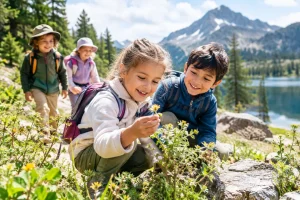
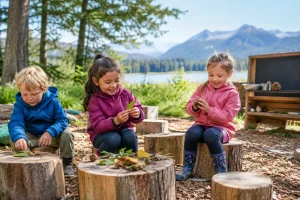
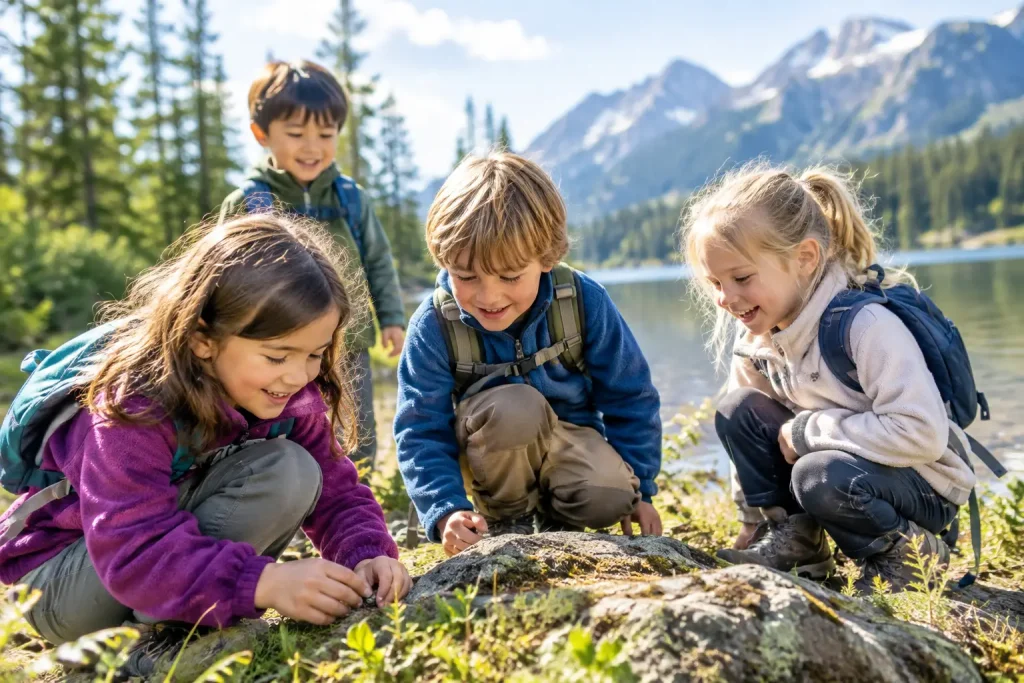
Outdoor learning can be particularly valuable. A garden, mud kitchen, sand area or nature walk invites children to work together without the pressure of sitting face to face. One child gathers leaves, another carries a bucket, and another suggests making a home for an insect. Shared discovery often makes conversation feel easier, especially for children who are still finding their voice.
At Alpine Preschool, play-based and nature-connected experiences are designed to give children this kind of meaningful social practice. A purpose-built environment and green outdoor spaces create room for movement, curiosity and cooperative play, while trained teachers help each child feel seen within the group.
What caring adults do differently
Children do not learn social skills merely by being placed near other children. Adult guidance matters, particularly in the early years. The most helpful teachers do not solve every small problem immediately, but neither do they leave children to navigate difficult moments alone.
They observe closely. They may help a hesitant child find a gentle entry point into play, such as carrying blocks to a group that is building. They may describe what is happening when emotions rise, then offer simple choices. They model kindness, listen carefully and set clear boundaries around safety.
This approach avoids two unhelpful extremes. Constant adult direction can prevent children from trying their own solutions, while no intervention at all can leave a child overwhelmed or excluded. Sensitive educators step in just enough to build confidence, then step back as children become more capable.
Consistency between home and playgroup helps too. If children hear similar language in both places – “gentle hands”, “we can ask for a turn”, “feelings are allowed, hurting is not” – they are more likely to use those skills independently.
When playgroup may not feel helpful straight away
Parents sometimes worry when their child cries at drop-off, clings to them, plays alone or comes home tired and irritable. These behaviours do not automatically mean the setting is wrong or that playgroup is harming social development. Group life asks a lot of young children: they are processing sounds, routines, faces, choices and feelings all at once.
A settling period is common, particularly for children who are naturally cautious, have had limited group experience or are going through a change at home. What matters is the pattern over time. Is your child beginning to recognise familiar adults? Do they mention an activity, song or child they enjoyed? Are teachers able to explain how they support them when they are upset?
It may be worth discussing a slower transition if distress remains intense or does not ease. A good setting will welcome that conversation, share observations and work with families rather than expecting every child to follow the same timetable.
Choosing a playgroup that supports real connection
When visiting a playgroup, look beyond cheerful displays and busy activity tables. Notice how adults speak to children when something goes wrong. Are children comforted without being rushed? Do teachers encourage them to try again, communicate their needs and include others?
Consider whether the day includes both small-group moments and unhurried free play. Ask about outdoor time, settling-in arrangements and how educators handle conflict. It is also helpful to observe whether children have access to materials in sufficient quantity, as this can reduce frustration and create more opportunities for cooperative play.
Most of all, choose a place where your child can be known as an individual. Social growth is not measured by how many friends a child names after one week. It is seen in quieter changes: a child who offers another a cup in pretend play, waits briefly for the slide, tells a teacher what happened, or walks into the room with a little more confidence than before.
Give your child time, warmth and a setting that treats play as serious learning. Friendships may begin with something as simple as two small hands digging in the same patch of soil – and the confidence built there can travel with them long after playgroup ends.