
A three-year-old carefully pouring water between two small jugs is learning concentration, coordination and confidence. Another child is building a pretend café with friends, negotiating who will take orders and what the menu should say. Both moments are rich with learning, yet they reflect different educational priorities. When parents compare Montessori versus play-based preschool, the real question is not which approach is superior in every situation. It is which environment will help their child feel secure, curious and ready to flourish.
For families choosing an early years setting, the labels can feel more complicated than the daily experience. Montessori and play-based programmes share many positive aims: respect for the child, hands-on learning, growing independence and meaningful relationships. Their differences tend to lie in how children use their time, how adults guide learning and how the curriculum is organised.
Montessori versus play-based preschool: the core difference
Montessori education follows a distinct philosophy developed by Dr Maria Montessori. Classrooms are carefully prepared with specific learning materials, usually arranged in accessible order. Children choose activities independently within clear boundaries, often working for sustained periods and repeating a task until they feel satisfied.
A Montessori environment may include practical life activities such as fastening, sorting, sweeping and food preparation, alongside sensorial materials, early maths and language work. Teachers observe closely and introduce materials at the moment a child appears ready. The adult is a guide rather than the centre of the room.
Play-based preschool also takes children seriously as active learners, but play is more often the main vehicle for the curriculum. A teacher may set up a construction area, nature table, role-play corner or art invitation, then extend children’s ideas through questions, stories, materials and shared experiences. Learning can be child-led, teacher-guided or a thoughtful blend of both.
The distinction is not always absolute. Many excellent preschools use elements associated with Montessori, such as child-sized equipment, practical independence and calm routines, while remaining fundamentally play-based. Equally, Montessori children can enjoy imaginative play and outdoor exploration. What matters is what happens consistently throughout the day, not simply the name on the prospectus.
How a Montessori preschool day may feel
A traditional Montessori classroom often feels purposeful and orderly. Children may select work from shelves, carry it to a mat or table, use it carefully and return it when finished. There is a strong emphasis on looking after the shared environment, from pouring a drink to tidying materials for the next child.
This structure can be particularly reassuring for children who enjoy routines, clear expectations and time to concentrate without frequent interruption. Repetition is welcomed rather than hurried along. A child fascinated by matching shapes, transferring beans with a spoon or tracing letters may return to that activity many times, building mastery through practice.
Montessori’s carefully designed materials can make abstract ideas more concrete. Quantity, sounds, sequencing and fine-motor control are explored through the hands before children are expected to understand them on paper. Mixed-age groupings are also common, giving younger children models to observe and older children opportunities to help.
There are trade-offs. Some families may find that a more traditional Montessori setting allows less room for open-ended fantasy play, messy large-scale projects or a rapidly changing daily theme. Quality also varies widely. Ask whether children have regular opportunities to move, create, collaborate and play outdoors, rather than assuming every Montessori programme offers the same experience.
What play-based preschool offers children
At its best, play-based learning is not free time with toys. It is intentional teaching built around the way young children naturally investigate the world. When children make a muddy soup in an outdoor kitchen, they may be measuring, experimenting, communicating and imagining. When they build a bridge for toy animals, they are testing balance, persistence and early engineering thinking.
Play gives children a reason to use new language. They describe their ideas, solve disagreements, adapt a plan when it fails and learn to notice other people’s perspectives. These social and emotional skills are central to school readiness, especially in the early years when children are learning how to join a group, express feelings and recover from frustration.
A strong play-based setting does not leave development to chance. Trained teachers observe each child, identify next steps and shape experiences that extend learning. A child counting pebbles may be encouraged to compare quantities; a child drawing a family picture may be supported to notice sounds in names; a group collecting leaves may explore colour, texture, change and care for living things.
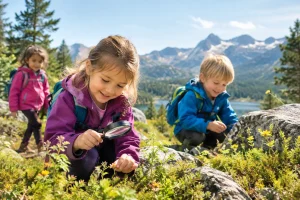
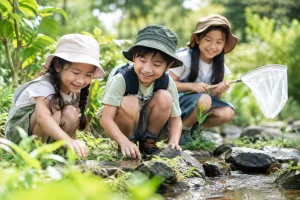
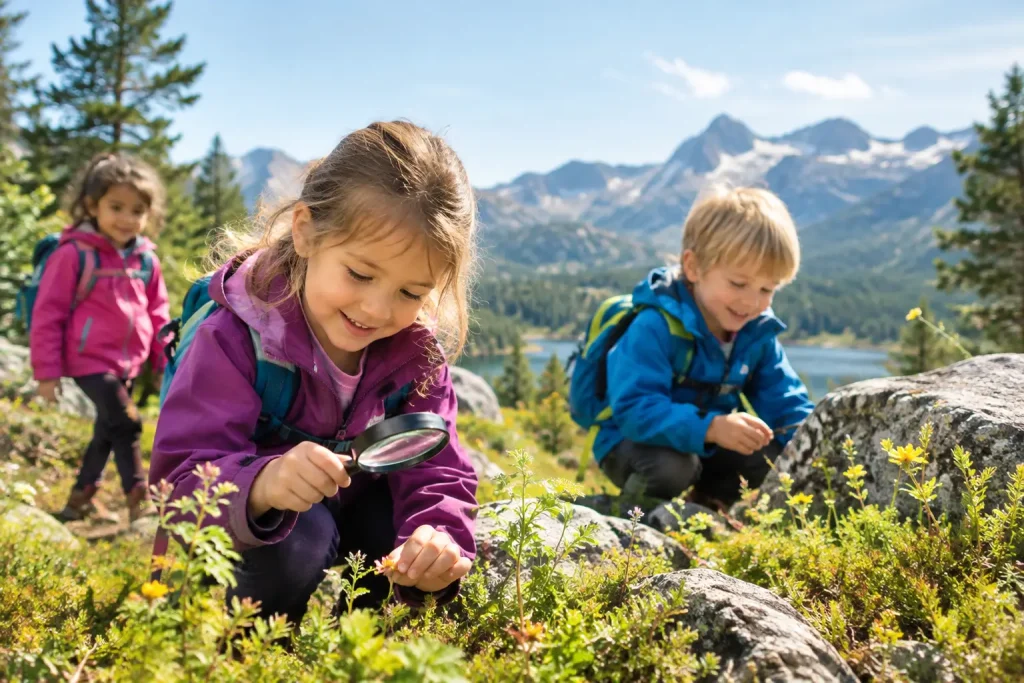
Nature-connected play adds another valuable dimension. Uneven ground, rain puddles, climbing, digging and gardening invite children to use their whole bodies and senses. Outdoor classrooms give room for energetic movement, collaborative projects and the quiet wonder of watching an insect, seed or cloud. For many young children, this physical freedom helps attention and confidence grow indoors as well.
Structure is not the opposite of play
Parents sometimes worry that play-based learning will not prepare a child for formal education. Others worry that a structured approach will make childhood feel too academic. In reality, the strongest early years programmes balance freedom with thoughtful structure.
Children need predictable routines: a warm welcome, mealtimes, rest, group moments and clear transitions. They also need space to make choices, follow interests and try things for themselves. A well-planned play-based curriculum can offer both. Teachers may introduce phonological awareness, early number concepts, mark-making and problem-solving through meaningful experiences rather than relying on worksheets or premature formal instruction.
The key is progression. At two, a child may be developing separation confidence, language and sensory awareness. By kindergarten age, they can take part in longer projects, recognise patterns, communicate ideas and build the foundations for literacy and numeracy. The curriculum should meet children where they are while gently inviting them forward.
At Alpine Preschool, this developmental journey is supported through staged programmes that combine purposeful learning with creative play, outdoor experiences and caring teacher guidance. The aim is not to rush children through childhood, but to give each stage the attention it deserves.
Which approach suits your child and family?
Start by looking beyond your child’s current preferences. A quiet child may benefit from a setting that helps them find their voice with peers, while an energetic child may thrive with plenty of movement and opportunities to focus their energy. Independence is important for every child, but it can be developed through both Montessori routines and play-based experiences.
During a visit, watch the children rather than only the displays. Are they settled, engaged and treated with kindness? Do teachers speak with genuine respect? Is there a balance between child choice and attentive guidance? Notice whether the environment offers books, creative materials, sensory experiences, physical challenge and places for calm concentration.
Ask practical questions too. How is outdoor learning planned? How are early literacy and maths introduced? What happens when a child finds sharing difficult, misses home or needs extra challenge? How do teachers communicate progress with families? Clear, thoughtful answers reveal far more than a programme label.
It is also worth considering the rhythm of family life. Some parents value a highly consistent routine and individual work cycles. Others want a school community where projects, excursions, seasonal celebrations and collaborative play feature strongly. Neither priority is wrong. The best choice is one that aligns with your values while responding warmly to your child’s individual needs.
Look for meaningful childhood experiences
The preschool years should build foundations, but they should also be full of memories: discovering a ladybird in the garden, proudly carrying a snack to a friend, singing with classmates, making a shelter from branches or finally writing the first letter of a name. These experiences matter because children learn most deeply when they feel safe, capable and involved.
Choose the setting where your child can be known well, encouraged thoughtfully and given plenty of reasons to wonder. Whether its influences are Montessori, play-based or a considered blend of both, a nurturing early years education should leave children eager to return tomorrow.