

The first playgroup morning can feel surprisingly big. Your child may be excited by the thought of paints, songs and new friends, then cling tightly to your hand at the gate. As a parent, you may be holding both pride and nerves at once. Knowing how to prepare for playgroup is not about making a young child perfectly independent before their first day. It is about helping them feel safe enough to explore.
Playgroup is often a child’s first experience of being part of a small community beyond home. Through stories, sensory play, outdoor discovery and shared routines, children begin learning that new places can be warm, interesting and full of possibility. A little thoughtful preparation can make that transition gentler for everyone.
How to prepare for playgroup before the first day
Begin by talking about playgroup in simple, positive language. Young children understand what they can picture, so describe the parts of the day that will feel familiar and enjoyable: building with blocks, singing with a teacher, playing outdoors, having a snack and choosing an activity. Avoid making it sound like a test or a major milestone they must manage alone.
If possible, visit the setting together before their start date. Let your child notice the classroom, toilets, outdoor area and entrance. Point out small details they may remember later, such as a colourful reading corner or a climbing structure in the garden. Familiarity turns an unknown place into somewhere they have already begun to know.
It also helps to practise short separations in everyday life. A brief stay with a trusted grandparent, family member or close friend can show your child that you leave, and that you always return. Keep your goodbye calm and clear. Slipping away when they are distracted may seem easier in the moment, but it can make future goodbyes feel less predictable.
Build a manageable morning routine
A rushed morning can make even a confident child feel unsettled. During the week before playgroup begins, gradually move towards the wake-up, breakfast and leaving times you will follow on school days. There is no need for military precision, especially with two- and three-year-olds, but a predictable sequence helps children understand what comes next.
You might say, “First we get dressed, then we have breakfast, then we put on our shoes and go to playgroup.” Repeating the same order gives children a sense of control. If they like choosing between two T-shirts or carrying their own small bag, let them take part. These small responsibilities nurture independence without placing too much pressure on them.
Good sleep and an unhurried breakfast matter too. A tired or hungry child will find new sights, sounds and social interactions much harder to manage. Aim for a familiar meal rather than introducing something new on the first morning.
Practise the everyday skills that support confidence
Playgroup teachers expect young children to be learning. Your child does not need to recognise letters, count to ten or sit still for long periods before they begin. The most useful preparation is practical and emotional: communicating a need, trying simple tasks and accepting help when needed.
At home, encourage your child to have a go at pulling down trousers for the toilet, washing and drying hands, opening a lunch container and putting a toy away when asked. These skills develop at different rates, so treat practice as play rather than correction. A child who can say, gesture or show that they need the toilet, want a drink or feel sad already has valuable tools for the day.
Teach a few simple phrases they can use with adults and peers. “Help, please,” “Can I have a turn?” and “I’m finished” are useful starting points. If your child is quieter or still developing language, reassure them that their teachers will observe closely and support them. Communication is not only verbal. A caring educator notices facial expressions, body language and changes in mood.
Playdates, park visits and family gatherings can also offer gentle practice in sharing space with others. Children do not need to share every toy immediately, and it is developmentally normal to protect a favourite possession. What matters is beginning to experience turn-taking, waiting for a moment and seeing that there are many ways to play alongside other children.
Pack for comfort, movement and messy discovery
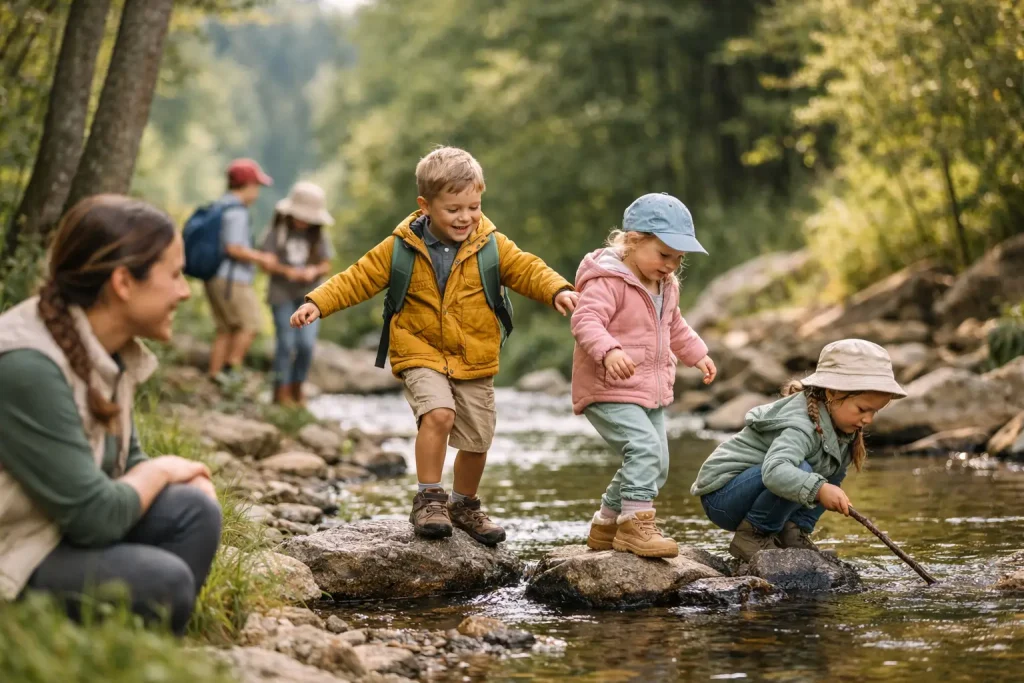
Playgroup days are active. Children may be painting, digging, splashing, climbing, collecting leaves or sitting on the floor for a story. Choose comfortable clothes that allow them to move freely and that you do not mind getting marked by a wonderful day of learning.
Label everything clearly, including shoes, water bottle, bag and spare clothing. Young children are still learning which belongings are theirs, and familiar labels help both children and teachers. Pack a complete change of clothes, including underwear and socks, in case of spills, water play or toilet accidents. This is simply part of early childhood, not a sign that anything has gone wrong.
Depending on the school’s guidance, a small comfort item may be appropriate during settling-in. A familiar handkerchief, family photo or soft keyring can offer reassurance without becoming difficult to manage during play. It is best to check the setting’s approach first, as some children settle more easily when treasured toys stay safely at home.
For children attending an outdoor-focused programme, sun protection, a hat and suitable shoes are especially useful. Nature-connected learning invites children to experience texture, weather, movement and changing seasons. Muddy hands and grass-stained knees often tell the story of meaningful exploration.
Make the goodbye brief, loving and trustworthy
The first drop-off is usually harder for the adult than for the child, even when there are tears. Some children walk in confidently on day one and feel uncertain on day three. Others cry at the door, then become absorbed in play a few minutes later. Both responses can be entirely normal.
Create a short goodbye ritual and use it consistently. It could be a hug, a kiss, a wave at the window and one reassuring sentence: “You are safe with your teacher. I will see you after playgroup.” Then leave as promised. Lengthening the goodbye can unintentionally communicate that there is something to fear.
Try not to ask, “Will you be brave?” Bravery can sound like a requirement, and children may feel they have failed if they cry. Instead, name their feelings with confidence: “You might miss me, and your teacher will help you. You can play, and I will come back.” This acknowledges the emotion while giving them a clear, safe path through it.
If your child is distressed beyond the usual settling period, speak openly with their teacher. A strong playgroup team will want to understand what comforts your child, how they express tiredness or worry, and what routines work well at home. Partnership between home and school is one of the most reassuring foundations a child can have.
Support the transition after playgroup
The pick-up is a valuable moment to reconnect, but many young children are too tired or overstimulated to give a detailed account of their day. Instead of asking, “What did you do today?”, try a specific, low-pressure question such as, “Did you play outside?” or “What colour paint did you see?” They may answer immediately, later in the car or not at all. All are fine.
Offer a calm afternoon where possible. New routines require a great deal of emotional energy, even when a child appears happy. Extra cuddles, earlier bedtime and familiar family rituals can help them process the experience. You may notice new behaviour for a short time, such as clinginess, tiredness or a stronger wish to do things independently. These are often signs that a child is adapting to an expanding world.
Keep your own language about playgroup warm and steady. Rather than promising that every day will be easy, let your child know they are supported through the tricky moments as well as the joyful ones. At Alpine Preschool, children are given time, encouragement and meaningful opportunities to grow through play, friendship and outdoor exploration.
The goal is not to send a child into playgroup without a backward glance. It is to give them the quiet certainty that they are loved, capable and safe to take their next small step into the world.