A two-year-old crouches beside a garden bed, carefully following an ant across the soil. Nearby, another child is balancing on a timber beam, while a teacher names the feeling behind a small moment of frustration: “You wanted another turn.” These moments may look simple, yet they reveal what parents should expect from 新山高品质幼教 – a setting where children are seen, guided and encouraged to learn through real experiences.
For families choosing a preschool in Johor Bahru, the decision reaches far beyond whether a child can recite letters or complete a worksheet. The early years shape how children approach relationships, challenges, language, movement and their own capabilities. A high-quality programme gives them a joyful, secure foundation while helping them grow ready for the next stage of learning.
What high-quality early education really looks like
Premium early education is not defined by a polished building alone, nor by an overly academic timetable. It is found in the thoughtful connection between skilled teachers, purposeful routines, rich play opportunities and an environment designed around young children.
Children aged two to seven learn best when they can touch, move, question, repeat and make choices. A well-planned classroom may include literacy and number activities, but these are brought to life through stories, songs, construction, role play, art and conversation. Rather than asking children to sit still for long periods, teachers create meaningful moments that hold their attention naturally.
This approach does not mean learning lacks structure. The opposite is true. Children flourish when their day has a reassuring rhythm: arrival, shared play, small-group learning, outdoor exploration, meals, rest when needed and reflection. Predictable routines help children feel safe enough to take small risks, such as speaking in a group, trying an unfamiliar activity or making a new friend.
Choosing 新山高品质幼教 beyond academic promises
It is understandable for parents to ask whether a preschool will prepare their child for primary school. Strong early literacy, numeracy and thinking skills matter. However, school readiness is broader than recognising words or completing sums ahead of schedule.
A child who can listen to instructions, express a need, wait for a turn, manage disappointment and persist with a task has valuable foundations for classroom life. These abilities develop through responsive teaching and repeated social experiences, not through pressure.
When visiting a preschool, notice how teachers speak with children. Are they giving orders throughout the day, or asking questions that invite thinking? Do they support a child to solve a small conflict, rather than rushing to solve it for them? Warm guidance paired with clear boundaries helps children develop independence without feeling alone.
It also helps to ask how learning is observed and communicated. A quality school should understand each child as an individual. Some children may be ready to communicate confidently in a large group, while others need time and gentle encouragement. Some may show their strongest thinking while building, drawing or exploring outdoors. Assessment in the early years should inform teaching and celebrate progress, rather than place children in competition with one another.
Why outdoor learning belongs in childhood
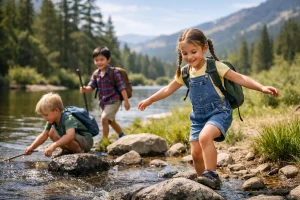
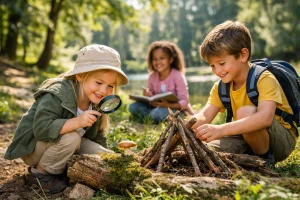
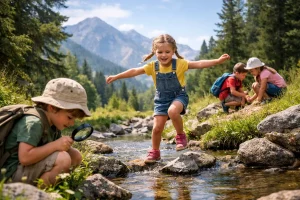
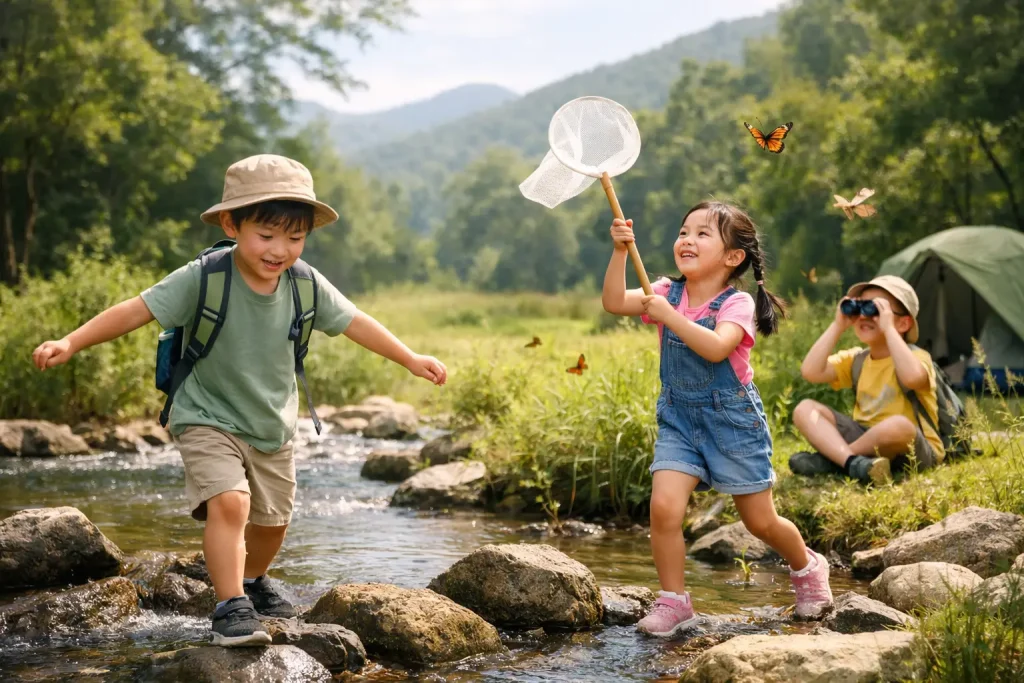
Outdoor space is not simply a pleasant extra. For young children, it is a powerful learning environment. Running, climbing, digging, pouring water and caring for plants strengthen coordination, confidence and sensory awareness. Nature also offers endless invitations to observe change: a leaf drying in the sun, puddles after rain, seeds becoming shoots or insects moving through grass.
Outdoor learning can support academic development too. Children naturally compare sizes, count stones, describe textures and test ideas about balance and gravity. More importantly, they learn that questions are worth following. That curiosity becomes a lasting habit.
The quality of outdoor provision matters. A meaningful green space is safe, supervised and intentionally used by teachers. It should offer room for energetic movement as well as quieter areas for observation, imagination and conversation. In Johor Bahru’s warm climate, schools also need sensible planning around shade, hydration and suitable activity times.
For families near Taman Impian Emas, Bandar Dato Onn or Setia Tropika, a purpose-built campus with generous outdoor areas can make a genuine difference to a child’s daily experience. It gives children space to breathe, explore and return to the classroom refreshed.
The value of a clear developmental pathway
Children do not develop in identical ways or at identical speeds. A thoughtful preschool programme recognises this through stages that meet children where they are, while gently extending what they can do.
In the earliest years, a Playgroup or Nursery experience should prioritise attachment, communication, sensory play and confidence in separation. Children need caring adults who help them feel secure as they begin to participate in a group setting. Small accomplishments matter: putting away a toy, joining a song, choosing an activity or communicating a feeling.
As children move towards kindergarten, learning can become more focused without losing its sense of wonder. They are ready for richer language, early mathematical concepts, problem-solving, creative projects and collaboration. By Kindergarten 2, children benefit from activities that develop concentration, logical thinking and familiarity with classroom expectations, alongside continued opportunities for play and movement.
This staged approach is especially reassuring because it avoids two unhelpful extremes. Children should not be held back by an environment that offers too little challenge, but neither should they be pushed into formal learning before they have the emotional and physical readiness to enjoy it.
Questions that reveal teaching quality
A school visit is most useful when parents look beyond displays and facilities. Beautiful resources are valuable only when educators know how to use them with care and purpose. Ask about teacher training, staff continuity and how educators plan for different developmental needs.
You may also ask what happens when a child is upset, reluctant to join an activity or struggling with a peer. The answer will tell you much about the school’s values. Children need compassionate support, but they also need adults who believe in their ability to recover, communicate and try again.
Look for a curriculum that connects experiences rather than treating subjects as isolated tasks. A story about a garden might lead to vocabulary, painting, counting, planting and a discussion about caring for living things. This kind of connected learning helps knowledge feel relevant and memorable.
At Alpine Preschool, the curriculum is designed to bring this balance together through play-based, nature-connected experiences and clear developmental goals. Outdoor classrooms, excursions and holiday camps add variety to the school year, allowing children to learn with their whole bodies, senses and imaginations.
A community where children feel they belong
A preschool also becomes one of a child’s first communities outside the home. Children learn that families may have different traditions, languages and ways of living. With thoughtful guidance, these differences become opportunities for kindness and cultural awareness.
Parents should feel welcomed as partners too. Clear communication about routines, progress, events and any concerns creates trust. A school does not need to promise perfection; young children will have difficult mornings, disagreements and days when they need extra reassurance. What matters is that the school responds with professionalism, warmth and consistency.
The right preschool is one where your child can arrive with growing confidence, be known as an individual and return home with stories worth sharing. Choose a place that protects the magic of childhood while giving every curious step a meaningful direction.