
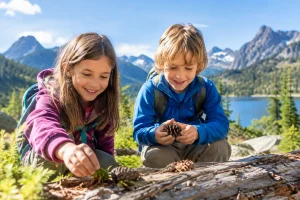
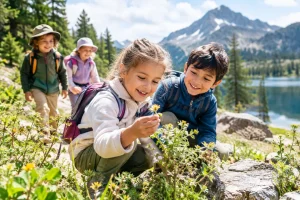
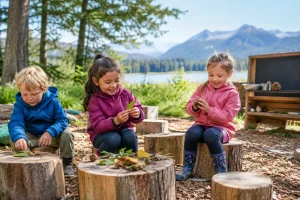
A child who spends the morning balancing on logs, asking why leaves change colour, sharing tools in the sand area and listening to a story about feelings is not “just playing”. That child is building the exact foundations that early childhood development 2026 is placing firmly back at the centre – confidence, language, self-regulation, problem-solving and a joyful readiness to learn.
For parents choosing a preschool now, that shift matters. The conversation is moving away from the old question of how early a child can start formal academics, and towards a better one: what kind of environment helps young children truly flourish? The strongest answers are increasingly clear. Children need caring relationships, structured routines, meaningful play, rich language, movement, time outdoors and teaching that understands development rather than rushing it.
Why early childhood development 2026 looks different
The most encouraging change in early years education is that quality is being judged more holistically. Parents are looking beyond worksheets and neat displays. They want to know whether their child will feel secure, become independent, build strong communication skills and develop genuine curiosity.
This does not mean academic learning has become less important. It means schools are recognising that early literacy, numeracy and thinking skills grow best when the foundations are strong first. A child who can listen, take turns, express needs, notice patterns and persist with a challenge is far better prepared for later learning than a child who has simply memorised facts too soon.
That is why early childhood development 2026 is increasingly centred on the whole child. Emotional wellbeing, sensory development, physical confidence, language growth and social understanding are no longer viewed as “extra” parts of education. They are the education.
The skills that matter most in early childhood development 2026
Parents often ask what children should really be learning between ages two and seven. The honest answer is that it depends on age and stage, but several priorities stand out.
Emotional security and self-regulation
Before children can manage the wider world, they need to feel safe within their own. This means learning how to separate confidently, trust familiar adults, cope with frustration and begin to understand emotions. In a high-quality preschool, this does not happen through lectures. It happens through patient routines, warm teacher responses, predictable transitions and plenty of guided social practice.
A calm, emotionally secure child is more open to learning. That sounds simple, yet it is one of the biggest predictors of whether children settle happily and engage well.
Language and communication
Strong language sits beneath almost every other area of development. It helps children explain ideas, ask for help, negotiate with peers and make sense of stories, instructions and new concepts. In practical terms, this means children need songs, conversations, role play, storytelling, questioning and adults who speak with intention.
There is a trade-off here worth noting. Fast-paced, overly noisy environments can create activity without depth. Young children benefit more from responsive interaction than from constant stimulation. Thoughtful classrooms make space for both lively participation and quieter moments of focused conversation.
Physical development and sensory learning
Fine motor control matters for writing later on, but it starts much earlier with climbing, carrying, pouring, digging, threading and building. Gross motor development and sensory exploration are not side activities. They help children develop balance, coordination, body awareness and concentration.
This is one reason outdoor learning is becoming even more valued. Open spaces invite bigger movement, richer risk assessment and more imaginative play than many indoor-only settings can offer.
Early thinking skills
Young children are natural investigators. They compare sizes, notice sequences, test ideas and look for causes. Good early years teaching nurtures these habits through real experiences rather than abstract pressure. Sorting natural objects, measuring water, observing insects and building with loose parts all support mathematical and scientific thinking in age-appropriate ways.
What parents should look for in 2026
A beautiful setting is lovely, but quality runs deeper than appearances. When visiting schools, parents should look closely at how children are spending their time and how adults are supporting them.
Do teachers get down to the child’s level and extend conversations? Are routines calm and well organised? Is there a balance between structure and freedom? Are children encouraged to explore, create and solve small problems independently? These details reveal far more than marketing language ever could.
In the context of early childhood development 2026, the best environments usually share a few characteristics. They are warm but purposeful. They offer play with intention, not play as filler. They understand milestones, but they do not treat every child as if development follows a rigid timetable. They use observation carefully, then plan experiences that support the next step.
Outdoor space also deserves serious attention. Nature-connected learning supports resilience, imagination and sensory growth in ways that are difficult to reproduce indoors. A well-designed outdoor area is not simply a place for break time. It is a classroom in its own right.
Play-based learning with real structure
Some parents still worry that play-based education sounds too loose. It is a fair question, especially for families who want strong preparation for primary school. But play-based learning at its best is not unstructured wandering. It is carefully guided, developmentally informed and rich with opportunity.
For example, a role-play market can support counting, vocabulary, turn-taking and confidence. A gardening activity can introduce sequencing, patience, observation and care. Block building can strengthen spatial reasoning, collaboration and perseverance. The learning is real. The difference is that young children engage with it through meaningful experience rather than pressure.
This is where trained teachers make all the difference. They know when to step in, when to observe, when to model language and when to let a child wrestle productively with a challenge. In a premium early years setting, structure and play work together rather than pulling in opposite directions.
Why nature is becoming even more central
As families become more aware of children’s need for movement, emotional balance and sensory richness, outdoor learning is taking a more central role in early years education. This is not a passing trend. It reflects what many parents and educators have seen firsthand: children often become calmer, more engaged and more imaginative when they have regular access to green space.
Nature offers variety that manufactured environments rarely can. There are textures, sounds, weather changes, uneven surfaces, living things and endless prompts for curiosity. A puddle can become a science lesson, a language lesson and a social lesson within minutes.
There are, of course, practical considerations. Outdoor learning requires thoughtful supervision, appropriate facilities and adults who can turn everyday moments into purposeful learning. But when it is done well, the rewards are substantial. Children build confidence, adaptability and a lasting relationship with the world around them.
The role of kindness, culture and community
Parents are not only choosing a curriculum. They are choosing a community that will shape how their child sees themselves and others. That is why values matter so much in the early years.
Children benefit from environments where kindness is taught through daily practice, where diversity is visible and respected, and where they are encouraged to listen, help and belong. These experiences build social confidence and empathy from the start.
A setting such as Alpine Preschool reflects this broader view of learning particularly well when it combines trained educators, purposeful stages of development and nature-connected experiences within a nurturing school culture. For many families, that balance is exactly what makes the early years feel both magical and meaningful.
Preparing for school without rushing childhood
One of the most reassuring messages within early childhood development 2026 is that school readiness does not mean pushing children beyond their developmental needs. True readiness is not about making reception look like Year 2. It is about helping children arrive ready to participate, communicate, adapt and enjoy learning.
Children who are genuinely well prepared can manage routines, express basic needs, engage with stories, cooperate with others and approach new tasks with confidence. Some may already recognise letters or numbers, while others are still consolidating earlier skills. Both can be on a healthy path.
What matters most is whether the preschool journey has supported steady, confident growth. When children are given space to wonder, move, create and connect, they tend to carry that strength forward.
The early years pass quickly, but their influence lasts. As you look at schools in the year ahead, it helps to ask not only what your child will learn, but how they will feel while learning it. The right environment gives children more than preparation for the next stage. It gives them the chance to grow with curiosity, security and delight still fully intact.